Gigafauna—Eye to Windward

I’ve been a metalhead for decades now. I’d always leaned toward heavier rock, but as I made my way through my twenties, and navigated major life changes and the insanity of medical school, heavier music became one of those key coping strategies. And while my heart remained rooted in progressive music, thanks to a lifelong love of the music of Rush, I began to explore the myriad sub-genres found in metal.

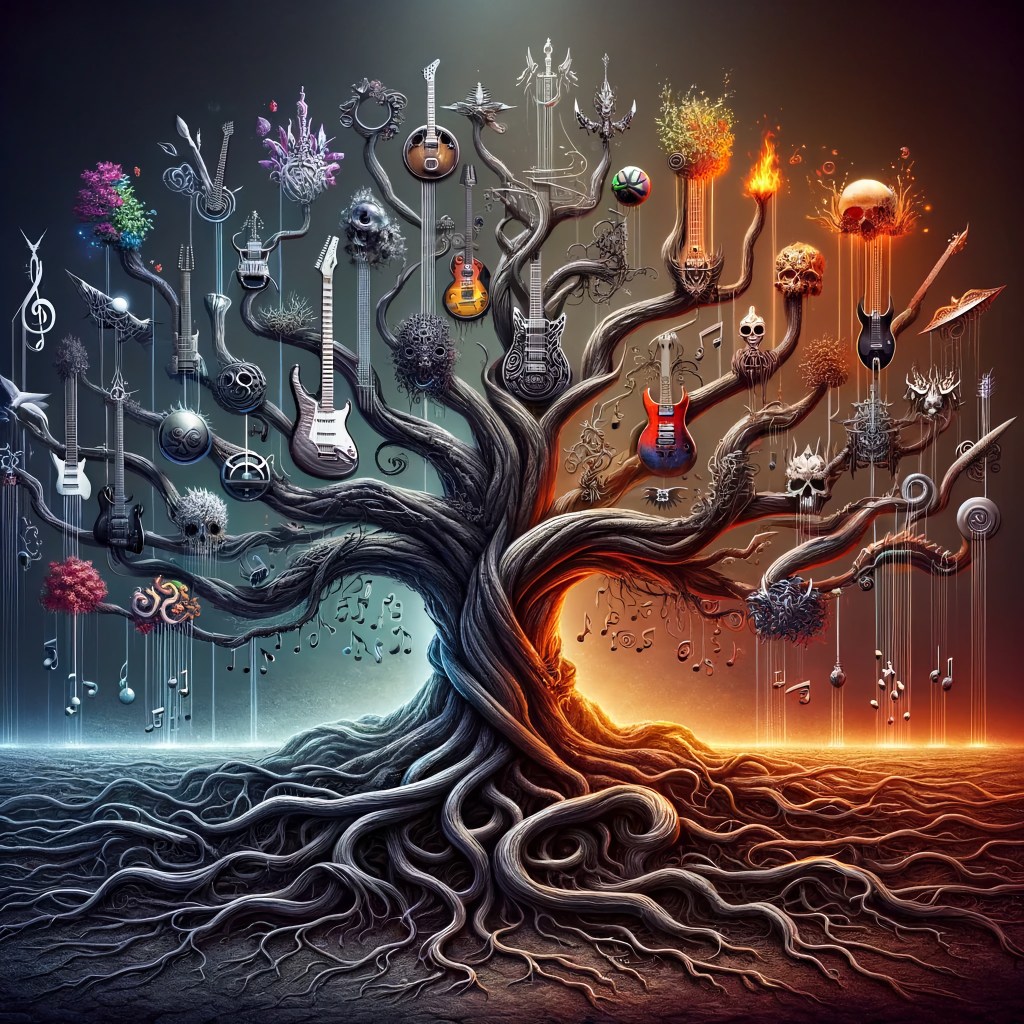
More than perhaps any other type of music, metal embraces variety. There are dozens of different sub-genres, yet all are still recognizably metal. Truth is, it is one of the facets of being a metalhead that I find so refreshing. There is no shortage of different styles of metal that I can dip in and out of, with new styles and sounds to discover.

Some bands find their sound, their style, and settle in and make decades long successful careers from that. My personal favorite thrash metal band, Testament, is a perfect example. On (almost) any one of their albums, it is instantly apparent that I am listening to thrash metal, and honestly that I am listening to Testament. Other bands, however, take the risk of mixing different styles, and do so with varying degrees of success.

Cover of the album Eye to Windward by the band Gigafauna

Enter Gigafauna, a four piece from Uppsala, Sweden. For the sake of disclosure, I will admit that I was unaware of the band until they reached out via the contact form and let me know of their upcoming album, Eye to Windward. Hitting play, I truly had no idea what to expect. What I found, almost instantly, was a band taking that far riskier approach, that chance to mix genres and see what came out.

And what came out on Eye to Windward? A kick-ass album that deftly blends elements of progressive metal, sludge, and melodic death metal with a groove and swagger straight from an 80s hard rock band.

Songs move between moments of heavy grooves, crushing death metal riffs, clean vocals and growls, and back to those heavy grooves. The sense of swagger is ever present, even when the drums move to double time and the growls come barreling in. This all comes together to keep the heaviness from ever becoming overwhelming. Don’t mistake what I am saying: This is a metal album, through and through. But there is a sense of what I would describe as playfulness in how the band weaves together these different styles that keeps if from feeling oppressive.

Some days, I welcome the oppression and darkness that metal can provide. Eye to Windward keeps me engaged with its, at times, crushing heaviness. Yet the variety between the vocal styles and the riffs keeps the album feeling interesting, explorative, and injects a sense of joy into the music, even when the songs are dead serious. This is a difficult trick to pull off, and many bands falter as they try to do so. An excellent example is mid-album track “Plagued”. Harsh vocals start out, with an almost stomping beat. But the band isn’t afraid to take that places, with soaring vocals, textural variations in the guitars, and playing with moments of stripped back drums and bass coupled with layered guitars and vocals. It is an excellent showcase of all the different tools Gigafauna has at their disposal.

Other tracks are more focused. “Pyres” is heavy out of the gate, with my favorite riff on the album. Even here, though, there is a sense of dynamics that prevents the music from ever feeling stale. Album finale, “Vessel,” is a worthy way to close out this journey, taking us through all of the feelings of the album in a fantastic capstone on the experience. A sludgy, progressive, death-tinged epic, Gigafauna sticks the hooks in, tantalizingly hinting at where they may choose to go from here.

That doesn’t mean the album is perfect. There are some transitions that feel less fluid, slightly forced. There are moments where the disparate elements don’t come together perfectly. But that is always the risk when trying to marry these different styles. And while not perfect, the songs are all supremely enjoyable and performed with incredible talent. I am left impressed by the successes found on Eye to Windward, which far outshine the few bumps on the road.

For a band to come out of the dark and really blow me away is no small feat. Gigafauna has done just that with their release Eye to Windward. Mixing metal styles can either pay off or backfire spectacularly, and here it pays off with aplomb.

Icon by Paradise Lost, 30 years later

I can’t claim to have been familiar with the institution of British metal that is Paradise Lost back when Icon was originally released. It was 1993. I was beginning my trip down the metal rabbit hole, but only just. Like many people who listened to rock radio, I was listening to Metallica and Countdown to Extinction. I had started to branch out a bit on my own, taking my love of progressive rock and seeing how it fit with a heavier sound. Images and Words by Dream Theater was getting heavy rotation.

It wouldn’t be until many years later, 2009 to be precise, when Paradise Lost appeared on my radar, with their release of Faith Divides Us – Death Unites Us. I had been gradually expanding my musical tastes over my years in medical school and through residency. Those were incredibly difficult years. Years that have left scars on me that I carry with me to this day. One of the ways I dealt with the trauma of those years was to embrace the darkness that metal music embodied.

Faith Divides Us – Death Unites Us resonated with me. The heavy, dark tone, with a gothic atmosphere and a sound that spoke of some of the uglier aspects of life was what I needed. Hell, there was even a track on that album titled “Living with Scars”. Yeah, I was almost instantly hooked.

One of the most wonderful things I have experienced in life is discovering a new band that already has a healthy catalog. I’m not kidding or being hyperbolic. I love music, and the joy of discovering a new band, and then diving into hours of near music is just sublime. Such was the case with Paradise Lost. There were 11 full albums from the band that preceded that most recent release.

To say I was excited would be an understatement.

As I am wont to do, I also began reading about the band on the internet. I read all about Draconian Times and how it was often considered their landmark record. I listened to and loved that album. But there was another.

Two years earlier, the band had released Icon. The cover was striking but unsettling. But by this time, I was all in on the band. So I listened to it.

And quickly discovered my own, personal favorite Paradise Lost album.

I actually don’t think Paradise Lost has a bad album. They have very, very different albums. A trip through their discography will be one of fascinating discovery, as the music moves from death/doom, to gothic metal, to dark synth pop, back to gothic metal, and ending (currently) at a healthy death/doom and gothic mix. There isn’t a dull moment.

But I still kept coming back to Icon. There is an urgency, a power to the songs that I find still keeps them vibrant to this day. It is an album that stands proud amongst all other peers in the metal world of the early 90s.

And so, with the 30th anniversary upon us of this influential and seminal album, Paradise Lost chose to re-record it.

We have, again, a triumph.

Icon 30 is Icon brought into the modern world. The original always had just a bit of soft edge, in terms of the production. Icon 30 gives this album the edge it always had, but that wasn’t evident. It doesn’t matter that these songs were written and originally recorded 30 years ago. They don’t sound dated in the least.

Rather, particularly with the new recordings, they have all the bite that they were intended to have, and are as relevant to the world of music and metal as they were 30 years ago. Perhaps even more so.

There are no breakdowns to be found. Paradise Lost didn’t need them to punch you in the gut. Nick Holmes’ voice is powerful, gritty, urgent and intoxicating. The guitars shine and drive. The bass and drums are punchy, groovy, and listening to this version of the album just proves what incredibly musicians and writers the band is.

Icon has been, for the last 15 years, my favorite Paradise Lost album. Icon 30 has reconfirmed that love and is a vibrant example of just how timeless metal music can be.

More subgenres than genres

I’m a metal head. Have been for a few decades now. Given that it has been that many years, one of the aspects of metal that I barely even notice anymore is just how many subgenres there are.

This was brought to the forefront of my mind just yesterday. I was at work, and music was playing. At one point, someone asked me, “What the hell is this music?” It gave me pause for just a moment. I had actually chosen some of my music that I deemed to be the most “accessible” and the least unusual or offensive to the other people in the room with me. In my line of work, often people are asleep. In that case, I listen to whatever I want to. But when people are awake, I strive to be more selective in what I choose to play.

So, it really surprised me that, what I had deemed to be easily accessible and “normal” metal warranted such a question.

Still, I tried to answer and offered that I would consider it “gothic doom.”. That was when another individual in the room offered the observation, “I think there are more genres of metal than there are genres of all other music combined.”

That made me think. Because, honestly, I’m not sure that the truth is too far off from that comment. There are so many subgenres that all fall under the metal umbrella. There are entire, 20+ minute YouTube videos that discuss the different genres of metal. On the surface, that seems insane.

But to me, it just seems natural. It makes sense. Hell, it even seems necessary. Because, of course, just because someone likes Iron Maiden, that does not, at all, mean they are going to like Gorguts or The Melvins. They all fall under the metal umbrella, but they are so different as to not even seem like the same type of music. At least to those of us already in the “know”.

But, again, why is it that way?

Despite all being metal, so many of the subgenres found within the genre have very little in common with each other, other than the fact they use distorted guitars, bass and drums.

And, well, that is all that really sets metal apart from all other genres of music. So it isn’t that odd, is it?

But more than that, it helps to really categorize music. There is a vast gulf between the thrash metal of Slayer, the polished progressive metal of TesseracT, and the slow, ponderous build of Bell Witch’s funeral doom.

Or, take, for example, two of my very favorite bands. From a musical standpoint, there is very little that is the same between the building, dynamic post-metal of Neurosis, and the progressive styling of Fates Warning. In fact, it would almost be impossible to find two albums that, at least on the surface, seem more dissimilar than the epic titan of an album Through Silver In Blood, and its temporal counterpart, the excellent album A Pleasant Shade of Gray.

So, to simply refer to both of these as metal albums doesn’t help the listener. One may be right up their alley, while the other could be something they have little to no interest in.

As I think about it, it really is just a type of shorthand. With a style of music that is so varied and has a truly incredible amount of breadth and depth to it, this shorthand helps to describe the music to someone else who may, or may not, be interested.

I love post-metal. It is one of my favorite types of metal. If you tell me something is post-metal, I am going to give it a chance, no questions asked. However, I am much more selective in my black metal. So I’ll need additional information before I decide to listen to something with that label.

Those labels help. They accelerate the process of understanding and setting expectations for the music. And so, something that initially seems to be a hindrance to someone getting into metal can actually evolve into a strength.

And with just so damn much metal out there, that shorthand is a real lifesaver.