Zero Hour – Dark Deceiver

Let’s just get right to the point. Dark Deceiver by Zero Hour is some crazy stuff.

And for some reason, in 2008, I was really, really in the mood for crazy. I was familiar with some of the band’s previous work. Their opus Specs of Pictures Burnt Beyond was an album I had tried to enjoy given the praise it had received in the progressive online media. Yet true enjoyment of that album had eluded me for a couple of years (though it now boasts two of my all-time favorite songs). Something about Specs just left me feeling a little cold.

Enter Dark Deceiver, the fifth and final album from Zero Hour. Here was an album that was darker, heavier, faster, and really more all over the place than the band’s previous work. Zero Hour played a style of technically challenging progressive metal. Powerful vocals, thundering and stunning bass work, with drumming to match, and some really great fretwork.

Dark Deceiver took all of that and turned it up to 11. The bass playing here is just insane, and the drumming keeps up. Chris Salinas has a powerful voice that is a bit of a mix of Geoff Tate (he’s a douche these days, but man that guy had an amazing voice), Warrel Dane (RIP), and even some glimpses of Ray Alder, while always still sounding like his own singer. He demonstrates a true power here, with a strong range, and the ability to punch through the technical music.

And the songs here are just top notch. They take some time to get into, honestly. Part of this is the technical nature. The time signatures vary dramatically, and some of the songs never really get into a groove. Often that will put me off, but here it works. There are moments of really beautiful and emotional music to be found amidst the aggression and technical playing, as well as some just punishingly heavy riffs.

For me though, once I started to really get into these songs, particularly some of the shorter tracks, everything else started to click into place for me. I really couldn’t stop listening to Dark Deciever, and still find myself drawn to it today. Next thing I knew, this was all I was listening to, and suddenly the band’s previous work opened up to me and I was hooked. I fell in love with their style of aggressive, progressive metal.

Sadly, Zero Hour is no longer with us, though the Tipton brothers continue to release great music (check out the two albums from Cynthesis for some more amazing, powerful, but much less technical prog). Gone though, these guys are not forgotten and I strongly recommend checking out their albums. And Dark Deceiver is a great place to jump in.
Isole – Dystopia

There is just something about doom metal that gets me. It gets so many things right, it pulls me in and keeps me wanting more and more. The first half of 2019 saw a relative dearth of great doom metal, and I kept waiting for my fix.

When I think of excellent doom metal, I am looking for heavy, heavy riffs, that still remain delightfully melodic. Vocals that are soaring, emotive, and powerful are a key. I want memorable choruses that you want to sing along with. And, of course, under it all should be a palpable melancholy, a sense of loss, sadness, of even despair. Come on, it’s called doom metal for a reason. This isn’t happy music.

The catharsis in a solid doom song is a wonderful thing. It can be incredibly therapeutic, and I find it even soothing at times.

Enter Isole, with their latest album Dystopia. I wasn’t familiar with the band prior to this August release. But Dystopia immediately made me a fan. I found everything I was hoping for.

The riffs are massive. They are powerful. They are heavy. Yet they still sing to you. They tell a story. They aren’t heavy just to be heavy. They propel the music and the emotion directly into that instinctive lizard brain. The guitars emote in a mournfully beautiful manner. Take personal favorite “You Went Away”. It starts with an ominous church bell and a grinding, low, brutal riff. Layered on top of this, though, is a mournful clean mini-solo. Nary a word has been sung, but this combination has already set up an epic feeling tale of sadness and loss.

Let’s not forget the vocals. Throughout the album, they shine through the music. Acting both as a focus of light, and an additional source of sadness and loss, they sweep along with the music, bringing the listener with. Scaling back at times, growing, and exploding at others, they provide the dynamics necessary to sweep the listener along in the flow of the music. There are even sparse and tasteful death growls. These are all the more effective due to their restraint. They masterfully convey darker emotions at just the right time.

Dystopia is a tight seven songs. Not a moment feels wasted or superfluous. This further enhances the impact of each and every song. I find myself coming back again and again.

What I love the most about music is it’s ability to be appreciate for a plethora of reasons. Some music I love because of the technical ability required to produce it. Other, because of its ability to excite and motivate me. The music I love the most is that which makes me feel.

Dystopia makes me feel. It communicates so many emotions and does so with so much skill and power. The music is as emotional as the vocals. The lyrics bring you along as well. This is doom at its finest, and exemplifies why doom is one of my very favorites.

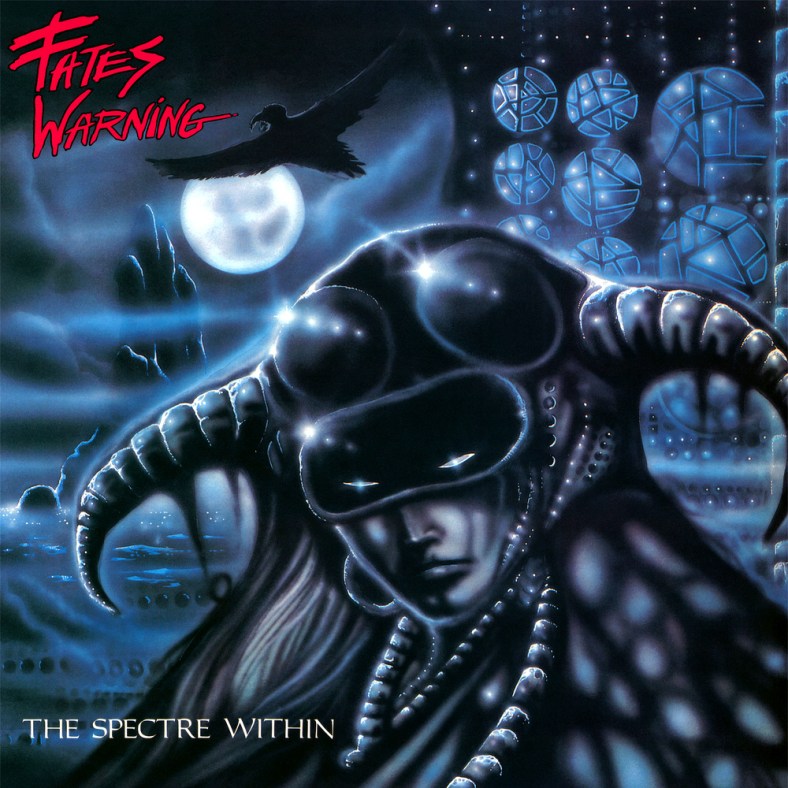
Fates Warning – The Spectre Within

The New Wave of British Heavy Metal was in full swing in the early 80s. Thanks to bands such as Iron Maiden and Judas Priest (amongst others), heavy metal was taking hold, becoming a pretty big deal, and many bands were following in the footsteps of those greats.

One of those bands was Fates Warning, from Connecticut. Their first album, Night on Brocken dropped in 1984, with a distinct sense of Iron Maiden worship.

However, a closer listen revealed some tendencies to more progressive music. Shades of bands such as Rush were creeping into the NWOBHM sound that Fates was building their sound on. Enter their second album in 1985, The Spectre Within, and I don’t think it would be unfair to say that progressive metal was born.

Taking the metal sound of Night on Brocken and adding different time signatures, allowing the music to really be more dynamic and variable, and in retrospect, ground was being broken. Fates Warning is anchored by the guitar playing of Jim Matheos, and on The Spectre Within we see him upping his game considerably. Songs like “Orphan Gypsy” still are built on that fast, metal riffing. But it is also willing to slow things down, add some variation with the choruses. “Pirates of the Underground” is one of my favorites. Starting with a rapid gallop, it slows things down when the first verse hits, only to end by speeding up again, with one of my favorite endings in metal.

And that is a theme really seen on The Spectre Within. Few, if any, of the songs are predictable, or go where you initially expect. Yet what also makes this album so strong is how none of these transitions feel abrupt or out of place. There is a definite flow to the album, despite the changing time signatures and tempos throughout.

Songs like “The Apparition” are legitimate prog masterpieces. Final track, “Epitaph” is 12 minutes of excellence that really shows where the band would go on subsequent tracks like “Exodus” and “The Ivory Gate of Dreams”.

It is impossible to talk about the first three Fates Warning albums without spending some time on the vocals of John Arch.

Let me start by saying that, it took me a bit to really get into his voice. Given that Ray Alder was my introduction to Fates Warning, John Arch was something completely different. I’ve read that Tony Iommi said that Ozzy sang with the melody, but Dio sang across the melody. That is a good way to describe John Arch as well. His vocal melodies are some of the most interesting in metal. He has a high tenor, and isn’t afraid to use it. But what I love the most is just how dynamic his vocal lines are. This man can sing, and amazingly still can today. Because his vocal melodies are much more unique and dynamic than usual for this type of music, it takes a bit for them to click. But once they do, I’ll fight anyone who has bad things to say about John Arch. It’s that simple.

The Spectre Within is an essential album, as it really is the birth of prog metal. It holds up excellently today and is a dynamic, vibrant musical expression of a band that continues to shape progressive music to this day.

Altars of Grief – Iris

I’m not sure I’m really able to do this album justice.

How’s that for a start? Iris by Canada’s Altars of Grief is a staggeringly powerful album, that draws me back regularly. It is a harrowing journey, emotionally wrenching, and leaves me feeling wrung out when the final notes fade.

So powerful is this record, I regret my deep desire to go back and listen to it again.

Art is difficult to define. For me, a key factor is purpose. I don’t know what the authorial purpose of Iris is, but I’ll be damned if it doesn’t have one, and a powerful one at that. If nothing else, this is music that forces me to reflect on life, on my place in the world, on the impact others have had on me, and the small impact I may have on those that surround me.

I realize this is all sort of vague and nebulous. I’ll try to be a little more concrete. Altars of Grief play a blackened style of doom metal. There are blast beats, tremolo picking, harsh vocals, and vicious riffs. Yet, they are also so much more. We have moments of beautiful melody, quiet contemplation, and tenuous peace.

The clean vocals are excellent. At times very reminiscent of the late David Gold, from Woods of Ypres, at others, they are more soaring and melodious. The contrapuntal harsh vocals run the gamut. We have blackened shrieks, hardcore screams, and even some low, bone shaking death growls. The vocals are used to perfect effect, clean when the song calls for it, harsh when necessary. The guitars follow the same pattern. There are extremely heavy and crushing passages, that often move deftly into crystalline moments of tranquility. Keys and organs punctuate the guitars, never one overwhelming the other.

In many ways, Woods of Ypres is an excellent starting reference point for Iris. Yet this never feels derivative. Many of the same hallmarks are present, but Altars of Grief owns these moments so thoroughly that they become theirs.

Iris tells a story. A story of loss, grief, addiction, abandonment, and death. I’ll leave it to the individual to seek out the specifics. It is sufficient to say that this is a dark record. It doesn’t leave one feeling hopeful, but it does end with a certain sense of peace. And with music this powerful, and a subject matter this dark, peace is about the best one could hope for.

I really do find myself struggling somewhat with what to say about Iris. Musically, it is an amazing record, full of heavy blackened moments, slow, plodding doom moments, and plenty of beautiful, quiet passages. Lyrically, well, I’ve touched on that enough. As a father, it is a harrowing album. Emotionally, this albums devastates me. It is such a complete experience, and so stunningly cathartic, that when final strings fade, I can’t help but feel as though I’ve been through the wringer. This is proof positive that music has power and emotional weight. Iris, while not for the faint of heart, is an amazingly powerful, beautiful, and emotional experience, from first note to last.

Bell Witch – Mirror Reaper

Doom metal. It is epic, often majestic, heavy in the ponderous sense of the word It tends to be on the slower side, often with powerful, soaring vocals. Birthed in the roots of Black Sabbath, and honed to a real edge with the release of Candlemass’ essential Epica Doomica Metalicus, it is one of my very favorite sub-genres of metal.

And then there is funeral doom.

Funeral doom is a different beast all together. True, it is still rooted in doom metal, and shares many of the same hallmarks. It also borrows from doom/death. It then fuses these elements into one of the most punishing, extreme, esoteric, and inaccessible styles of music out there.

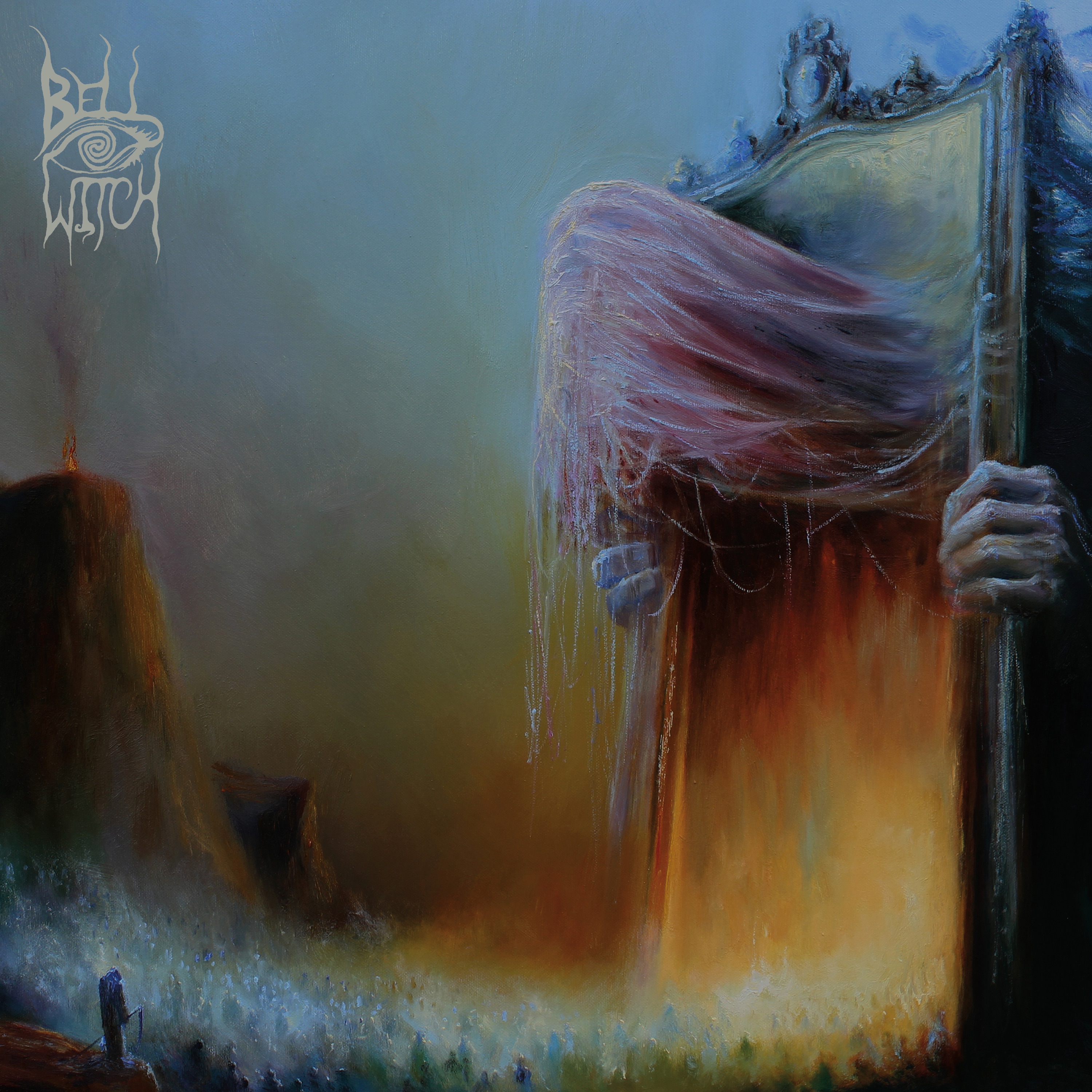
Take Mirror Reaper by Bell Witch. First off, look at that artwork. No, really. Look at it. It is beautiful. But it is also haunting, menacing, and creepy as hell. Then look at the song list. It consists of “Mirror Reaper”, and… well, that’s it. Yes, the album Mirror Reaper has a single song, the track titled “Mirror Reaper”. And then look at the run time for the album. It is 83 minutes and 15 seconds.

Add that all up and, in my experience, there are basically two reactions. On the one hand, I have seen almost revulsion, and instant reaction of “no way!” It is too much, too long, too ponderous. I get that. But on the other hand, it can also lead to fascination.

That’s what happened to me. I wasn’t familiar with the band prior to the 2017 release of Mirror Reaper, but I was instantly intrigued and decided I had to know more. Context is often king, and in this case that holds very true. Bell Witch is a 2 person band, just bass, drums, and vocals. And after the 2015 release of Four Phantoms, the drummer Adrian Guerra, passed away. The band carried on, with Jesse Shreibman joining bassist Dylan Desmond to continue the band. Mirror Reaper acts as a tribute to their lost brother, and that sense of loss permeates every minute of this epic.

The music is very stripped down. It is ponderously slow, with haunting clean vocals, and low, guttural growls that shake the roots of the earth. The drums plod, slowly building over the course of the song. Often the music builds, slowly, only to be stripped back down to a single, sustained note. The bass alternates between clean and clear, to heavily distorted and grinding.

Yet Bell Witch expertly prevents the music from every becoming too, well, too anything. It could be slower, but it doesn’t. It could get much, much heavier, but it restrains. Just when you think it is going to be too much of the same thing, and become boring, it will switch it up just enough to keep it interesting. For me, that is really what makes this such a fascinating album. It is too much, really, I recognize it is. But it balances all of its excess with such a level of care, concern, and skill that it is a haunting work I find myself drawn back to time and again.

https://youtu.be/10q1ZJyLXFk

Mammoth Storm – Alruna

Heavy. What does it mean when discussing music? It is a nebulous term at best. For some, it is hyper-fast, aggressive, with harsh vocals. For others, it is down-tuned 8 string guitars with sick breakdowns. Yet others may think of slow, ponderous tunes.

And you know what? They are all right.

That’s part of what is fun about heavy music. There is a type of “heavy” for almost every mood. Some days, I’m looking for “Underneath the Waves” but Strapping Young Lad. Other days it’s “Rational Gaze” by Meshuggah. But when I really want heavy-as-a-two-ton-heavy-thing, can’t breathe it’s so heavy, being suffocated at the floor of the ocean, I turn to Mammoth Storm.

I became familiar with Mammoth Storm in 2015 with the release of their first full-length, Fornjot. And, finally, this year, they followed up with their second release, Alruna. And both are mammoth (pun intended) slabs of doom. Alruna is replete with low, chugging guitars, with a powerful rumble in the rhythm section. Vocals are clean, but with a raspy quality. And this stuff is slow.

Now, not quite funeral doom slow. I mean, we’re talking about more than 2-4 bpm here. But, unlike some doom metal (some Candlemass songs, some Khemmis tunes, to name a few), Mammoth Storm doesn’t ever speed things up. And the effect is profound. This is the soundtrack for the bottom of the ocean. This is the music of gravity slowly increasing, pulling you with more and more force to the ground. This is crushing music. But the slow crush of gradually being pressed to death, not the sudden crush of something along the lines of Misery Index.

And the guitar tone! I could go on and on about the guitar tone. It is full, rich, with a distortion that just screams “DOOM”. It builds the atmosphere of each song. At times, pulled back, other times, full throated and burly. This is the sound of guitars that know that music has power, that it can move people. This is the sound of guitars that know music can change the world. I don’t know exactly how they get this tone, but it is marvelous and I find myself wanting more.

Alruna is a great album. The songs are lengthy, given room to grow and build, without ever overstaying their welcome. The production fits the music excellently. It is clear enough to hear what is happening, but has just a little layer of grit over the top that helps with the sense of heaviness. I still prefer Fornjot over Alruna, but more Mammoth Storm is always a good thing, and I’ll gladly take what I can get.