Zero Hour – Dark Deceiver

Let’s just get right to the point. Dark Deceiver by Zero Hour is some crazy stuff.

And for some reason, in 2008, I was really, really in the mood for crazy. I was familiar with some of the band’s previous work. Their opus Specs of Pictures Burnt Beyond was an album I had tried to enjoy given the praise it had received in the progressive online media. Yet true enjoyment of that album had eluded me for a couple of years (though it now boasts two of my all-time favorite songs). Something about Specs just left me feeling a little cold.

Enter Dark Deceiver, the fifth and final album from Zero Hour. Here was an album that was darker, heavier, faster, and really more all over the place than the band’s previous work. Zero Hour played a style of technically challenging progressive metal. Powerful vocals, thundering and stunning bass work, with drumming to match, and some really great fretwork.

Dark Deceiver took all of that and turned it up to 11. The bass playing here is just insane, and the drumming keeps up. Chris Salinas has a powerful voice that is a bit of a mix of Geoff Tate (he’s a douche these days, but man that guy had an amazing voice), Warrel Dane (RIP), and even some glimpses of Ray Alder, while always still sounding like his own singer. He demonstrates a true power here, with a strong range, and the ability to punch through the technical music.

And the songs here are just top notch. They take some time to get into, honestly. Part of this is the technical nature. The time signatures vary dramatically, and some of the songs never really get into a groove. Often that will put me off, but here it works. There are moments of really beautiful and emotional music to be found amidst the aggression and technical playing, as well as some just punishingly heavy riffs.

For me though, once I started to really get into these songs, particularly some of the shorter tracks, everything else started to click into place for me. I really couldn’t stop listening to Dark Deciever, and still find myself drawn to it today. Next thing I knew, this was all I was listening to, and suddenly the band’s previous work opened up to me and I was hooked. I fell in love with their style of aggressive, progressive metal.

Sadly, Zero Hour is no longer with us, though the Tipton brothers continue to release great music (check out the two albums from Cynthesis for some more amazing, powerful, but much less technical prog). Gone though, these guys are not forgotten and I strongly recommend checking out their albums. And Dark Deceiver is a great place to jump in.
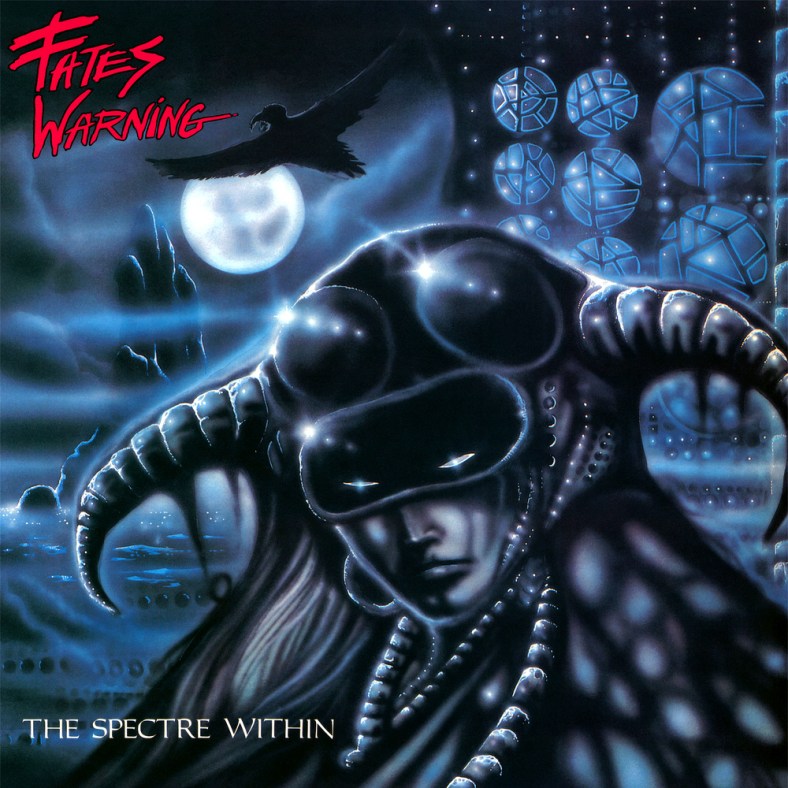
Fates Warning – The Spectre Within

The New Wave of British Heavy Metal was in full swing in the early 80s. Thanks to bands such as Iron Maiden and Judas Priest (amongst others), heavy metal was taking hold, becoming a pretty big deal, and many bands were following in the footsteps of those greats.

One of those bands was Fates Warning, from Connecticut. Their first album, Night on Brocken dropped in 1984, with a distinct sense of Iron Maiden worship.

However, a closer listen revealed some tendencies to more progressive music. Shades of bands such as Rush were creeping into the NWOBHM sound that Fates was building their sound on. Enter their second album in 1985, The Spectre Within, and I don’t think it would be unfair to say that progressive metal was born.

Taking the metal sound of Night on Brocken and adding different time signatures, allowing the music to really be more dynamic and variable, and in retrospect, ground was being broken. Fates Warning is anchored by the guitar playing of Jim Matheos, and on The Spectre Within we see him upping his game considerably. Songs like “Orphan Gypsy” still are built on that fast, metal riffing. But it is also willing to slow things down, add some variation with the choruses. “Pirates of the Underground” is one of my favorites. Starting with a rapid gallop, it slows things down when the first verse hits, only to end by speeding up again, with one of my favorite endings in metal.

And that is a theme really seen on The Spectre Within. Few, if any, of the songs are predictable, or go where you initially expect. Yet what also makes this album so strong is how none of these transitions feel abrupt or out of place. There is a definite flow to the album, despite the changing time signatures and tempos throughout.

Songs like “The Apparition” are legitimate prog masterpieces. Final track, “Epitaph” is 12 minutes of excellence that really shows where the band would go on subsequent tracks like “Exodus” and “The Ivory Gate of Dreams”.

It is impossible to talk about the first three Fates Warning albums without spending some time on the vocals of John Arch.

Let me start by saying that, it took me a bit to really get into his voice. Given that Ray Alder was my introduction to Fates Warning, John Arch was something completely different. I’ve read that Tony Iommi said that Ozzy sang with the melody, but Dio sang across the melody. That is a good way to describe John Arch as well. His vocal melodies are some of the most interesting in metal. He has a high tenor, and isn’t afraid to use it. But what I love the most is just how dynamic his vocal lines are. This man can sing, and amazingly still can today. Because his vocal melodies are much more unique and dynamic than usual for this type of music, it takes a bit for them to click. But once they do, I’ll fight anyone who has bad things to say about John Arch. It’s that simple.

The Spectre Within is an essential album, as it really is the birth of prog metal. It holds up excellently today and is a dynamic, vibrant musical expression of a band that continues to shape progressive music to this day.