Tool – Fear Inoculum

So far, all I’ve pretty much done is write about albums I like. And, well, that is fine to me. This isn’t a blog for reviews. I’ll leave that to others. Again, these are my reactions to music. And sometimes, that reaction is apathy.

So, with a heavy heart, I state that, in my opinion, Fear Inoculum by Tool is just fine.

And I’m neither surprised nor really disappointed. I mean, I thought that their previous album, released 13 FREAKING YEARS AGO, 10,000 Days was just fine as well. There were a few good tracks, and some filler crap, and a handful of songs that just bored me before they ever wrapped up.

Look, I won’t claim to be the most die-hard Tool fan ever. I like their previous music, and even would say that I think Lateralus is a brilliant album. But I don’t love it either. There are excellent tracks on it, but overall, it leaves me feeling a bit cold. Still, they are Tool, and I can’t deny the impact they have had on modern rock/metal.

Of course, that meant that their first album in over a decade was sure to create a bit of a stir.

Then the title track, “Fear Inoculum” dropped. I preordered the album, because this was Tool after all. And I listened to that song. Then I listened again. Then one more time. Then I decided to spend my time listening to songs that were actually interesting. But I was still open to giving the rest of the album a fair shot. And so it was released.

And, much to my surprise, what I found was an album where the proper songs (forget the stupid “interludes”) followed a formula. Yes, formulaic songs from Tool. Long songs (around 10 minutes), with a mellow, slow, quiet intro. This slowly builds, adding more instruments, eventually the song reaches some type of crescendo. Maybe it backs off and builds again, or maybe the crescendo comes at the very end. Either way, about halfway through the album and I was bored.

Yes, bored. Big time.

Here’s the thing. I dig progressive music, so nothing Tool is doing on the album wowed me in that regard. I have more than enough patience for long songs, if they do something interesting (Mirror Reaper anyone?), so it wasn’t that the songs were longer than your average tune. They just felt boring. Yes, we have crescendos and denouements, but I just kept waiting for the songs to reach a bit higher of a crescendo, so was left wanting more. And even formulaic music can be well appreciated. Take Cult of Luna. They have a certain formula, and it works. But they still mix it up enough that the songs feel different and fresh. Instead, the formula on Fear Inoculum makes each song sound almost generic.

They playing is fine. These guys are excellent musicians. But the album just never hits with the impact I was hoping for. It isn’t bad. None of the songs (again, ignoring the stupid interludes) are atrocious. They just all start to blend together as far as I am concerned, and nothing has made me want to come back to Fear Inoculum in the months since it has been released. They feel cold and clinical, surprising since older Tool had so damn much emotion, even if that emotion was often anger.

Others will disagree, and adamantly so. Tool has a somewhat rabid and, at times, myopic fan base who think that everything Tool does is the best and most original (despite the fact that many bands do and have done the same sort of thing and in many cases do it better). And that is fine. I won’t take issue with anyone who loves Fear Inoculum as, again, it isn’t a bad album by any stretch of the imagination.

It’s just sort of fine and a bit boring and forgettable. And if that isn’t damning with faint praise, I don’t know what is.

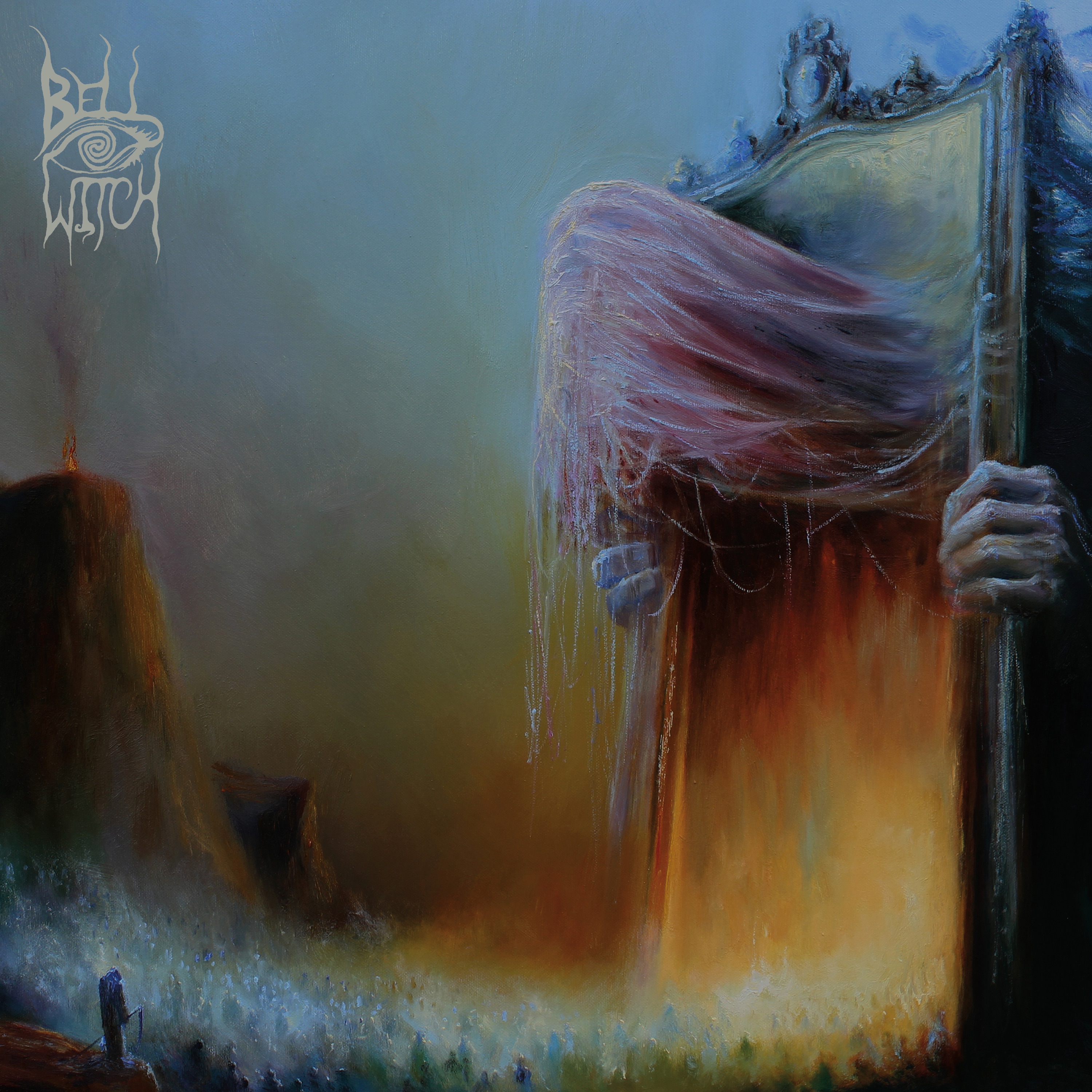
Bell Witch – Mirror Reaper

Doom metal. It is epic, often majestic, heavy in the ponderous sense of the word It tends to be on the slower side, often with powerful, soaring vocals. Birthed in the roots of Black Sabbath, and honed to a real edge with the release of Candlemass’ essential Epica Doomica Metalicus, it is one of my very favorite sub-genres of metal.

And then there is funeral doom.

Funeral doom is a different beast all together. True, it is still rooted in doom metal, and shares many of the same hallmarks. It also borrows from doom/death. It then fuses these elements into one of the most punishing, extreme, esoteric, and inaccessible styles of music out there.

Take Mirror Reaper by Bell Witch. First off, look at that artwork. No, really. Look at it. It is beautiful. But it is also haunting, menacing, and creepy as hell. Then look at the song list. It consists of “Mirror Reaper”, and… well, that’s it. Yes, the album Mirror Reaper has a single song, the track titled “Mirror Reaper”. And then look at the run time for the album. It is 83 minutes and 15 seconds.

Add that all up and, in my experience, there are basically two reactions. On the one hand, I have seen almost revulsion, and instant reaction of “no way!” It is too much, too long, too ponderous. I get that. But on the other hand, it can also lead to fascination.

That’s what happened to me. I wasn’t familiar with the band prior to the 2017 release of Mirror Reaper, but I was instantly intrigued and decided I had to know more. Context is often king, and in this case that holds very true. Bell Witch is a 2 person band, just bass, drums, and vocals. And after the 2015 release of Four Phantoms, the drummer Adrian Guerra, passed away. The band carried on, with Jesse Shreibman joining bassist Dylan Desmond to continue the band. Mirror Reaper acts as a tribute to their lost brother, and that sense of loss permeates every minute of this epic.

The music is very stripped down. It is ponderously slow, with haunting clean vocals, and low, guttural growls that shake the roots of the earth. The drums plod, slowly building over the course of the song. Often the music builds, slowly, only to be stripped back down to a single, sustained note. The bass alternates between clean and clear, to heavily distorted and grinding.

Yet Bell Witch expertly prevents the music from every becoming too, well, too anything. It could be slower, but it doesn’t. It could get much, much heavier, but it restrains. Just when you think it is going to be too much of the same thing, and become boring, it will switch it up just enough to keep it interesting. For me, that is really what makes this such a fascinating album. It is too much, really, I recognize it is. But it balances all of its excess with such a level of care, concern, and skill that it is a haunting work I find myself drawn back to time and again.

https://youtu.be/10q1ZJyLXFk

Allegaeon – Apoptosis

Three years ago I had a video recommended for me on Facebook. It was of a cover of the Rush classic “Subdivisions” but a band named Allegaeon. I’d never heard of them before, but it was a Rush cover, and a great song to boot. So I decided to check it out.

What I heard was a faithful cover, but not a copy, that sounded excellent. Suddenly I was intrigued. Who was this band? Apparently this single was being released in anticipation of an upcoming album. The title of the album was Proponent for Sentience. Ok, that’s cool too. A little more digging and I find out these guys are apparently a death metal band. So, now we have a death metal band covering Rush, and releasing an album about artificial intelligence. And then there was the back catalog. Songs like “Dyson Sphere”, “1.618” (that would be the numerical approximation of the golden ratio), and “The God Particle” demonstrated that these guys were also firmly rooted in and writing songs about science.

That freaking rules.

And I really fell in love with the band and their music. Seeing them live on the Proponent tour reinforced that they are amazing musicians, and super chill dudes. So I was all on board for their 2019 release Apoptosis (another scientific term).

What we have, then, is another slab of technical, progressive death metal, with scientific themes. If that doesn’t make this album stand out a bit, I just don’t know what will. The playing is excellent, as always. The songs are intricate, heavy, and progressive. But most importantly, and one of the thing that sets these guys apart from so much other “tech death” is the fact that they really focus on melody.

All of the songs are just that, songs. These aren’t just collections of riffs played as rapidly and ferociously as possible. Riley, the lead singer, can growl with the best of them, but also has a really nice, clean vocal when the song calls for it. Moments of classical, acoustic guitar are peppered throughout (with an entire interlude type track consisting of just that). These songs are musical. Still, the playing is extremely technical, but it doesn’t feel mechanical, automated. This is music written by and played by people who understand and love music.

I love me some tech death. But other times, you really want songs that center around melodies. And that is what sets Allegaeon apart for me. Overall, I do think I prefer Proponent for Sentience over Apoptosis. But that also could be due to the fact I’ve been jamming to Proponent for the past three years, and only have a few months with Apoptosis. Again, saw these guys live on this tour and the brought it. They play with energy, passion, and a love for the music. It translates through in the music. While still relatively young, their first EP dropped in 2008, Allegaeon have become one of my favorite bands, and Apoptosis is a worthy entry in their oeuvre.

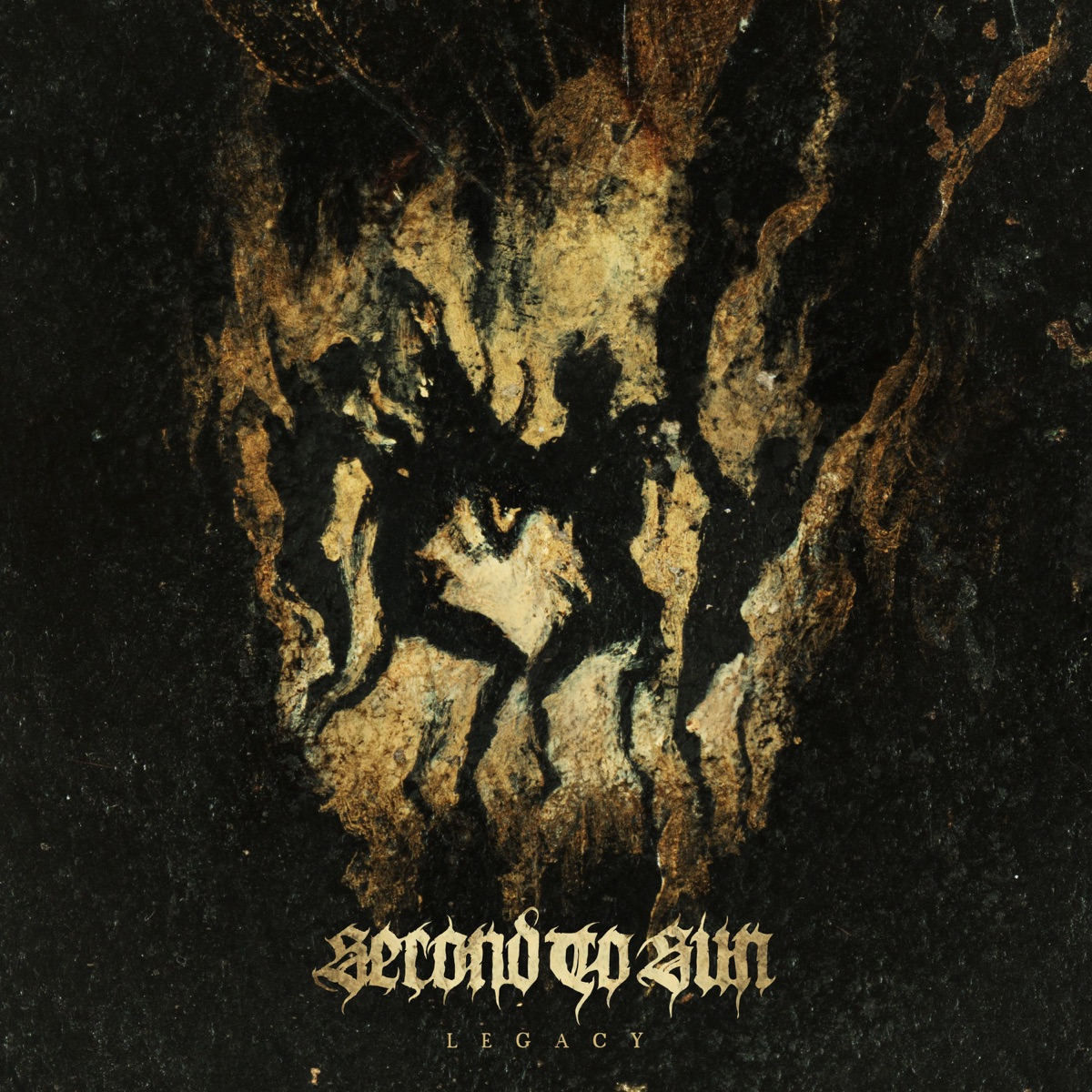
Second to Sun – Legacy

This is a bit of a mix-up today. I hadn’t originally planned to write about this album. In the list of 30 albums for the 30 days of November, this wasn’t on the list, simply because it hadn’t been released yet. But now it has been released, and I simply must write about it.

Second to Sun hail from Russia, and their music is deeply rooted in their country. Songs often take themes from Russian history of folk-lore, and just as often, incorporate sounds that strengthen that tie. And they have been incredibly prolific over the years. Starting out as an instrumental band, they have added lyrics and vocals over the years, broadening their sound. But they still hold close to their instrumental roots, as all of their past few albums have had both an instrumental and a vocal release. Most interestingly, they are such excellent writers, that the two versions feel like separate, wholly realized compositions, not just one version with the vocals stripped away.

Deeply rooted in black metal, but playing around with a host of other elements, including some death metal, so groove based riffs and passages, and always willing to allow the music to progress, Legacy is no different.

Let me just start off by saying, this album freaking rules. I’ve been listening to it almost nonstop for the past 3 days, and it is infectious, addictive, and has a real shot at being in the top 10 list of the year for me. I won’t bore with a track by track discussion, but I will say that there isn’t a weak song here. Some are straight up bludgeoning tracks (opener “Devil” comes to mind). Others alternate, building tension with keyboards and orchestrations, giving the songs room to breath and become more than weapons (“Pages For A Manuscript” for example).

Calling the vocals harsh is like calling ghost peppers “spicy”. Talk about understatement. These vocals could strip the paint right off your deck and sand it at the same time. They are raw, powerful, and uncompromising. But they fit the music so well. This is music written by people who know what they want to do and how to use those tools to make it happen. Instrumentally, there are no drawbacks to be found. The music is frenetic, it is brutal, it is atmospheric, it is haunting.

Second to Sun don’t write music to relax to. This isn’t casual music. It is heavy, it is harsh, and I can imagine that it would be too much for people without some degree of comfort with heavy music. But it is also brilliantly written and performed, and an impressive demonstration of just how vital and important black metal has become as a sub-genre. Far from the church burning roots, Second to Sun clearly demonstrate on Legacy that black metal is simply a tool, and they are using to bring a haunting piece of Russia right into your ear-holes.

https://youtu.be/q9UGNaRbFz8

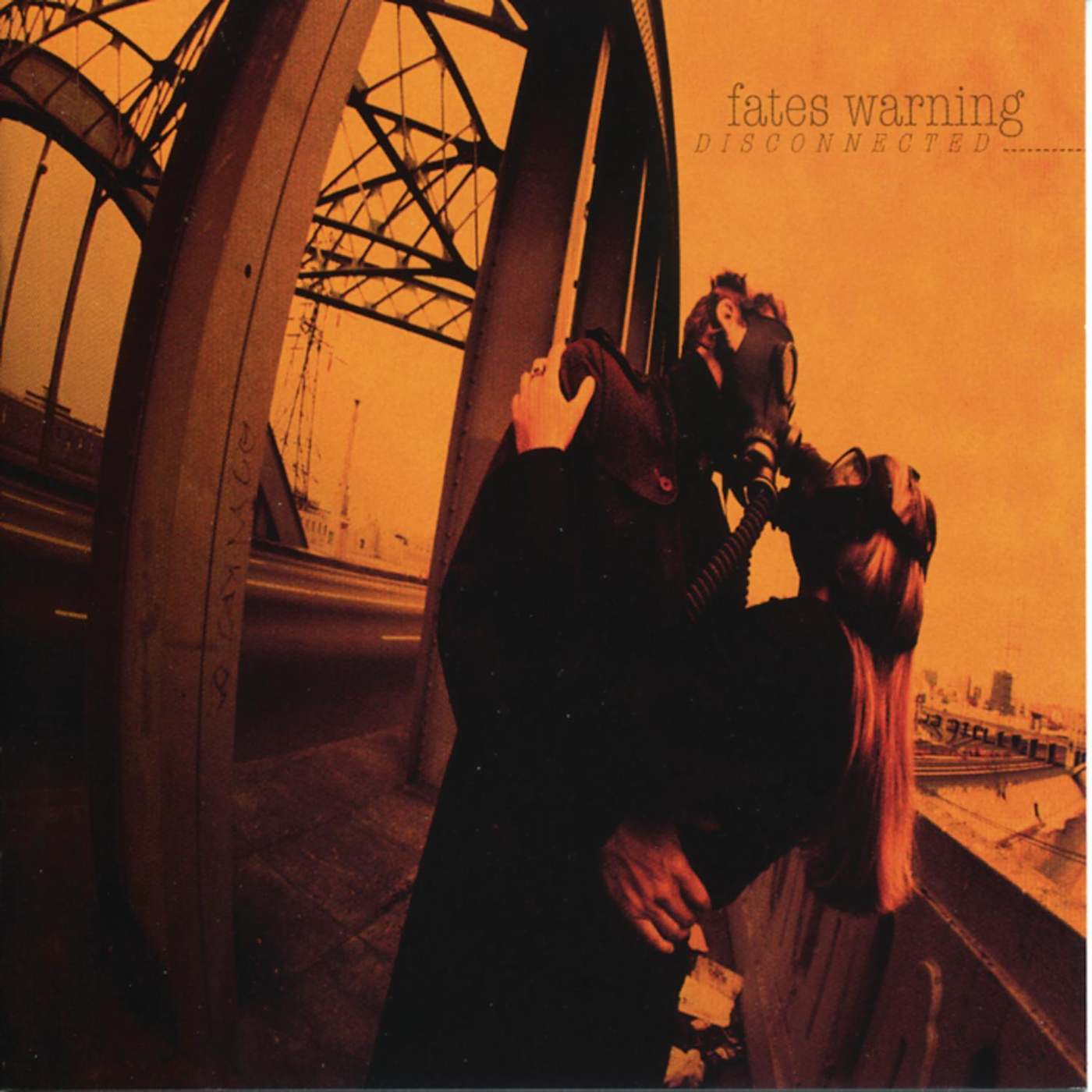
Fates Warning – Disconnected

It’s almost difficult for me to talk about Fates Warning. On the one hand, it is because they are, in my opinion, the single most underrated band in the history of metal. On the other, it is because they are very possibly my favorite band of all time. Depends on the day, but it’s a toss up between Fates and Neurosis.

But why are they my favorite? For two main reasons. Number one, because they write amazing music. And second, because they were such an essential band on my journey of really getting into and appreciating metal on the whole.

I’d heard the name, but it was many years before I actually started listening to them, so I was super late to the game. It was actually right around the release of Disconnected in 2000 that I finally got around to listening to the band. And that was probably the perfect album for me to start listening to them. It may not be their best album, but it probably is my favorite. We’ll leave John Arch’s amazing vocal melodies, and the idea that their 1986 album The Spectre Within really can be considered the birth of progressive metal for another day. But today, let’s just enjoy the mastery that is Disconnected.

There had been some band changes in recent years, but Disconnected was the second band with the same line up as on A Pleasant Shade of Gray. And what we have is a group that really seems to have come together, with a clear understanding of what they want to do and where they were going. Kevin Moore’s work, both on keys, but most importantly in creating an atmosphere are on full display here. And I will continue to argue that Jim Matheos has penned more brilliant songs than just about anyone in the business.

Disconnected really runs the gamut of what Fates Warning can bring to the table. There are atmospheric tracks, like “Disconnected Part 1” and “Part 2”. There are relatively straightforward rockers like “One” and “Pieces of Me”. And then you have the progressive epics. “Something from Nothing” slowly builds over the course of its 11 minutes. But the real star of the show here is “Still Remains”, a 16 minute progressive and emotional epic.

I love the complete lack of fear or need to hurry here. The song slowly builds for minutes before it finally hits its stride into what one would consider a proper song. And then it keeps building and morphing. Throughout all, the performances are stellar, and the emotion is palpable. Disconnected is an album about relationships, about loss, about human connections and how those impact our lives. And “Still Remains” is the ultimate track to convey all of this.

I really can’t find a flaw in this album. The performances are excellent. Jim Matheos, in addition to being an excellent guitarist, also has amazing guitar tone on this album. Immediately recognizable. Ray Alder’s vocals are as fantastic as always, powerful, clear, expressive. Mark Zonder always was one of the more interesting drummers in the business. Even the final track, “Disconnected Part 2”, is a necessary part of this album. It completes the album, really hitting home the sense of loss and sadness that permeates the album.

I love all Fates Warning albums. And they have some truly groundbreaking and essential ones. Disconnected may not be their very best, but I think it will always be my favorite, and is clearly one of my top 10 albums of all time.

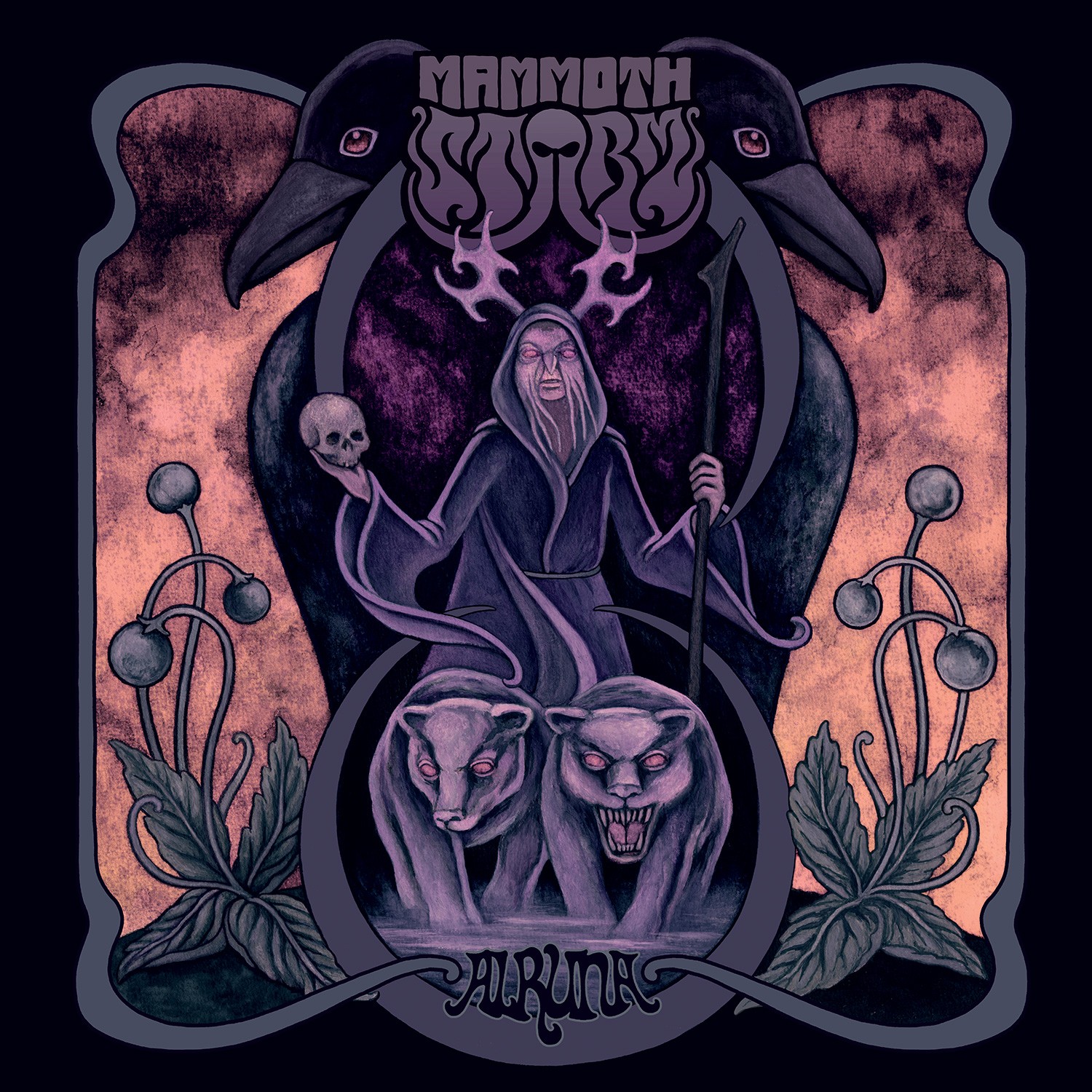
Mammoth Storm – Alruna

Heavy. What does it mean when discussing music? It is a nebulous term at best. For some, it is hyper-fast, aggressive, with harsh vocals. For others, it is down-tuned 8 string guitars with sick breakdowns. Yet others may think of slow, ponderous tunes.

And you know what? They are all right.

That’s part of what is fun about heavy music. There is a type of “heavy” for almost every mood. Some days, I’m looking for “Underneath the Waves” but Strapping Young Lad. Other days it’s “Rational Gaze” by Meshuggah. But when I really want heavy-as-a-two-ton-heavy-thing, can’t breathe it’s so heavy, being suffocated at the floor of the ocean, I turn to Mammoth Storm.

I became familiar with Mammoth Storm in 2015 with the release of their first full-length, Fornjot. And, finally, this year, they followed up with their second release, Alruna. And both are mammoth (pun intended) slabs of doom. Alruna is replete with low, chugging guitars, with a powerful rumble in the rhythm section. Vocals are clean, but with a raspy quality. And this stuff is slow.

Now, not quite funeral doom slow. I mean, we’re talking about more than 2-4 bpm here. But, unlike some doom metal (some Candlemass songs, some Khemmis tunes, to name a few), Mammoth Storm doesn’t ever speed things up. And the effect is profound. This is the soundtrack for the bottom of the ocean. This is the music of gravity slowly increasing, pulling you with more and more force to the ground. This is crushing music. But the slow crush of gradually being pressed to death, not the sudden crush of something along the lines of Misery Index.

And the guitar tone! I could go on and on about the guitar tone. It is full, rich, with a distortion that just screams “DOOM”. It builds the atmosphere of each song. At times, pulled back, other times, full throated and burly. This is the sound of guitars that know that music has power, that it can move people. This is the sound of guitars that know music can change the world. I don’t know exactly how they get this tone, but it is marvelous and I find myself wanting more.

Alruna is a great album. The songs are lengthy, given room to grow and build, without ever overstaying their welcome. The production fits the music excellently. It is clear enough to hear what is happening, but has just a little layer of grit over the top that helps with the sense of heaviness. I still prefer Fornjot over Alruna, but more Mammoth Storm is always a good thing, and I’ll gladly take what I can get.

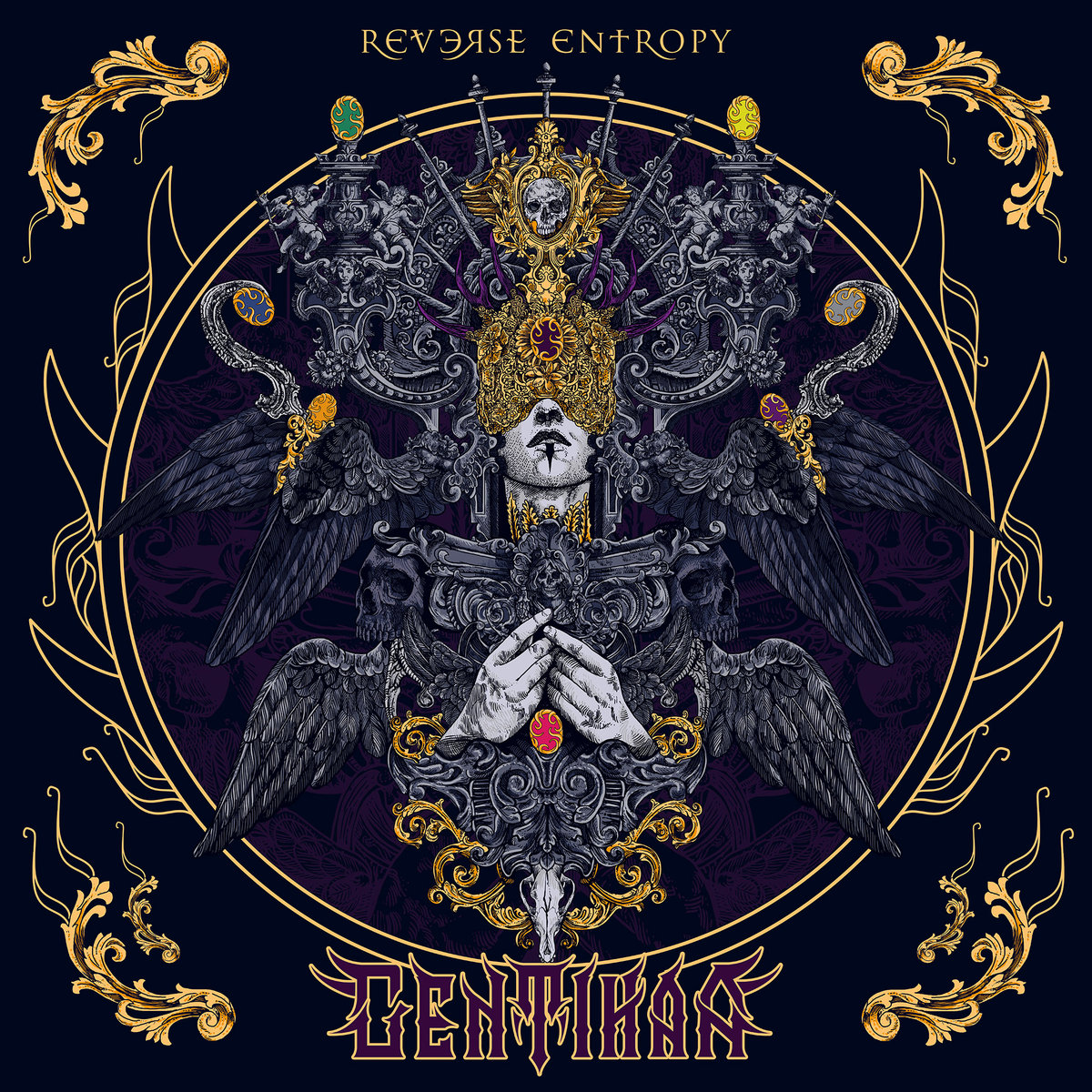
Gentihaa – Reverse Entropy

Years ago I fell in love with the first few albums from the band Pain of Salvation. I fell off hard with the release of BE, and honestly, never really got back on board with the band. But I always loved Daniel Gildenlow’s voice. It is powerful, extremely versatile, and one of my favorites. His ability to go from quiet, almost plaintive whispers to full on screams in short order not only impressed, but really got me hooked.

Interestingly, I just hadn’t realized how much I missed that. Enter Gentihaa, with their debut album Reverse Entropy. I discovered this gem thanks to the excellent write up over at Angrymetalguy.com. As a debut album from a Greek band, this was in no way on my radar at all. But the review was unique, entertaining, and sufficiently complementary that it piqued my interest. Even more, I was curious about the fact that Tom Englund, of the formidable Evergrey, had done guest vocals on 2 of the tracks.

Genrefication of music is a troublesome sport. It can be helpful, giving the listener some type of framework to anticipate the music. For example, if you tell me something is “technical death metal”, I have a decent idea of what I’m going to get. Well, AMG described Reverse Entropy as “power metal”. Yet the band describes themselves as “symphonic death/black metal”. Those are fairly differing genres right there my friend, yessiree. And then I started listening to the music. And I’d add in some “progressive metal” elements in there. So we have a real mashup of genres here.

And, well, it makes the music freaking rule!

To be fair, I just don’t see much of the “power metal” here. Sure, it is melodic, with some clean vocals and keyboards. But it entirely eschews any of the cheese and the keyboard theatrics that are so often associated with “power metal”. Rather, the vocals remind me more of the aforementioned Daniel Gildenlow than anything. They have many of the same qualities, particularly the versatility. The smoothly and effortlessly move from low whispers, gentle singing, almost death metal growls, and powerful screams. Add in the counterpoint of Tom Englund on two of the tracks, and you end up with one of the most interesting and engaging vocal records of the year.

But the rest of the band holds their own as well. The guitars have a wonderful, clean crunch to them. The drums are dynamic, with excellent fills and the oft-unheralded ability to move from double bass and blast beats to gentle drumming, as the songs demand.

Lyrically, it is apparently based on some piece of fiction on the internet. That sounds silly, and if they slavishly felt the need to tell this story, it would be beyond silly. Yet, exhibiting an almost uncommon restraint, the lyrics serve to build the overall dark atmosphere of the album, and don’t distract in any way. And dark this album is. It seethes with a sense of dread and menace. It keeps my just a tad on edge the entire time. I love that aspect, as it prevents it from ever falling into that cheese trap, the trap that so often can put me off from either power metal or even many progressive metal acts.

Again, I’d say this is more of a progressive metal album with some overtones of death metal. It doesn’t overstay its welcome, and I actually wished some of the songs were a bit more fleshed out. But it keeps itself engaging throughout the entire running time. Expectations can be both good and bad, as can lack of. In this case, a complete lack of expectations has led to Reverse Entropy to come out of nowhere and become one of my favorite albums of 2019.

Cloudkicker – Beacons

At some point (I’d like to think I’m not alone here), I started to dive down the djent rabbit hole. I don’t remember what started that dive, but I stumbled across one of three key albums. Not sure which came first, but it was probably either One by TesseracT or Periphery by Periphery. Something about the down tuned, palm muted, chugging sound got to me.

I’d heard Meshuggah, having listened to them since Nothing dropped years before. But for some reason, I hadn’t tied them to the whole djent thing. And, frankly, I still don’t. Meshuggah is Meshuggah. Honestly, they stand on their own.

As part of that dive into djent, I found a blog with a whole host of recommendations. And there, they mentioned Cloudkicker. A one man project, releasing music on Bandcamp, I promptly went and started checking out Ben’s music. There were a number of EPs, and one full length previously release. And then there was Beacons.

This is instrumental music. Some people have a hard time with instrumental music, for reasons that continue to evade me. I’ve pretty much always loved instrumental music, both with a love of classical music (Baroque music especially), but also because of my love of Rush growing up. Songs like “YYZ”, “La Villa Strangiato”, and others were some of my favorites. And now, here was more guitar driven instrumental music. I ate it up.

Disclaimer: I’m not sure that I would, personally, toss Cloudkicker into the djent camp, but I think that label is pretty stupid anyway.

Nonetheless, what we have on Beacons is guitar heavy, instrumental music, with loads of dynamics. Yes, there are heavy, chugging sections. But these are balanced by clear, non-distorted guitars, quite passages, and moments that build strong atmosphere. Beacons just flows, right from start to finish. It tells a story through the music and the titles. The beauty of instrumental music is that it affords each person to create their own story.

It is the flow of Beacons that creates such a powerful narrative. It feels less like a collection of songs, and really harkens back to the idea of a whole composition, with each song more of a movement. While there aren’t necessarily recurring motifs throughout the album, it still has a cohesive feel that permeates all the tracks. The playing is excellent, Ben is a wonderful guitarist. Much of the other instruments are programmed, but surprisingly don’t really feel like it. This really has to do with the strength of the writing and just how engaging it is.

I love pretty much all Cloudkicker albums. But Beacons stands apart. It is a powerful piece of music that still feels fresh, engaging, and powerful. It is an emotional journey, and an album I recommend to everyone without hesitation.

Lacuna Coil – Black Anima

I can’t really tell how it happened, but many years ago I happened to stumble across a couple of bands that mixed up my thoughts on heavy metal. Those two bands were After Forever and Lacuna Coil. And it was their powerful mix of soaring female lead vocals with harsh male vocals that had me thinking differently about heavy music.

Lacuna Coil dropped their album Comalies in 2003, and this was when I stumbled upon them. I was immediately intrigued, and actually made my wife, a classically trained vocalist, listen to Comalies almost non-stop in the car. She, almost begrudgingly, admitted that this was neat music. Next release, Karmacode also struck me, and I even had the opportunity to write about that album for the website Blogcritics.org.

Then something happened. The law of diminishing returns kicked in, and I just didn’t really find anything from Lacuna Coil that resonated with me. To be honest, I actually forgot all about them, until 2017 when I had the chance to see them live. I had gone to the show really for Insomnium and Epica. But Lacuna Coil surprised me, more than I expected. They sounded great live. There was an excellent energy, the music was heavy yet atmospheric, with these gothic overtones that helped drive the music home.

I left that show and promptly went and listened to the songs on the four albums I hadn’t previously heard. And, well, still didn’t find much to draw me in. Delirium had some hints of the previous X factor that had drawn me in, but it almost felt like it was reactionary, like the band was trying to prove how “goth” and “twisted” they could be. So the band fell off my radar again. 

Jump ahead to 2019, and behold my surprise when I saw not one, but two reviews for Black Anima on Angrymetalguy.com, my preferred blog/review site for music. I was so surprised because, well, Angry Metal Guy himself had given Black Crown Halo a 1/5 score, and decided to just completely skip Delirium. But there it was, the Friday morning of release, two reviews for Black Anima, and they were both actually really positive. To the point that the man himself was giving it a 4/5 and calling Black Anima the best Lacuna Coil album to date. 

I promptly took advantage of my Apple Music subscription and downloaded Black Anima and started listening while at work. And promptly stopped working. Opener “Anima Nera” was haunting, with Cristina Scabbia’s vocal taking on an almost childlike quality. But with a crazy-just-under-the-surface hint that intrigued yet also made me just a little uncomfortable. And then “Sword of Anger” drops, with a city leveling riff after some serious growls from Andrea Ferro, the male pair to Cristina’s clean vocals. 

From there, the album just doesn’t really let up. This is Lacuna Coil sounding heavier than they ever have. And most importantly, sounding more energized than they ever have. The songs have real power, with dynamics pushing and pulling, lulling down to quiet moments, only to then crescendo again. The production is the usual hyper clear modern production, but honestly serves the music well. I will admit that the album, particularly with the bonus tracks, does get a little long. It works better on a playlist mixed in with other songs. Yet there isn’t a single song I’ll skip, and with 14 tracks on the album, that is really saying something.

The songwriting needs to be recognized, as that ultimately is what elevates this above the previous Lacuna Coil albums. It is heavy, brooding, with a delicious gothic flair that helps it stand apart from the majority of heavy music that will reach similar levels of popularity as this. The star of the album, though, is Cristina Scabbia. Her vocals have never sounded this good. She is all over the place, going from kick-ass frontwoman one second to sounding barely south of crazy the next. The breadth of vocal styles she employs is really fascinating. I’ve always enjoyed her voice, but never found it to be as dynamic as it is on Black Anima. 

Black Anima is a triumph from a veteran band who hadn’t really interested me in many years. It’s been in constant rotation since it dropped, and I see myself coming back regularly.