Introducing Terrific Tuesday – Funeral Doom Edition

When I first fired up this blog I had a couple of ideas about what I wanted to do. Initially I was mostly basing it off other music blogs I frequent. The idea was, thus, to mostly do reviews and such.

It didn’t take long to realize that, while I am a pretty avid consumer of new music, there just isn’t something new coming out on a regular enough basis that I want to consume and write about that it was going to be a productive writing avenue. So I started thinking about other things, and thus my 30 albums in 30 days was born, followed by some other ideas. 

Then I got lazy, took over a year off from writing. This time around I decided that I wanted to have some sort of plan to what I write, and so I came up with ideas for specific days. Enter Terrific Tuesday (and a few other ideas such as New Music Monday). On Tuesdays (not promising every Tuesday, mind) it will be a chance to write about something I think is just that, terrific. Maybe an entire album, maybe a song, maybe something else. All that needs to happen is I think it is terrific. Let’s get this party started.

That’s right, we are talking Funeral Doom today. Funeral Doom is freaking terrific. At the same time, I will be the first to admit it absolutely is not for everyone. Funeral Doom takes the slower, heavier elements of Doom and turns them up to 11. No, actually, it turns them up to like 19. 

First off, this is slow music. Like really, really slow. It is ponderous, with songs easily in the double digits in terms of length (some even up to 30, 60 or even 80 minutes long for a single song). There is a huge hurdle to overcome in that regard. This isn’t music that works on a casual listen. It demands time, attention, and a significant investment from the listener. 

It is also heavy, in the most literal sense of the word. Funeral Doom is akin to having more and more weight added to your back, weighing you down minute after minute. Harsh vocals abound, often addressing equally weighty topics. Again, not for the casual listener. This isn’t feel good music. 

But it is cathartic. So, so cathartic. 

Some people get that. Others don’t, and that’s okay. But for those of us who appreciate the power of music to take us on mental and emotional journeys, Funeral Doom fits that bill. Sure, it may be like being run through a meat grinder. But coming out the other side, there has been some sort of release. For me it is often a huge release of tension or anxiety I have been holding in. Through the weight of the music, these elements are pressed right out of me. 

And the relief that can come in that catharsis is beautiful and often so welcome. And terrific. 
Bull Elephant – Bull Elephant

We’ve all heard the advice to “trust your gut”.

It is a time honored saying, and one I fully endorse. In my personal life, I honestly don’t remember a time a regretted trusting my gut. Perhaps that is some sort of memory bias at play. However, I can think of plenty of times I didn’t trust my gut, and regretted it immensely.

And this is in many aspects of life. Personal, professional, and even something as mundane as taking a chance on new music.

That brings us to debut album, Bull Elephant, from anonymous four piece from the UK, Bull Elephant. My gut didn’t just say “buy this album”. No, it said “buy this album this very second, including the art book, you fool, you fool!”

How’s that for a gut instinct? And what an instinct that was.

Disclaimer: I haven’t listened to this enough you to really feel like I can offer a definitive assessment, so this is more of an initial impression. But that impression is impressively positive.

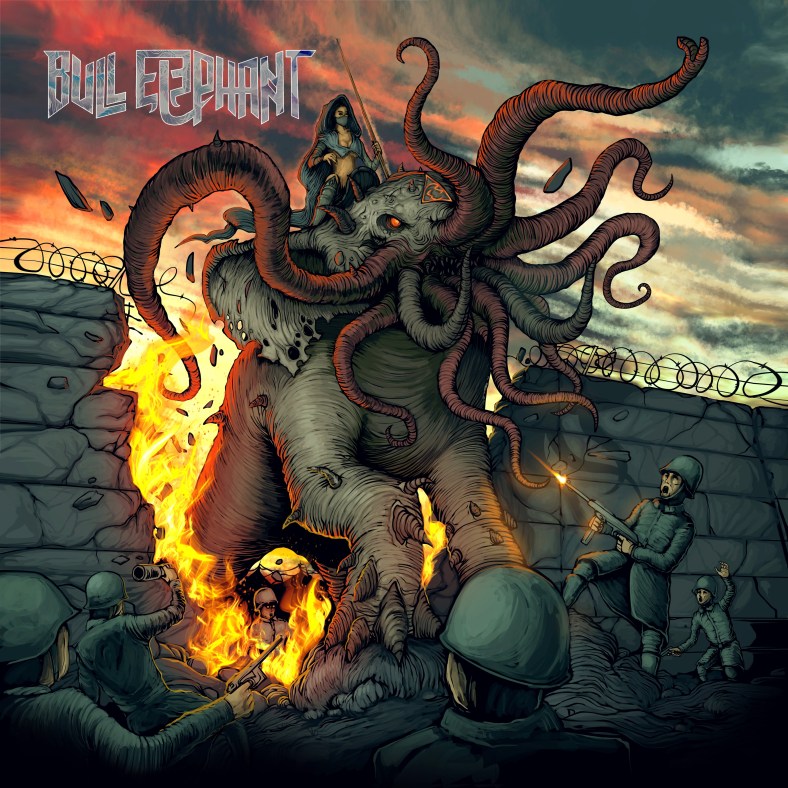
First off, why did my gut tell me so strongly to get this album? Well, there are two reasons. First, did you see that cover up there? I mean, did you really see it? A mix of WWII, mystic arts, and a huge war elephant/Lovecraftian horror hybrid. How metal is that? The answer is thus: all the metal. All of it.

And then there is this, the description from the band:

Bull Elephant is the story of a slain African elephant that occultist Ahnenerbe SS attempted to bring back from the dead as a new form of battle asset. However, before re-animation could be completed it was intercepted by a mysterious witch-shaman, pursuing her own agenda and redirecting the undead creature’s purpose.

Think of the background concept as Raiders of the Lost Ark set to a progressive doom soundtrack where Judeo-Christian mythology is replaced by the even more sinister universe hinted at in the writings of H. P. Lovecraft…. with Nazi assault wolves.

Once again, all the metal.

But fantastic artwork and a beautifully bonkers theme only get you so far. The music has to do the rest. Here, the music does so brilliantly. Bull Elephant are playing a bit of a genre salad here, with the base being a sludgy sort of doom. Layered on top of this are some elements of death metal and atmosphere that wouldn’t be out of place on a post-metal record. Vocals range from death growls to pleasant cleans. Songs are mostly in the mid to slow pace range, with some more propulsive moments.

So far, I love what I’ve been hearing. The guitar tone is heavy, with just enough fuzz to give it a little grime, that seems super appropriate given the theme. The drumming is crisp, with some nice little fills here and there, and never overwhelm, but provide a solid backdrop. Really, everything here has been clicking into place for me. Even though many of the songs are on the long side, and take their time moving from section to section, the album moves briskly, without ever feeling like there is a wasted moment. And just listen to the riff the kicks in “Dread Reactor”, final track. It is a delicious monster of a riff. These lads know what they are doing, and execute excellently.

A concept album with such a ridiculous premise has a very difficult job of not crumbling under the weight of its own ridiculousness. Bull Elephant pulls that off admirably, embracing the concept to the point that you can’t help but be pulled along. This album came out of nowhere and I can’t stop smiling while listening, or even thinking about listening. Cheers you crazy lads, cheers.

Oceans of Slumber – The Banished Heart

Loss is part of life.

We all will, or have, lost someone near and dear to us. The melange of emotions that accompanies such loss is a complex one. Grief, anger, despair, pain are all common. Mayhap there is also a sense of peace or relief, depending on the situation.

However, in every case, it is a confusing time for us all.

And loss doesn’t need to mean death. We’ve all experienced the loss of a friendship, a relationship that at some point was so fundamental to our existence, that the very thought of life without that person or relationship seemed impossible to fathom. Those can be some of the most painful losses, because that person is still there, still exists and occupies this same sphere of existence as we do, but the loss of that relationship taunts us incessantly, reminding us of what once was, but no longer is.

I first became familiar with Oceans of Slumber with the release of their 2016 sophomore LP, Winter. I subsequently discovered their debut, Aetherial and couldn’t have been more surprised at the difference between the two albums. It felt like these were completely different bands.

At least at first.

However, closer listens revealed many of the same hallmarks. Oceans of Slumber play a progressive style of metal, with overtones of melodic death metal, and a healthy slab of doom layered over it all. The emotional power of third full-length, The Banished Heart really drives home that doom aspect this time around.

Between their first album and subsequent EP, Blue, Oceans of Slumber had the fortune of adding Cammie Gilbert as lead vocalist. Her power, ability to convey emotion, and wonderfully soulful voice has become the real heart of Oceans of Slumber since that EP. It is the addition of her and her prodigious ability that has allowed the band to become a much more fascinating, engaging, and powerful band than on the debut.

Her talent is put into full force on The Banished Heart. Penned primarily by the drummer, the album chronicles the emotional journey of the birth of a daughter and a divorce from his wife. There is real emotion here. In a similar manner as Iris from Altars of Grief, this is a powerful and painful listen. This album hits hard, and rarely relents.

Lyrically, this cuts like a knife. Lines such as “You take from me for gain/You take my love in vain/And here we are the same as before”, sung with Cammie’s powerful voice are immediately followed by growl/screams “Could you believe/The other side of bliss is misery?”. These are powerful words. The final stance from first track, “The Decay of Disregard” establish this sense of loss and pain. “Did you even try to find me?/Did you even care for one last chance at reconciliation?/Do you know how long these veins have ran?/Remnant of red that stains your hands” gives a solid clue as to where this album will go.

Musically, it is powerful stuff. There are quiet moments of simple keys and vocals. There are driving moments of heavy guitars, double bass, and growls and screams. The performances are excellent all around. Tom Englund, ultimate melancholy and sad boy vocalist, even appears for a duet on “No Color, No Light”. Honestly, pairing him with Cammie Gilbert nearly breaks me. I’d have a hard time telling you which track leaves me feeling more drained, this one or “Becoming Intangible” from Iris. Both songs are supreme tours de force of emotional, cathartic, and melancholy misery.

And yet, there still exists some light at the end of this tunnel. It isn’t all darkness and sadness. There is a sense of, if not hope, at least peace to be found in the cover of folk song “Wayfaring Stranger”, as the album closes out. It won’t leave you feeling happy, pumped to go and take on the world. But The Banished Heart is a powerful expression of emotion, loss, and acceptance of some of the more difficult aspects of being human. This ability to reach inside the listener and lead to some emotional introspection is a mark of true art, and one I welcome.

But only every once in a while.

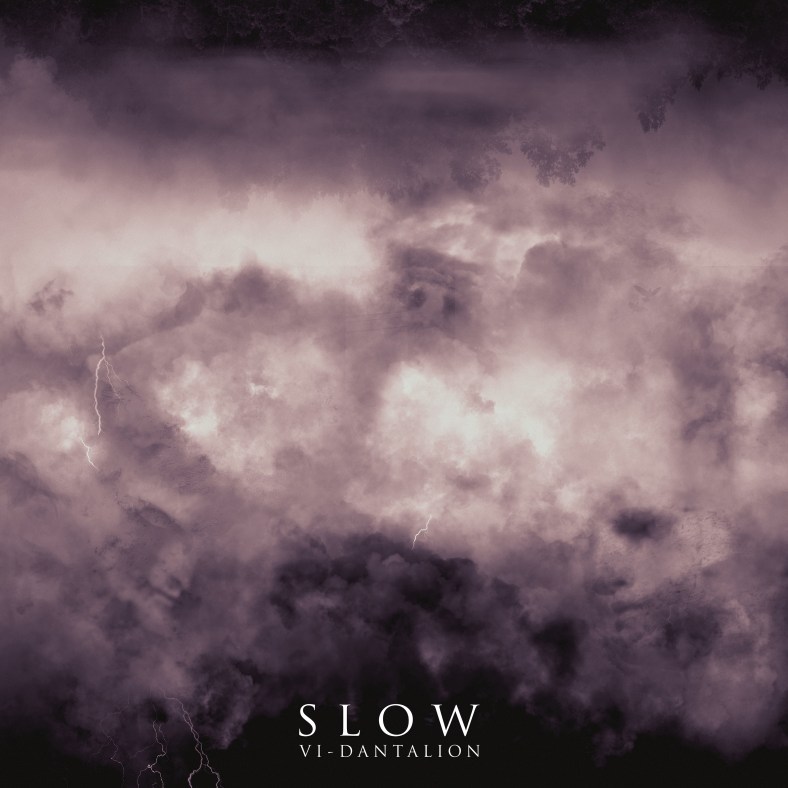
Slow – IV Dantalion

Years ago, my family and I went to Myrtle Beach in South Carolina. My oldest daughter and I, being the more adventurous and swimmerly of the crew (my youngest may be staking claim to that throne though), were out in the Atlantic, swimming and playing in the waves.

She had gone back to shore, and I was still out in the water. Shortly, I realized that I was actually getting further away from the shore. Yes, I was caught in a current and being pulled out to sea. As the saline waves cascaded over me, I had a brief moment when I truly thought that I might die. The ocean, so vast, so unfathomable, so uncaring for us mere mortals, had me in its relentless grasp, and cared not one whit about me or my plight. That inexorable current was all that mattered to me, I had to escape. Being honest with myself, at that moment, I felt a dread like none I have ever felt in my life.

I’ve been held up at gunpoint, I’ve been nearly plummeted off a steep washout with the river a hundred feet or more below me, I’ve been in biking accidents where I hit my head hard enough to lose consciousness. I’ve felt fear.

Yet never before, and never since, have I known dread as I knew it that day, in the clutches of the inhuman deep.

Slow, a two person band hailing from Belgium, must have felt similar dread at some point. The music of IV – Dantalion perfectly encapsulates that same sense of dread and helplessness I felt, embraced by the Atlantic.

Slow could not be more appropriately named. This is funeral doom at its finest. The music is incredibly slow, almost suffocatingly so. Songs march with an aptly funereal pace, feeling inevitable in their progression toward some sort of finality. And that finality is not going to be some happy occurrence. Seven tracks, with the album weighing in at a hefty 78 minutes, this isn’t a casual listen.

And yet I find it incredibly compelling. There is sadness here. There is loss, pain, fear. I think we all identify with those feelings. And while these may not be pleasant, the musical conveyance of said emotions carries with it a profound power. It allows us to process some of these feelings. It creates and atmosphere in which we can become introspective, looking inward and discovering a strength inside ourselves to overcome the vagaries that life will throw our way.

It is that cathartic ability I find so profound in the music of Slow. The guitars are heavy, crushingly so. The vocals, predominantly deep and throat ripping growls. The drums march out a sepulchral beat, relentless in their march. Yet layered over all this are beautiful keys and effects, almost sounding choral at times. When the music does increase in tempo, it is often simply in service of propelling one to the unavoidable conclusion.

Yet, buried in this doom, these moments of beauty and clarity serve to provide glimmers of hope. I don’t finish IV – Dantalion and feel like the hero has won, evil has been vanquished, and all is right in the world. But it doesn’t end feeling as though all is lost. Slow is music for realists. It is for those who know life can suck, but that we can fight back and make it through. This isn’t anthemic music to get you pumped to push on. But it reminds you that overcoming is part of the trial of life, and the ultimate goal for us all. We get kicked, we get beat, we are tired, fed up, worn out. But we persist.

In the end, Slow play music for those who are willing to be just as relentless as the ocean. And some days, relentless is the very best we can possibly be.

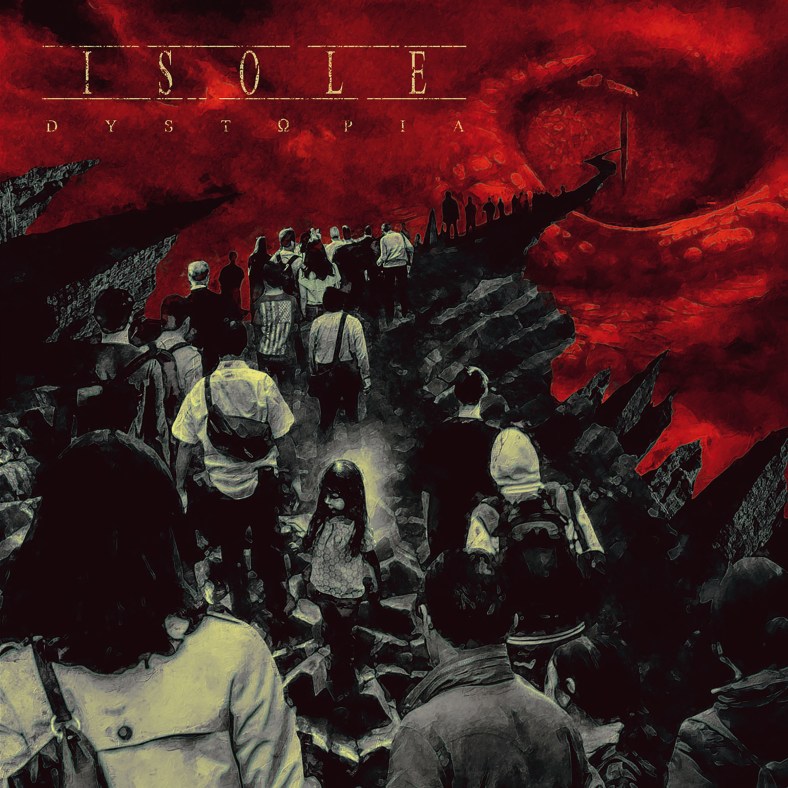
Isole – Dystopia

There is just something about doom metal that gets me. It gets so many things right, it pulls me in and keeps me wanting more and more. The first half of 2019 saw a relative dearth of great doom metal, and I kept waiting for my fix.

When I think of excellent doom metal, I am looking for heavy, heavy riffs, that still remain delightfully melodic. Vocals that are soaring, emotive, and powerful are a key. I want memorable choruses that you want to sing along with. And, of course, under it all should be a palpable melancholy, a sense of loss, sadness, of even despair. Come on, it’s called doom metal for a reason. This isn’t happy music.

The catharsis in a solid doom song is a wonderful thing. It can be incredibly therapeutic, and I find it even soothing at times.

Enter Isole, with their latest album Dystopia. I wasn’t familiar with the band prior to this August release. But Dystopia immediately made me a fan. I found everything I was hoping for.

The riffs are massive. They are powerful. They are heavy. Yet they still sing to you. They tell a story. They aren’t heavy just to be heavy. They propel the music and the emotion directly into that instinctive lizard brain. The guitars emote in a mournfully beautiful manner. Take personal favorite “You Went Away”. It starts with an ominous church bell and a grinding, low, brutal riff. Layered on top of this, though, is a mournful clean mini-solo. Nary a word has been sung, but this combination has already set up an epic feeling tale of sadness and loss.

Let’s not forget the vocals. Throughout the album, they shine through the music. Acting both as a focus of light, and an additional source of sadness and loss, they sweep along with the music, bringing the listener with. Scaling back at times, growing, and exploding at others, they provide the dynamics necessary to sweep the listener along in the flow of the music. There are even sparse and tasteful death growls. These are all the more effective due to their restraint. They masterfully convey darker emotions at just the right time.

Dystopia is a tight seven songs. Not a moment feels wasted or superfluous. This further enhances the impact of each and every song. I find myself coming back again and again.

What I love the most about music is it’s ability to be appreciate for a plethora of reasons. Some music I love because of the technical ability required to produce it. Other, because of its ability to excite and motivate me. The music I love the most is that which makes me feel.

Dystopia makes me feel. It communicates so many emotions and does so with so much skill and power. The music is as emotional as the vocals. The lyrics bring you along as well. This is doom at its finest, and exemplifies why doom is one of my very favorites.

Altars of Grief – Iris

I’m not sure I’m really able to do this album justice.

How’s that for a start? Iris by Canada’s Altars of Grief is a staggeringly powerful album, that draws me back regularly. It is a harrowing journey, emotionally wrenching, and leaves me feeling wrung out when the final notes fade.

So powerful is this record, I regret my deep desire to go back and listen to it again.

Art is difficult to define. For me, a key factor is purpose. I don’t know what the authorial purpose of Iris is, but I’ll be damned if it doesn’t have one, and a powerful one at that. If nothing else, this is music that forces me to reflect on life, on my place in the world, on the impact others have had on me, and the small impact I may have on those that surround me.

I realize this is all sort of vague and nebulous. I’ll try to be a little more concrete. Altars of Grief play a blackened style of doom metal. There are blast beats, tremolo picking, harsh vocals, and vicious riffs. Yet, they are also so much more. We have moments of beautiful melody, quiet contemplation, and tenuous peace.

The clean vocals are excellent. At times very reminiscent of the late David Gold, from Woods of Ypres, at others, they are more soaring and melodious. The contrapuntal harsh vocals run the gamut. We have blackened shrieks, hardcore screams, and even some low, bone shaking death growls. The vocals are used to perfect effect, clean when the song calls for it, harsh when necessary. The guitars follow the same pattern. There are extremely heavy and crushing passages, that often move deftly into crystalline moments of tranquility. Keys and organs punctuate the guitars, never one overwhelming the other.

In many ways, Woods of Ypres is an excellent starting reference point for Iris. Yet this never feels derivative. Many of the same hallmarks are present, but Altars of Grief owns these moments so thoroughly that they become theirs.

Iris tells a story. A story of loss, grief, addiction, abandonment, and death. I’ll leave it to the individual to seek out the specifics. It is sufficient to say that this is a dark record. It doesn’t leave one feeling hopeful, but it does end with a certain sense of peace. And with music this powerful, and a subject matter this dark, peace is about the best one could hope for.

I really do find myself struggling somewhat with what to say about Iris. Musically, it is an amazing record, full of heavy blackened moments, slow, plodding doom moments, and plenty of beautiful, quiet passages. Lyrically, well, I’ve touched on that enough. As a father, it is a harrowing album. Emotionally, this albums devastates me. It is such a complete experience, and so stunningly cathartic, that when final strings fade, I can’t help but feel as though I’ve been through the wringer. This is proof positive that music has power and emotional weight. Iris, while not for the faint of heart, is an amazingly powerful, beautiful, and emotional experience, from first note to last.

Bell Witch – Mirror Reaper

Doom metal. It is epic, often majestic, heavy in the ponderous sense of the word It tends to be on the slower side, often with powerful, soaring vocals. Birthed in the roots of Black Sabbath, and honed to a real edge with the release of Candlemass’ essential Epica Doomica Metalicus, it is one of my very favorite sub-genres of metal.

And then there is funeral doom.

Funeral doom is a different beast all together. True, it is still rooted in doom metal, and shares many of the same hallmarks. It also borrows from doom/death. It then fuses these elements into one of the most punishing, extreme, esoteric, and inaccessible styles of music out there.

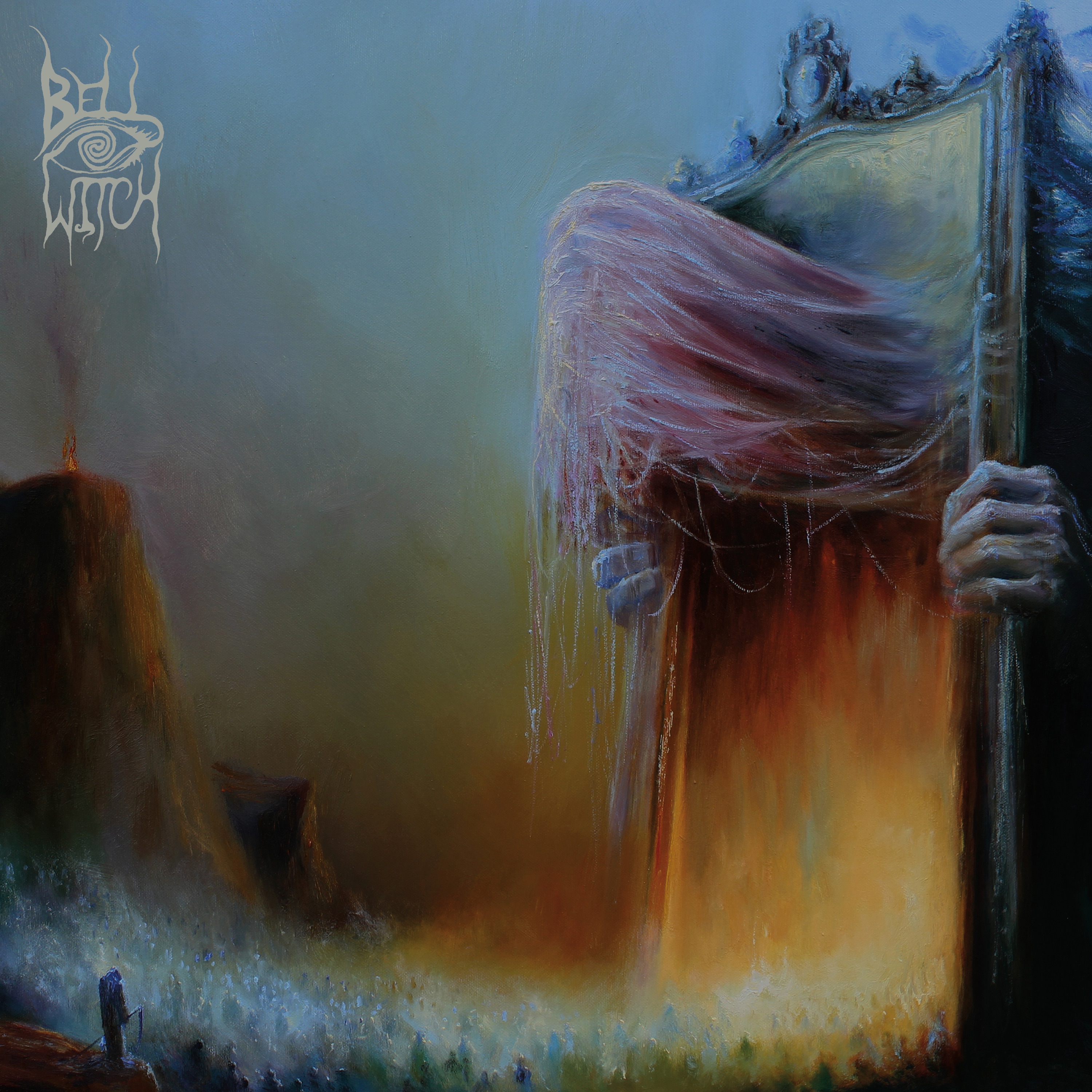
Take Mirror Reaper by Bell Witch. First off, look at that artwork. No, really. Look at it. It is beautiful. But it is also haunting, menacing, and creepy as hell. Then look at the song list. It consists of “Mirror Reaper”, and… well, that’s it. Yes, the album Mirror Reaper has a single song, the track titled “Mirror Reaper”. And then look at the run time for the album. It is 83 minutes and 15 seconds.

Add that all up and, in my experience, there are basically two reactions. On the one hand, I have seen almost revulsion, and instant reaction of “no way!” It is too much, too long, too ponderous. I get that. But on the other hand, it can also lead to fascination.

That’s what happened to me. I wasn’t familiar with the band prior to the 2017 release of Mirror Reaper, but I was instantly intrigued and decided I had to know more. Context is often king, and in this case that holds very true. Bell Witch is a 2 person band, just bass, drums, and vocals. And after the 2015 release of Four Phantoms, the drummer Adrian Guerra, passed away. The band carried on, with Jesse Shreibman joining bassist Dylan Desmond to continue the band. Mirror Reaper acts as a tribute to their lost brother, and that sense of loss permeates every minute of this epic.

The music is very stripped down. It is ponderously slow, with haunting clean vocals, and low, guttural growls that shake the roots of the earth. The drums plod, slowly building over the course of the song. Often the music builds, slowly, only to be stripped back down to a single, sustained note. The bass alternates between clean and clear, to heavily distorted and grinding.

Yet Bell Witch expertly prevents the music from every becoming too, well, too anything. It could be slower, but it doesn’t. It could get much, much heavier, but it restrains. Just when you think it is going to be too much of the same thing, and become boring, it will switch it up just enough to keep it interesting. For me, that is really what makes this such a fascinating album. It is too much, really, I recognize it is. But it balances all of its excess with such a level of care, concern, and skill that it is a haunting work I find myself drawn back to time and again.

https://youtu.be/10q1ZJyLXFk

Mammoth Storm – Alruna

Heavy. What does it mean when discussing music? It is a nebulous term at best. For some, it is hyper-fast, aggressive, with harsh vocals. For others, it is down-tuned 8 string guitars with sick breakdowns. Yet others may think of slow, ponderous tunes.

And you know what? They are all right.

That’s part of what is fun about heavy music. There is a type of “heavy” for almost every mood. Some days, I’m looking for “Underneath the Waves” but Strapping Young Lad. Other days it’s “Rational Gaze” by Meshuggah. But when I really want heavy-as-a-two-ton-heavy-thing, can’t breathe it’s so heavy, being suffocated at the floor of the ocean, I turn to Mammoth Storm.

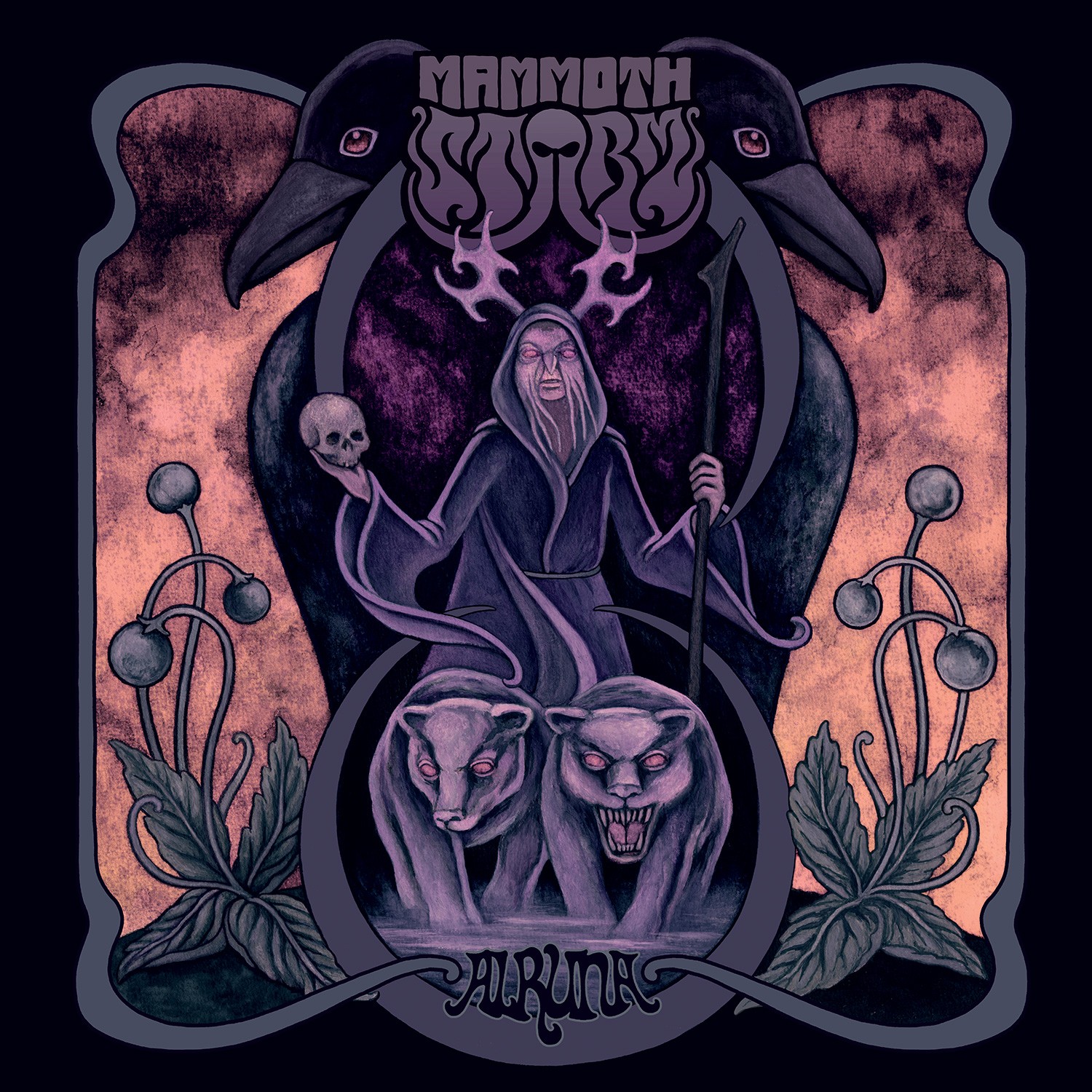
I became familiar with Mammoth Storm in 2015 with the release of their first full-length, Fornjot. And, finally, this year, they followed up with their second release, Alruna. And both are mammoth (pun intended) slabs of doom. Alruna is replete with low, chugging guitars, with a powerful rumble in the rhythm section. Vocals are clean, but with a raspy quality. And this stuff is slow.

Now, not quite funeral doom slow. I mean, we’re talking about more than 2-4 bpm here. But, unlike some doom metal (some Candlemass songs, some Khemmis tunes, to name a few), Mammoth Storm doesn’t ever speed things up. And the effect is profound. This is the soundtrack for the bottom of the ocean. This is the music of gravity slowly increasing, pulling you with more and more force to the ground. This is crushing music. But the slow crush of gradually being pressed to death, not the sudden crush of something along the lines of Misery Index.

And the guitar tone! I could go on and on about the guitar tone. It is full, rich, with a distortion that just screams “DOOM”. It builds the atmosphere of each song. At times, pulled back, other times, full throated and burly. This is the sound of guitars that know that music has power, that it can move people. This is the sound of guitars that know music can change the world. I don’t know exactly how they get this tone, but it is marvelous and I find myself wanting more.

Alruna is a great album. The songs are lengthy, given room to grow and build, without ever overstaying their welcome. The production fits the music excellently. It is clear enough to hear what is happening, but has just a little layer of grit over the top that helps with the sense of heaviness. I still prefer Fornjot over Alruna, but more Mammoth Storm is always a good thing, and I’ll gladly take what I can get.