RIP Neil Peart

Wow.

I really don’t know what else to say at this time. Sort of starts to shine light on your own mortality when one of the most influential musicians in your life passes away.

It was reported today that Neil Peart, drummer and lyricist of Rush, passed away from glioblastoma. He had apparently been fighting this for the past 3.5 years or so. That the band managed to keep this quiet says so much about their respect for their friend and brother.

Rush was my first music love. They were the first concert I ever went to (Roll The Bones tour, 1992, Delta Center), the first CD I bought with my own money after getting a CD player (Chronicles), the first band I ever travelled a distance to see (driving from Durham, NC to Charlotte, NC to see them for the R30 tour), and the first band I ever worked to make sure I had all their albums (19 studio albums, 10 live albums and then multiple compilations).

So, yeah, influential.

Even though I found myself not listening nearly as much as I used to, I never stop respecting the hell out of the band, their music, and each individual member. They were one of the most talented bands ever, with each member truly being one of the very best on their respective instruments.

With the addition of Neil Peart on their second release, Fly By Night, Rush entered and entire new era. Suddenly the songs were more complex, the lyrics more fantastical, the songwriting leaps and bounds above the (still really solid, but Led Zeppelin derivative) hard rock of their debut release. I don’t feel it is at all out of line to say that, had Neil not joined the band, Rush would have faded to obscurity as yet another 70s rock band that didn’t survive. The fact that they continued to write and perform new music right up until 2012 speaks volumes to their dedication, creativity, and hard work. Add to that the fact that their last album is probably one of their best (top 5 for sure), well, not many veteran bands can match that.

Seeing them live, seeing interviews, it was obvious the respect and love that the members all had for each other. The fact that they lived entirely out of the spotlight, with no scandals or drama, again speaks to their character and dedication to their craft.

I knew Rush had called it quits, but there was always that hope. Now, we simply will relish the wonderful music and legacy they leave behind, as there is no Rush without Neil, Geddy, and Alex together. Neil was a true legend, a true genius, and will be missed for sure.

Oceans of Slumber – The Banished Heart

Loss is part of life.

We all will, or have, lost someone near and dear to us. The melange of emotions that accompanies such loss is a complex one. Grief, anger, despair, pain are all common. Mayhap there is also a sense of peace or relief, depending on the situation.

However, in every case, it is a confusing time for us all.

And loss doesn’t need to mean death. We’ve all experienced the loss of a friendship, a relationship that at some point was so fundamental to our existence, that the very thought of life without that person or relationship seemed impossible to fathom. Those can be some of the most painful losses, because that person is still there, still exists and occupies this same sphere of existence as we do, but the loss of that relationship taunts us incessantly, reminding us of what once was, but no longer is.

I first became familiar with Oceans of Slumber with the release of their 2016 sophomore LP, Winter. I subsequently discovered their debut, Aetherial and couldn’t have been more surprised at the difference between the two albums. It felt like these were completely different bands.

At least at first.

However, closer listens revealed many of the same hallmarks. Oceans of Slumber play a progressive style of metal, with overtones of melodic death metal, and a healthy slab of doom layered over it all. The emotional power of third full-length, The Banished Heart really drives home that doom aspect this time around.

Between their first album and subsequent EP, Blue, Oceans of Slumber had the fortune of adding Cammie Gilbert as lead vocalist. Her power, ability to convey emotion, and wonderfully soulful voice has become the real heart of Oceans of Slumber since that EP. It is the addition of her and her prodigious ability that has allowed the band to become a much more fascinating, engaging, and powerful band than on the debut.

Her talent is put into full force on The Banished Heart. Penned primarily by the drummer, the album chronicles the emotional journey of the birth of a daughter and a divorce from his wife. There is real emotion here. In a similar manner as Iris from Altars of Grief, this is a powerful and painful listen. This album hits hard, and rarely relents.

Lyrically, this cuts like a knife. Lines such as “You take from me for gain/You take my love in vain/And here we are the same as before”, sung with Cammie’s powerful voice are immediately followed by growl/screams “Could you believe/The other side of bliss is misery?”. These are powerful words. The final stance from first track, “The Decay of Disregard” establish this sense of loss and pain. “Did you even try to find me?/Did you even care for one last chance at reconciliation?/Do you know how long these veins have ran?/Remnant of red that stains your hands” gives a solid clue as to where this album will go.

Musically, it is powerful stuff. There are quiet moments of simple keys and vocals. There are driving moments of heavy guitars, double bass, and growls and screams. The performances are excellent all around. Tom Englund, ultimate melancholy and sad boy vocalist, even appears for a duet on “No Color, No Light”. Honestly, pairing him with Cammie Gilbert nearly breaks me. I’d have a hard time telling you which track leaves me feeling more drained, this one or “Becoming Intangible” from Iris. Both songs are supreme tours de force of emotional, cathartic, and melancholy misery.

And yet, there still exists some light at the end of this tunnel. It isn’t all darkness and sadness. There is a sense of, if not hope, at least peace to be found in the cover of folk song “Wayfaring Stranger”, as the album closes out. It won’t leave you feeling happy, pumped to go and take on the world. But The Banished Heart is a powerful expression of emotion, loss, and acceptance of some of the more difficult aspects of being human. This ability to reach inside the listener and lead to some emotional introspection is a mark of true art, and one I welcome.

But only every once in a while.

Altars of Grief – Iris

I’m not sure I’m really able to do this album justice.

How’s that for a start? Iris by Canada’s Altars of Grief is a staggeringly powerful album, that draws me back regularly. It is a harrowing journey, emotionally wrenching, and leaves me feeling wrung out when the final notes fade.

So powerful is this record, I regret my deep desire to go back and listen to it again.

Art is difficult to define. For me, a key factor is purpose. I don’t know what the authorial purpose of Iris is, but I’ll be damned if it doesn’t have one, and a powerful one at that. If nothing else, this is music that forces me to reflect on life, on my place in the world, on the impact others have had on me, and the small impact I may have on those that surround me.

I realize this is all sort of vague and nebulous. I’ll try to be a little more concrete. Altars of Grief play a blackened style of doom metal. There are blast beats, tremolo picking, harsh vocals, and vicious riffs. Yet, they are also so much more. We have moments of beautiful melody, quiet contemplation, and tenuous peace.

The clean vocals are excellent. At times very reminiscent of the late David Gold, from Woods of Ypres, at others, they are more soaring and melodious. The contrapuntal harsh vocals run the gamut. We have blackened shrieks, hardcore screams, and even some low, bone shaking death growls. The vocals are used to perfect effect, clean when the song calls for it, harsh when necessary. The guitars follow the same pattern. There are extremely heavy and crushing passages, that often move deftly into crystalline moments of tranquility. Keys and organs punctuate the guitars, never one overwhelming the other.

In many ways, Woods of Ypres is an excellent starting reference point for Iris. Yet this never feels derivative. Many of the same hallmarks are present, but Altars of Grief owns these moments so thoroughly that they become theirs.

Iris tells a story. A story of loss, grief, addiction, abandonment, and death. I’ll leave it to the individual to seek out the specifics. It is sufficient to say that this is a dark record. It doesn’t leave one feeling hopeful, but it does end with a certain sense of peace. And with music this powerful, and a subject matter this dark, peace is about the best one could hope for.

I really do find myself struggling somewhat with what to say about Iris. Musically, it is an amazing record, full of heavy blackened moments, slow, plodding doom moments, and plenty of beautiful, quiet passages. Lyrically, well, I’ve touched on that enough. As a father, it is a harrowing album. Emotionally, this albums devastates me. It is such a complete experience, and so stunningly cathartic, that when final strings fade, I can’t help but feel as though I’ve been through the wringer. This is proof positive that music has power and emotional weight. Iris, while not for the faint of heart, is an amazingly powerful, beautiful, and emotional experience, from first note to last.

Bell Witch – Mirror Reaper

Doom metal. It is epic, often majestic, heavy in the ponderous sense of the word It tends to be on the slower side, often with powerful, soaring vocals. Birthed in the roots of Black Sabbath, and honed to a real edge with the release of Candlemass’ essential Epica Doomica Metalicus, it is one of my very favorite sub-genres of metal.

And then there is funeral doom.

Funeral doom is a different beast all together. True, it is still rooted in doom metal, and shares many of the same hallmarks. It also borrows from doom/death. It then fuses these elements into one of the most punishing, extreme, esoteric, and inaccessible styles of music out there.

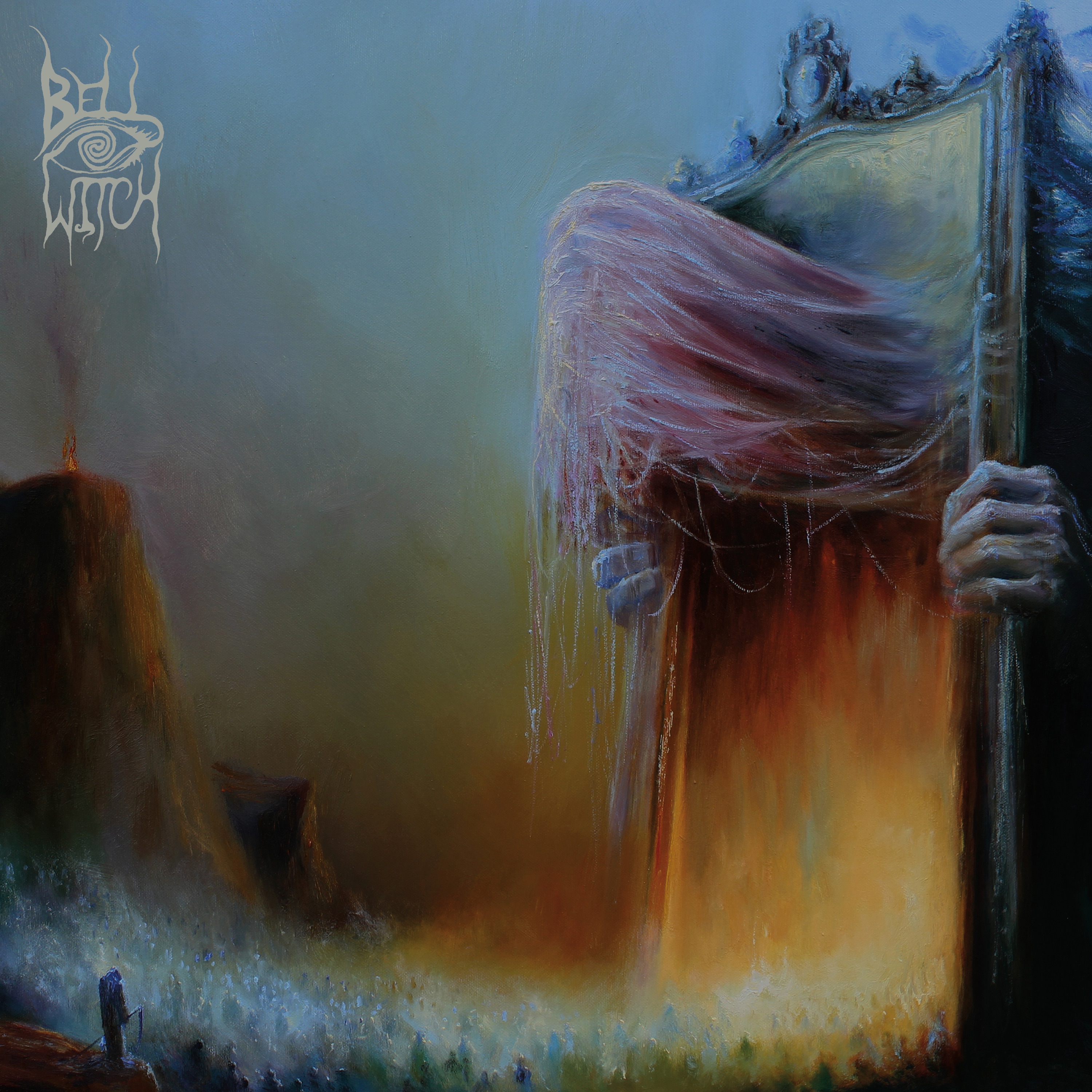
Take Mirror Reaper by Bell Witch. First off, look at that artwork. No, really. Look at it. It is beautiful. But it is also haunting, menacing, and creepy as hell. Then look at the song list. It consists of “Mirror Reaper”, and… well, that’s it. Yes, the album Mirror Reaper has a single song, the track titled “Mirror Reaper”. And then look at the run time for the album. It is 83 minutes and 15 seconds.

Add that all up and, in my experience, there are basically two reactions. On the one hand, I have seen almost revulsion, and instant reaction of “no way!” It is too much, too long, too ponderous. I get that. But on the other hand, it can also lead to fascination.

That’s what happened to me. I wasn’t familiar with the band prior to the 2017 release of Mirror Reaper, but I was instantly intrigued and decided I had to know more. Context is often king, and in this case that holds very true. Bell Witch is a 2 person band, just bass, drums, and vocals. And after the 2015 release of Four Phantoms, the drummer Adrian Guerra, passed away. The band carried on, with Jesse Shreibman joining bassist Dylan Desmond to continue the band. Mirror Reaper acts as a tribute to their lost brother, and that sense of loss permeates every minute of this epic.

The music is very stripped down. It is ponderously slow, with haunting clean vocals, and low, guttural growls that shake the roots of the earth. The drums plod, slowly building over the course of the song. Often the music builds, slowly, only to be stripped back down to a single, sustained note. The bass alternates between clean and clear, to heavily distorted and grinding.

Yet Bell Witch expertly prevents the music from every becoming too, well, too anything. It could be slower, but it doesn’t. It could get much, much heavier, but it restrains. Just when you think it is going to be too much of the same thing, and become boring, it will switch it up just enough to keep it interesting. For me, that is really what makes this such a fascinating album. It is too much, really, I recognize it is. But it balances all of its excess with such a level of care, concern, and skill that it is a haunting work I find myself drawn back to time and again.

https://youtu.be/10q1ZJyLXFk

Fates Warning – Disconnected

It’s almost difficult for me to talk about Fates Warning. On the one hand, it is because they are, in my opinion, the single most underrated band in the history of metal. On the other, it is because they are very possibly my favorite band of all time. Depends on the day, but it’s a toss up between Fates and Neurosis.

But why are they my favorite? For two main reasons. Number one, because they write amazing music. And second, because they were such an essential band on my journey of really getting into and appreciating metal on the whole.

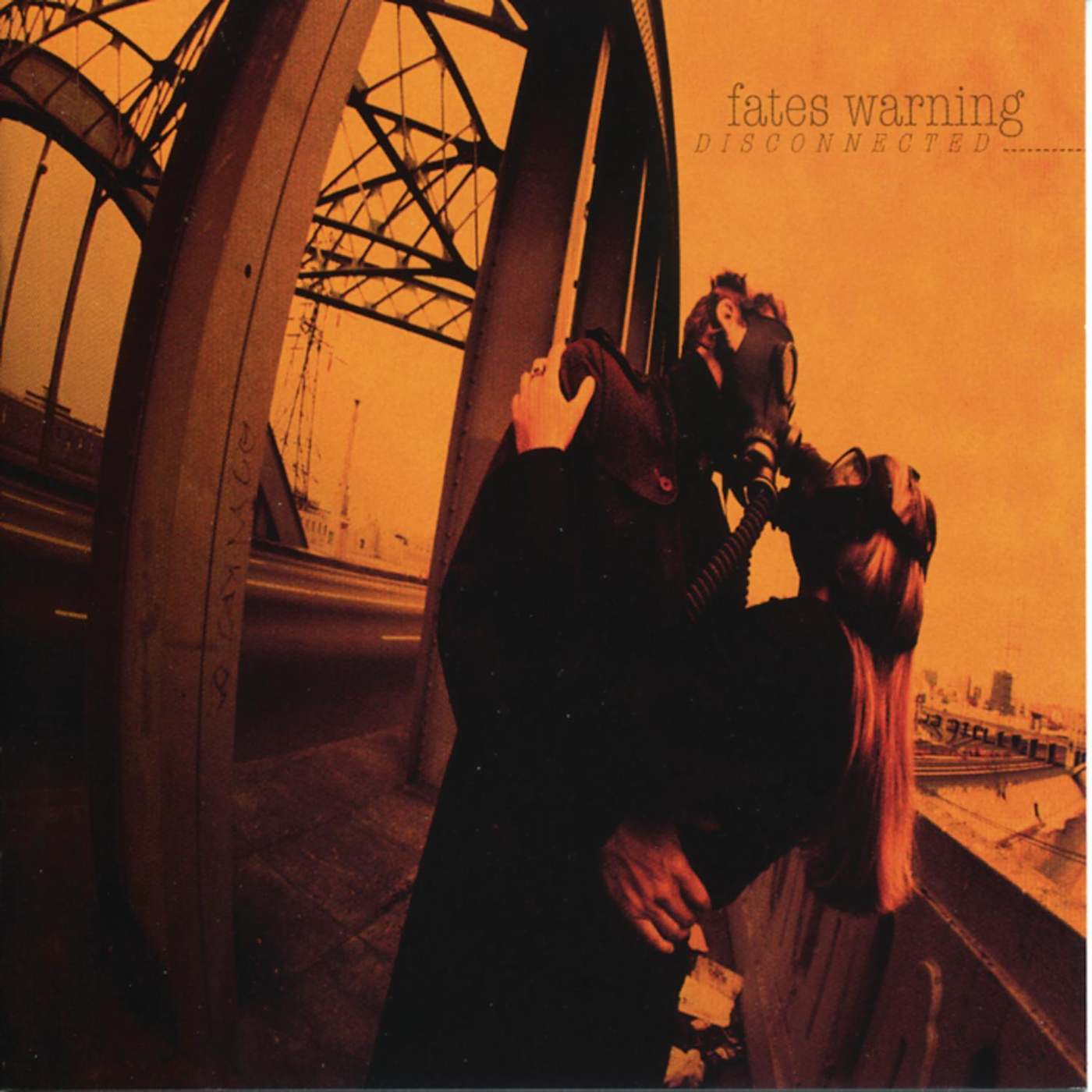
I’d heard the name, but it was many years before I actually started listening to them, so I was super late to the game. It was actually right around the release of Disconnected in 2000 that I finally got around to listening to the band. And that was probably the perfect album for me to start listening to them. It may not be their best album, but it probably is my favorite. We’ll leave John Arch’s amazing vocal melodies, and the idea that their 1986 album The Spectre Within really can be considered the birth of progressive metal for another day. But today, let’s just enjoy the mastery that is Disconnected.

There had been some band changes in recent years, but Disconnected was the second band with the same line up as on A Pleasant Shade of Gray. And what we have is a group that really seems to have come together, with a clear understanding of what they want to do and where they were going. Kevin Moore’s work, both on keys, but most importantly in creating an atmosphere are on full display here. And I will continue to argue that Jim Matheos has penned more brilliant songs than just about anyone in the business.

Disconnected really runs the gamut of what Fates Warning can bring to the table. There are atmospheric tracks, like “Disconnected Part 1” and “Part 2”. There are relatively straightforward rockers like “One” and “Pieces of Me”. And then you have the progressive epics. “Something from Nothing” slowly builds over the course of its 11 minutes. But the real star of the show here is “Still Remains”, a 16 minute progressive and emotional epic.

I love the complete lack of fear or need to hurry here. The song slowly builds for minutes before it finally hits its stride into what one would consider a proper song. And then it keeps building and morphing. Throughout all, the performances are stellar, and the emotion is palpable. Disconnected is an album about relationships, about loss, about human connections and how those impact our lives. And “Still Remains” is the ultimate track to convey all of this.

I really can’t find a flaw in this album. The performances are excellent. Jim Matheos, in addition to being an excellent guitarist, also has amazing guitar tone on this album. Immediately recognizable. Ray Alder’s vocals are as fantastic as always, powerful, clear, expressive. Mark Zonder always was one of the more interesting drummers in the business. Even the final track, “Disconnected Part 2”, is a necessary part of this album. It completes the album, really hitting home the sense of loss and sadness that permeates the album.

I love all Fates Warning albums. And they have some truly groundbreaking and essential ones. Disconnected may not be their very best, but I think it will always be my favorite, and is clearly one of my top 10 albums of all time.