Gigafauna—Eye to Windward

I’ve been a metalhead for decades now. I’d always leaned toward heavier rock, but as I made my way through my twenties, and navigated major life changes and the insanity of medical school, heavier music became one of those key coping strategies. And while my heart remained rooted in progressive music, thanks to a lifelong love of the music of Rush, I began to explore the myriad sub-genres found in metal.

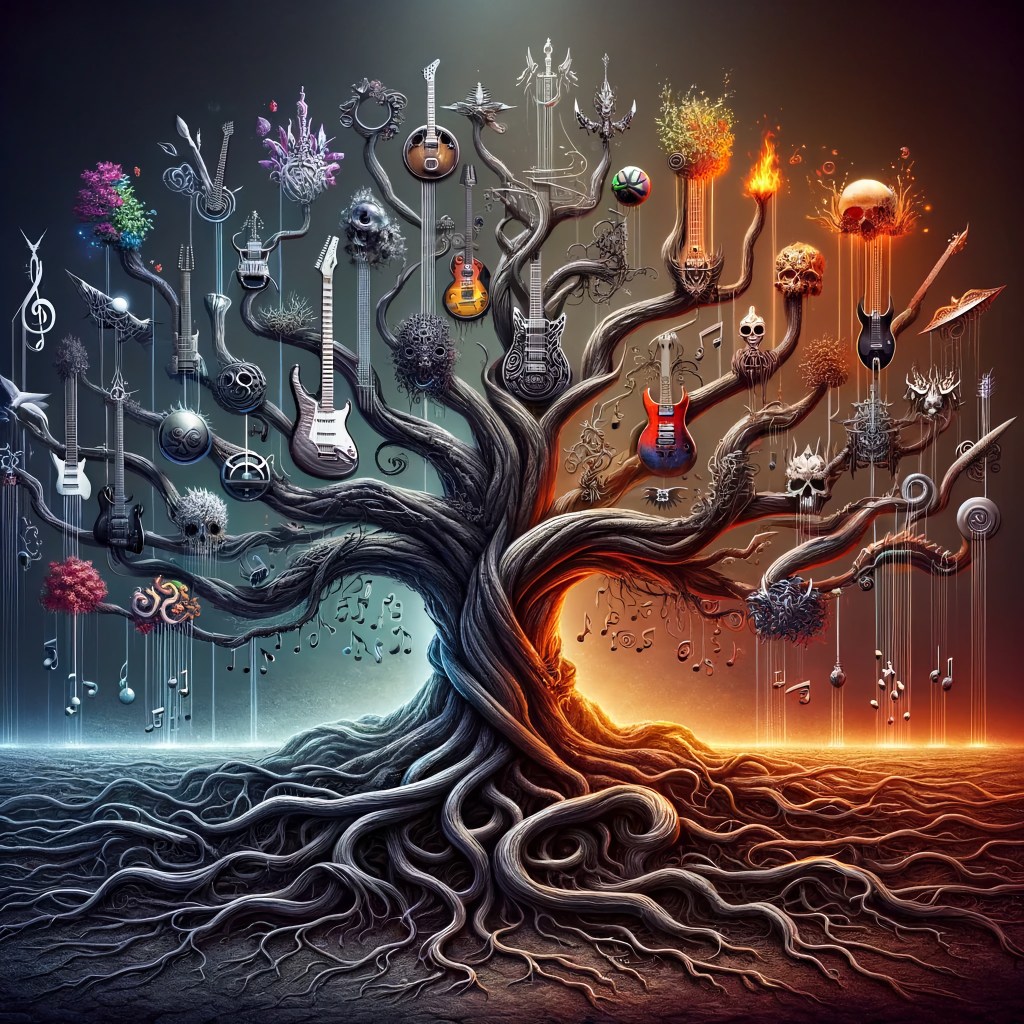
More than perhaps any other type of music, metal embraces variety. There are dozens of different sub-genres, yet all are still recognizably metal. Truth is, it is one of the facets of being a metalhead that I find so refreshing. There is no shortage of different styles of metal that I can dip in and out of, with new styles and sounds to discover.

Some bands find their sound, their style, and settle in and make decades long successful careers from that. My personal favorite thrash metal band, Testament, is a perfect example. On (almost) any one of their albums, it is instantly apparent that I am listening to thrash metal, and honestly that I am listening to Testament. Other bands, however, take the risk of mixing different styles, and do so with varying degrees of success.

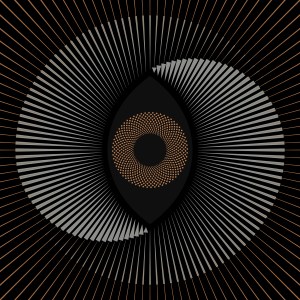
Cover of the album Eye to Windward by the band Gigafauna

Enter Gigafauna, a four piece from Uppsala, Sweden. For the sake of disclosure, I will admit that I was unaware of the band until they reached out via the contact form and let me know of their upcoming album, Eye to Windward. Hitting play, I truly had no idea what to expect. What I found, almost instantly, was a band taking that far riskier approach, that chance to mix genres and see what came out.

And what came out on Eye to Windward? A kick-ass album that deftly blends elements of progressive metal, sludge, and melodic death metal with a groove and swagger straight from an 80s hard rock band.

Songs move between moments of heavy grooves, crushing death metal riffs, clean vocals and growls, and back to those heavy grooves. The sense of swagger is ever present, even when the drums move to double time and the growls come barreling in. This all comes together to keep the heaviness from ever becoming overwhelming. Don’t mistake what I am saying: This is a metal album, through and through. But there is a sense of what I would describe as playfulness in how the band weaves together these different styles that keeps if from feeling oppressive.

Some days, I welcome the oppression and darkness that metal can provide. Eye to Windward keeps me engaged with its, at times, crushing heaviness. Yet the variety between the vocal styles and the riffs keeps the album feeling interesting, explorative, and injects a sense of joy into the music, even when the songs are dead serious. This is a difficult trick to pull off, and many bands falter as they try to do so. An excellent example is mid-album track “Plagued”. Harsh vocals start out, with an almost stomping beat. But the band isn’t afraid to take that places, with soaring vocals, textural variations in the guitars, and playing with moments of stripped back drums and bass coupled with layered guitars and vocals. It is an excellent showcase of all the different tools Gigafauna has at their disposal.

Other tracks are more focused. “Pyres” is heavy out of the gate, with my favorite riff on the album. Even here, though, there is a sense of dynamics that prevents the music from ever feeling stale. Album finale, “Vessel,” is a worthy way to close out this journey, taking us through all of the feelings of the album in a fantastic capstone on the experience. A sludgy, progressive, death-tinged epic, Gigafauna sticks the hooks in, tantalizingly hinting at where they may choose to go from here.

That doesn’t mean the album is perfect. There are some transitions that feel less fluid, slightly forced. There are moments where the disparate elements don’t come together perfectly. But that is always the risk when trying to marry these different styles. And while not perfect, the songs are all supremely enjoyable and performed with incredible talent. I am left impressed by the successes found on Eye to Windward, which far outshine the few bumps on the road.

For a band to come out of the dark and really blow me away is no small feat. Gigafauna has done just that with their release Eye to Windward. Mixing metal styles can either pay off or backfire spectacularly, and here it pays off with aplomb.

Icon by Paradise Lost, 30 years later

I can’t claim to have been familiar with the institution of British metal that is Paradise Lost back when Icon was originally released. It was 1993. I was beginning my trip down the metal rabbit hole, but only just. Like many people who listened to rock radio, I was listening to Metallica and Countdown to Extinction. I had started to branch out a bit on my own, taking my love of progressive rock and seeing how it fit with a heavier sound. Images and Words by Dream Theater was getting heavy rotation.

It wouldn’t be until many years later, 2009 to be precise, when Paradise Lost appeared on my radar, with their release of Faith Divides Us – Death Unites Us. I had been gradually expanding my musical tastes over my years in medical school and through residency. Those were incredibly difficult years. Years that have left scars on me that I carry with me to this day. One of the ways I dealt with the trauma of those years was to embrace the darkness that metal music embodied.

Faith Divides Us – Death Unites Us resonated with me. The heavy, dark tone, with a gothic atmosphere and a sound that spoke of some of the uglier aspects of life was what I needed. Hell, there was even a track on that album titled “Living with Scars”. Yeah, I was almost instantly hooked.

One of the most wonderful things I have experienced in life is discovering a new band that already has a healthy catalog. I’m not kidding or being hyperbolic. I love music, and the joy of discovering a new band, and then diving into hours of near music is just sublime. Such was the case with Paradise Lost. There were 11 full albums from the band that preceded that most recent release.

To say I was excited would be an understatement.

As I am wont to do, I also began reading about the band on the internet. I read all about Draconian Times and how it was often considered their landmark record. I listened to and loved that album. But there was another.

Two years earlier, the band had released Icon. The cover was striking but unsettling. But by this time, I was all in on the band. So I listened to it.

And quickly discovered my own, personal favorite Paradise Lost album.

I actually don’t think Paradise Lost has a bad album. They have very, very different albums. A trip through their discography will be one of fascinating discovery, as the music moves from death/doom, to gothic metal, to dark synth pop, back to gothic metal, and ending (currently) at a healthy death/doom and gothic mix. There isn’t a dull moment.

But I still kept coming back to Icon. There is an urgency, a power to the songs that I find still keeps them vibrant to this day. It is an album that stands proud amongst all other peers in the metal world of the early 90s.

And so, with the 30th anniversary upon us of this influential and seminal album, Paradise Lost chose to re-record it.

We have, again, a triumph.

Icon 30 is Icon brought into the modern world. The original always had just a bit of soft edge, in terms of the production. Icon 30 gives this album the edge it always had, but that wasn’t evident. It doesn’t matter that these songs were written and originally recorded 30 years ago. They don’t sound dated in the least.

Rather, particularly with the new recordings, they have all the bite that they were intended to have, and are as relevant to the world of music and metal as they were 30 years ago. Perhaps even more so.

There are no breakdowns to be found. Paradise Lost didn’t need them to punch you in the gut. Nick Holmes’ voice is powerful, gritty, urgent and intoxicating. The guitars shine and drive. The bass and drums are punchy, groovy, and listening to this version of the album just proves what incredibly musicians and writers the band is.

Icon has been, for the last 15 years, my favorite Paradise Lost album. Icon 30 has reconfirmed that love and is a vibrant example of just how timeless metal music can be.

More subgenres than genres

I’m a metal head. Have been for a few decades now. Given that it has been that many years, one of the aspects of metal that I barely even notice anymore is just how many subgenres there are.

This was brought to the forefront of my mind just yesterday. I was at work, and music was playing. At one point, someone asked me, “What the hell is this music?” It gave me pause for just a moment. I had actually chosen some of my music that I deemed to be the most “accessible” and the least unusual or offensive to the other people in the room with me. In my line of work, often people are asleep. In that case, I listen to whatever I want to. But when people are awake, I strive to be more selective in what I choose to play.

So, it really surprised me that, what I had deemed to be easily accessible and “normal” metal warranted such a question.

Still, I tried to answer and offered that I would consider it “gothic doom.”. That was when another individual in the room offered the observation, “I think there are more genres of metal than there are genres of all other music combined.”

That made me think. Because, honestly, I’m not sure that the truth is too far off from that comment. There are so many subgenres that all fall under the metal umbrella. There are entire, 20+ minute YouTube videos that discuss the different genres of metal. On the surface, that seems insane.

But to me, it just seems natural. It makes sense. Hell, it even seems necessary. Because, of course, just because someone likes Iron Maiden, that does not, at all, mean they are going to like Gorguts or The Melvins. They all fall under the metal umbrella, but they are so different as to not even seem like the same type of music. At least to those of us already in the “know”.

But, again, why is it that way?

Despite all being metal, so many of the subgenres found within the genre have very little in common with each other, other than the fact they use distorted guitars, bass and drums.

And, well, that is all that really sets metal apart from all other genres of music. So it isn’t that odd, is it?

But more than that, it helps to really categorize music. There is a vast gulf between the thrash metal of Slayer, the polished progressive metal of TesseracT, and the slow, ponderous build of Bell Witch’s funeral doom.

Or, take, for example, two of my very favorite bands. From a musical standpoint, there is very little that is the same between the building, dynamic post-metal of Neurosis, and the progressive styling of Fates Warning. In fact, it would almost be impossible to find two albums that, at least on the surface, seem more dissimilar than the epic titan of an album Through Silver In Blood, and its temporal counterpart, the excellent album A Pleasant Shade of Gray.

So, to simply refer to both of these as metal albums doesn’t help the listener. One may be right up their alley, while the other could be something they have little to no interest in.

As I think about it, it really is just a type of shorthand. With a style of music that is so varied and has a truly incredible amount of breadth and depth to it, this shorthand helps to describe the music to someone else who may, or may not, be interested.

I love post-metal. It is one of my favorite types of metal. If you tell me something is post-metal, I am going to give it a chance, no questions asked. However, I am much more selective in my black metal. So I’ll need additional information before I decide to listen to something with that label.

Those labels help. They accelerate the process of understanding and setting expectations for the music. And so, something that initially seems to be a hindrance to someone getting into metal can actually evolve into a strength.

And with just so damn much metal out there, that shorthand is a real lifesaver.

A Testament to real metal

The 90s were weird for metal, man

Testament were never the biggest of the thrash metal bands. They weren’t even officially in the “Big 4” of American thrash metal (though there are plenty of us who would argue they should have been, or were better than the “Big 4”).

But, they will forever be my personal favorite thrash band. And their reaction to the 90s metal weirdness is just one of the many reasons they are.

So, in summary, Metallica stopped being metal, Megadeth did as well. Between grunge and later nu-metal, more traditional types of metal were floundering to some degree. There were exceptions, of course. Pantera became hugely popular during this time, at least in my opinion because they were so uncompromising in their approach.

Holding their ground

Still, there was Testament, toiling away, never nearly as big or well known as many of those other bands. The early 90s saw them changing their sound a bit, with 1992 release The Ritual being more melodic and sounding more mature and polished than previous albums. And one could certainly assume that they were trying to chase after the Metallica-esque success of The Black Album. However, while Metallica is a metal album, but not a thrash metal album, The Ritual still retains most of its thrashiness.

Yet, record companies saw the writing on the wall, and came to the band demanding they move in the direction of their peers, and release an album that was even more commercially marketable, approachable. Less metal, more hard rock, since that really was what was moving sales at the time. And Testament wasn’t immune to this. Founding member Eric Peterson has said that Atlantic Records, their record label at the time, came to them and demanded an “alternative” record.

Those who remember the 90s as vividly as I do will recall that “alternative” was just the catch all for stuff that wasn’t top 40, but also was most definitely not metal. In fact, much of it really couldn’t even be considered hard rock. It was huge, and it was selling millions of records. Take, for example, Nirvana’s Nevermind and it’s more than 10 million copies sold in the US in it’s lifetime, and compare that to The Ritual and its less than 500,000 sales. Clearly, one style was dominating.

From that standpoint, I could see suits trying to tell Testament what they needed to do. And Testament responded in the most metal way possible.

A middle finger to record execs

Low dropped in 1994, two years after The Ritual. And from the very first seconds of the first, and title track, Testament raised a huge, flaming middle finger to their record label. Low finds Testament at their most aggressive, their most pissed off, their most thrash metal, in both music but also in ethos. In fact, “Dog Faced Gods” from the album is pretty much just death metal. It is about as far from “alternative” as the band could have been.

You can guess what happened next. Atlantic Records dropped the band, and they went on form their own record label. And, unfettered by the demands of the suits at Atlantic, Testament decided to get a little weird in their own way.

Demonic stomped onto the ears of unsuspecting listeners three years later. And from the get go, you can tell you are in for something different. Opening track, “Demonic Refusal” counts in with a somewhat distorted voice, “10, 9, 8, 7, 6, 6, 6” and we are introduced full on to Testament’s version of death metal.

Demonic is not a thrash metal album. And for that reason, many people dislike it. Many even hate it. Opinions on the album vary widely. Just a glance across the internet will see review scores anywhere from 0 all the way up to 8 and 9 out of 10. So, why is it so divisive?

And why do I love it so much?

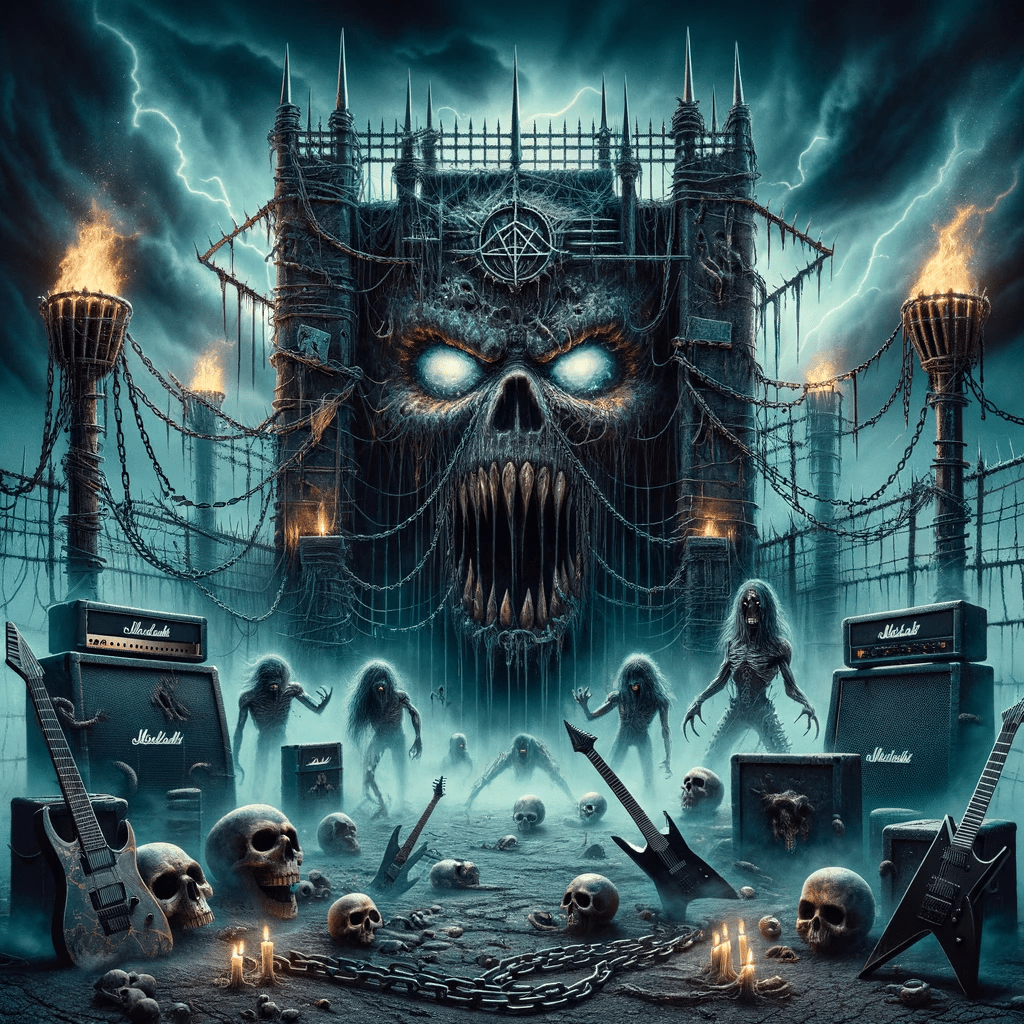
A demonic metal stage
Image courtesy of DALLE-3

A case for something different

Look, let’s just get this out of the way, Demonic is not the best album by Testament. Not by a long shot. It isn’t a thrash metal album, and it shows. It lacks much of the speed and energy that is most often associate with thrash metal. The riffs are more simplistic, there really aren’t guitar solos (with perhaps one exception, though the solo in “New Eyes of Old” is very short). And Chuck Billy growls almost the entire album, with very little of his trademark gravelly singing.

So, yeah, it is weird.

But it also stomps. It stomps hard! With Gene Hoglan on the kit, the drums pop, are so precise and powerful that it makes me really pay attention. Yes, the riffs aren’t as intricate as they previously were, but they are heavy, thick, groovy and threaten to snap necks. And while I agree that Chuck Billy is an absolute beast of a vocalist, his use of death growls is compelling to me, despite being fairly one-note.

I like heavy music. And this was Testament just playing heavy music. This same year we got ReLoad from Metallica. It’s hard rock, and even some songs I wouldn’t give the hard modifier to. Megadeth dropped Cryptic Writings, an absolute snooze-fest of an album that is pretty much just AOR. So, at least half of the “Big 4” weren’t even playing metal anymore, let alone anything has heavy as thrash or death metal. Testament was carrying that flame, and would continue to do so with their even more punishing subsequent release, The Gathering two years later.

Still, I have to admit that, in 1997 I wasn’t in to metal the way I am now. I don’t know how I would have reacted had I been a fan of the band at that time, and perhaps it is looking back on it that colors my opinion.

I think Demonic is a great album. It is so much better than much of what Testament’s contemporaries were releasing at that time, and showed a band committed to playing heavy fucking music, even despite intense pressure to do otherwise. In thinking about writing this, I have listened to Demonic at least a dozen times, and it just doesn’t get old to me.

And as a flaming middle finger to the music industry, I love it all the more. What is more metal than that?

Revisiting Holocene by The Ocean

Expectations. The word carries a lot of weight. We have so many different expectations, and sometimes, even when we don’t realize we have them, they still spring up and get in our way. I make it a habit to teach those I work with that the best way to exceed expectations is to preemptively manage them.

I often don’t do that for myself.

For the last number of albums, and over the course of about 10 years, The Ocean has been on a path, setting itself apart as one of the most interesting metal bands currently active. They have explored the human condition through major geological epochs of the earth, painting with impeccable care, creating a string of powerful albums that have ranked amongst the very best each year they have released one.

Enter Holocene, their latest opus.

The writing has been on the wall. The Ocean didn’t come out of left field and knock us senseless with some unforetold haymaker. They have been expanding their sound, adding more keyboards, more dynamics and asking more of the listener.

For some reason, I was still surprised at what Holocene was. The initial single that was release seemed to really telegraph what was coming. Furthermore, the final track from the previous album “Holocene” presaged what was coming.

Still, both myself and much of the online music/metal community seemed taken aback by what Holocene was. It still sounded like The Ocean. But here we had much more electronic, keyboard heavy, and atmospheric release. The Ocean has never shied away from atmosphere in their music, particularly over the last decade or so. But here, something seemed just too stripped back. It felt to me that there was a lack of intensity.

I was bummed.

While at dinner with some friends prior to attending a YOB concert, Holocene came up in conversation. I clearly recall referring to it as “my least favorite Ocean album.” And that was the line I stuck with.

Until I had some time off. We were leaving town, family summer vacation time. We had a bit of a drive, not too long, but long enough for me to have some headphones in and to fire up this album. Even though I had largely written it off, I still felt bad. Here was the most recent release from one of my very favorite bands, and I still hadn’t really given it much of a chance. I hadn’t, still, listened to the album from start to finish.

A couple of hours in the car seemed a solid enough excuse to dedicate 52 minutes to at least one solid, uninterrupted listen.

Reader, I can’t give you the reason for what happened next. Was it just finally listening to the album start to finish? Was it that I was in a vacation state of mind and thus more relaxed, more open minded? Or was it just that The Ocean had secretly created an absolute fucking masterpiece and I was just too blind to realize it? We may never know.

Except for the fact that it is, in fact, a masterpiece. Of that, I no longer have any doubt.

Holocene just drips atmosphere, style, and confidence. This is the confidence of a band who understand just how talented they are, and that they can play with different textures, different layers, and still create incredibly compelling music. There is a swagger to the music here, so confident is the music in what it is presenting.

And intensity. So much intensity.

Yet used in an incredibly intelligent and sparing manner. Songs often build slowly, over the course of many minutes. There are crescendos and decrescendos, dynamics abound and each song is a journey. There are groovy moments that just make you want to move to the music, an almost dancelike EDM quality to them. But these are so adeptly coupled with passages of extreme heaviness, that I can’t decide, do I want to bop to the beat or full on bang my head and jump in the pit?

The truth is, what makes Holocene such a masterful album is the fact that both, almost simultaneously, are appropriate.

Holocene may not be my favorite album from The Ocean, but it isn’t far off. The more I listen to it, the more layers it seems to unfold to me, revealing a brilliance in song writing, structure, and storytelling that draws me in again and again. In fact, so engaging is that album that, despite actually being a few minutes longer than some of the previous albums, it feels far shorter. Holocene asks for an open mind, but when approached with one, it reveals itself to be a perfect album for our time. Balancing so many disparate elements in a manner that feels effortless, The Ocean are telling the story of our difficult times, times in which we all similarly balance almost innumerable responsibilities and roles. If we can only do so with such grace and elegance, we will surely live blessed lives.

My Week in Music – February 5, 2022

This week was a bit more of a fun one when it came to music. I sort of rediscovered Black Crown Initiate, as well as Persefone. BCI just sort of because. Persefone had a new album drop Friday. I have been a huge fan on their particular take on progressive metal eve since I heard their album Spiritual Migration years ago. This one sort of snuck up on me. Didn’t realize they had one coming out until Tuesday.

Dawn of Solace had a new one drop recently. They have a certain melancholy that just seems to speak to me. Some Meshuggah, some LoG (a workout favorite), and some folk black metal. All in all, a nice mix, with a bit more variety than the previous week. And more to choose from. I definitely listened to more music this week.

My Week in Music – January 29, 2022

Two things this week.

Lifting and emotionally heavy and dark music. The lifting is the LoG, the Crescent, the Misery Index. Went to my workout playlist for the working out. Other than that, I listened to a surprisingly small amount of music this week considering I had time off and could have really listened to more music.

But when I did, it tended to lean toward the more dark and emotional music. Woods of Ypres (“Finality” is such a gut wrenching song), Dawn of Solace (new album, same excellent dark, somewhat depressive, but melodic music), and some Cynthesis. I did spend a bit of time last night getting into the new Mechina album.

But I still find myself not really listening to music as much as I would honestly like to. Perhaps that will be different this week, going back to work, but finally not having a resident or a medical student with me. Means I can actually listen to music between seeing patients, rather than having to try and teach.

2021 In Review: Music

Best of 2021

  • Archspire – Bleed the Future
    • A tour de force of technical death metal. Yet still balances that with more quiet, calm moments. Understanding that, even at only 32 minutes, it would be too much if it was unrelenting. Also, songs. Not just display of technical ability, actual songs.
  • 1914 – Where Fear and Weapons Meet
    • WWI will always be a bleak subject, and here it is handled with aplomb. Blackened death metal, with the addition of some symphonic elements this go around. Interspersed with music and quotations from the time. The music is perfect for the subject matter: harsh, harrowing, yet with moments of emotion.
  • Mastodon – Hushed and Grim
    • Too long, yes. But honestly, every song wins me over at some point. Even the songs that start off in a style I despise (country anyone?) eventually grow into something that I appreciate. Packed with emotion, this one took a couple of listens, but definitely won me over.
  • AMENRA – De Doorn
    • Not Mass VII. And shame on us for wanting Mass VII. De Doorn is still classic AMENRA. Powerful, haunting, balancing being abrasive with being introspective. A shining example of what draws me to post-metal: quiet contemplation balanced with crushing brutality.
  • Black Sites – Untrue
    • Just damn good heavy metal in the classic sense of the term. Lead member’s previous band Trials was a much heavier act. Black Sites brings some of that edge, but couches it in a modern yet classic metal veneer. Catchy songs, excellent choruses, interesting compositions.
  • IOTUNN – Access All Worlds
    • Progressive death metal with a sci-if theme? Sign me up! And Jón Aldará on lead vocals? Oh hells yes. This is huge, grandiose progressive metal with death growls and soaring cleans, this just hits all the right spots for me.
  • LLNN – Unmaker
    • So. Heavy. LLNN deal in the heavier aspects of post-metal. This is crushing, brutal, truly heavy music. Yet it is still subtle. That seems impossible, but mixed in with the monolithic riffs and the tortured vocals are weaved synths as well as layered “field recordings” of sounds from the real world. Probably the best single word for this is devastating.
  • Spiritbox – Eternal Blue
    • On paper, I shouldn’t really like Spiritbox. While difficult to place in a genre, metalcore would be the best fit. And I don’t really love most metalcore. And while I appreciate and love the heavy (“Holy Roller”), what elevates Spiritbox and Eternal Blue for me are all the things that are distinctly NOT metalcore. The gorgeous cleans of Courtney Laplante, the electronic elements, the ambience, the effects and the ever present guitar skills of Mike Stringer. Spiritbox just strikes me as something special, and their first full length album confirms that.
  • Year of No Light – Consolamentum
    • I love almost all things post. It’s true. Add post-metal or post-rock tag to anything and I am immediately 5 times more likely to check it out. Then make it instrumental? Gaaaahh. Okay, I’m sold. And then the fact that the music is so good, moving, driving, atmospheric. Having never heard of Year of No Light before, I immediately became a huge fan.
  • Crescent – Carving the Fires of Akhet
    • Egyptian themed death metal. Yawn. Nile has been doing that for years. But Nile has also not really wowed me for years (though their most recent album is a winner). Enter Crescent. Combining the heaviness of death metal with middle eastern musical cues and styles, they have created a really powerful album of music. This was an easy one to keep coming back to this year.

Honorable mentions

  • Be’lakor – Coherence
    • I really like the melodeath of Be’lakor, and this album is no different. Could have been higher had I listened to it more.
  • Emma Ruth Rundle – Engine of Hell
    • “Return” might be my favorite song of the year. This album is raw, simple, ERR. And she excels and bringing the emotion she is so adept at conveying.
  • Evergrey – Escape of the Phoenix
    • I just love Evergrey. This is an excellent distillation of what makes this band who they are. And that is why it isn’t ranked higher. It is Evergrey, once again, doing what they do. Good thing they do it so well.
  • Exodus – Persona Non Grata
    • Exodus be Exodus. Don’t expect them to change. And here they don’t. This is reliable thrash with a brutal guitar tone and Zetro’s unhinged vocal delivery.
  • Frontierer – Oxidized
    • WTF. Literally every time I listen to Frontierer I just think WTF over and over. Pure chaos in musical form, cranked all the way to 11.
  • Impure Wilhelmina – Antidote
    • I really like this band and their blend of metal with smooth, Brit pop style crooning. And this might be the best example of that blending ever. Probably should be higher on my list, I just didn’t listen as much as I would have liked.
  • Khemmis – Deceiver
    • Late in the year, not enough time to really appreciate this. But a reliable Khemmis record. Not their best (don’t know if Hunted will be able to be topped), but another great release from this band and an album I have enjoyed quite a bit this year.
  • Swallow the Sun – Moonflowers
    • Where are the tissues? Why is it so dusty in here? Why won’t my eyes stop watering? Death doom designed to rip your heart out and leave it on the floor. The loss of Aleah Stanbridge continues to haunt Juha Raivio, and that radiates from this record.
  • Clouds – Despartire
    • Yeah, seconded. Minus the loss of Aleah. Do not, I repeat DO NOT listen unless you want to wrap yourself in sadness and despair. But if you do, this is the softest, fuzziest blanket of despair you’ll find.

Better Than it Should Be

  • Chevelle – Niriatas
    • Chevelle hasn’t really interested me in years. But somehow this one grabbed my attention enough I listened to it multiple times this year. That shocked me.
  • Between the Buried and Me – Colors II
    • Following up such a landmark album like Colors is a difficult task. And the fact that BtBaM do it as well as they do here is surprising. I still have to be in the correct mindset for BtBaM and their “kitchen sink” approach to music, but here it works better than expected.

Disappointments

  • Gojira – Fortitude
    • Too many moments or tracks that just halt the momentum of this album. Like it’s predecessor Magma, this album just doesn’t click for me. I know a lot of the metal community continue to slather praise on Gojira and treat them like the second coming of the Lord. But while I admit they have had some amazing albums in the past, Fortitude continues the trend of albums that I have little to no interest in coming back to.
  • Iron Maiden – Senjutsu
    • It’s Maiden. It’s reliable. It’s also getting slower, songs feel more bloated, and fewer and fewer moments really stand out. This isn’t a bad album, it just isn’t one I came back to after the first week or so. I love that these guys are still rocking into their late 60s, but maybe it is time to wind down? Maybe?
  • Leprous – Aphelion
    • It is fine, if you want proggy pop-rock. But if what you loved about Leprous all started to fade with 2015s The Congregation this album will do little to nothing to win you back over. It certainly didn’t win me over. At least it isn’t any worse than their last 2 albums.

Lamb of God – Sacrament

Over the years my tastes in music have changed, something that I think happens to most, if not all, people. In some cases, I can pin moments of that changing musical tastes to specific albums. Sacrament is one such album.

I first stumbled across an instrumental version of Sacrament, which was probably good. At the time, I was (for better or worse) a much more tender flower, who would have rejected the album outright due to the aggressive nature of the lyrics. However, time (and years spent as a surgeon – trust me, we can curse with the best of them) desensitized me to the point I not only didn’t reject the lyrics, I found solace in them.

Immediately, Sacrament grabs you with the groove of “Walk With Me in Hell”, a driving, pummeling track. It can be off putting. It can seem dark, negative, hateful. And yet, as with so much in music, there is much more to that. Instead, it actually is an invitation that builds to an anthemic crescendo, inviting us all to walk through Hell together, to lean on each other to get through the bullshit that life throws at us.

I find that incredibly inspiring.

Not all tracks have that same type of inspiration. “More Time to Kill” spews vitriol like few other songs. Take the opening lines, for example:

I just got the news today you were dying

Hot damn, we’re already partying

But please, before you have to leave

Let me tell you a few last things

But you know what? Talk about catharsis. Get done with that and you just feel better. It purges something out of you. Hell, you can’t look me in the eye and tell me we haven’t all felt that way about someone in our lives. Because we totally have, and we’ve wished we could say that. And so, Randy Blythe spews it out with gravel to boot.

Sacrament doesn’t ever really let up. Songs have massive, mosh-worthy, breakdowns. The vocals are relatively one note, harsh growls, but there is variability here and there, more than on previous albums. But you didn’t come to a Lamb of God album for sweet crooning. If you did, you done messed up, bro. One thing that Randy has always excelled in is the clarity of his delivery. It is too easy for harsh vocals to become unintelligible. That is avoided here, the lyrics are almost shockingly understandable. And that works in the music’s favor. Lamb of God works best for me as a vehicle for rage, frustration, and the need to process. Understanding the biting lyrics makes that so much more effective.

This certainly isn’t my favorite Lamb of God album (that would be Ashes of the Wake). But it was the first LoG album I listened to, start to finish. And it was a powerful introduction to a band I was aware of, but hadn’t really listened to up to that point. Live, this band is phenomenal (see the above banner picture), and they do an excellent job of translating their live energy to the record. Lamb of God is one of those bands that are just incredibly reliable. There isn’t ever any wondering what you are going to get. You know: aggressive, groove heavy music that will get you going, help purge some of the ugly out of you, and leave you feeling just a little bit better, no matter how bad the day was.

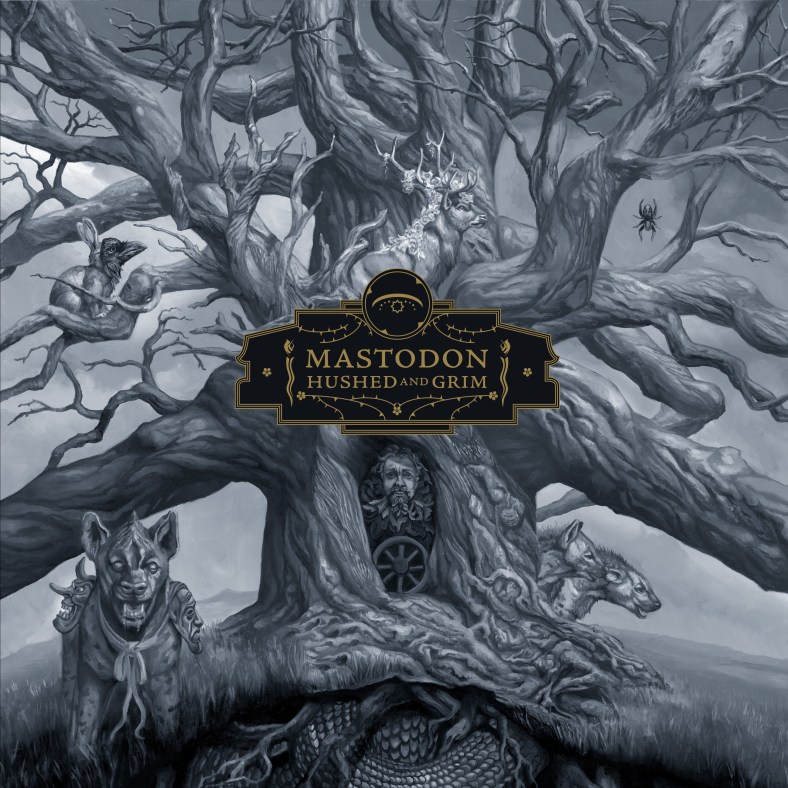
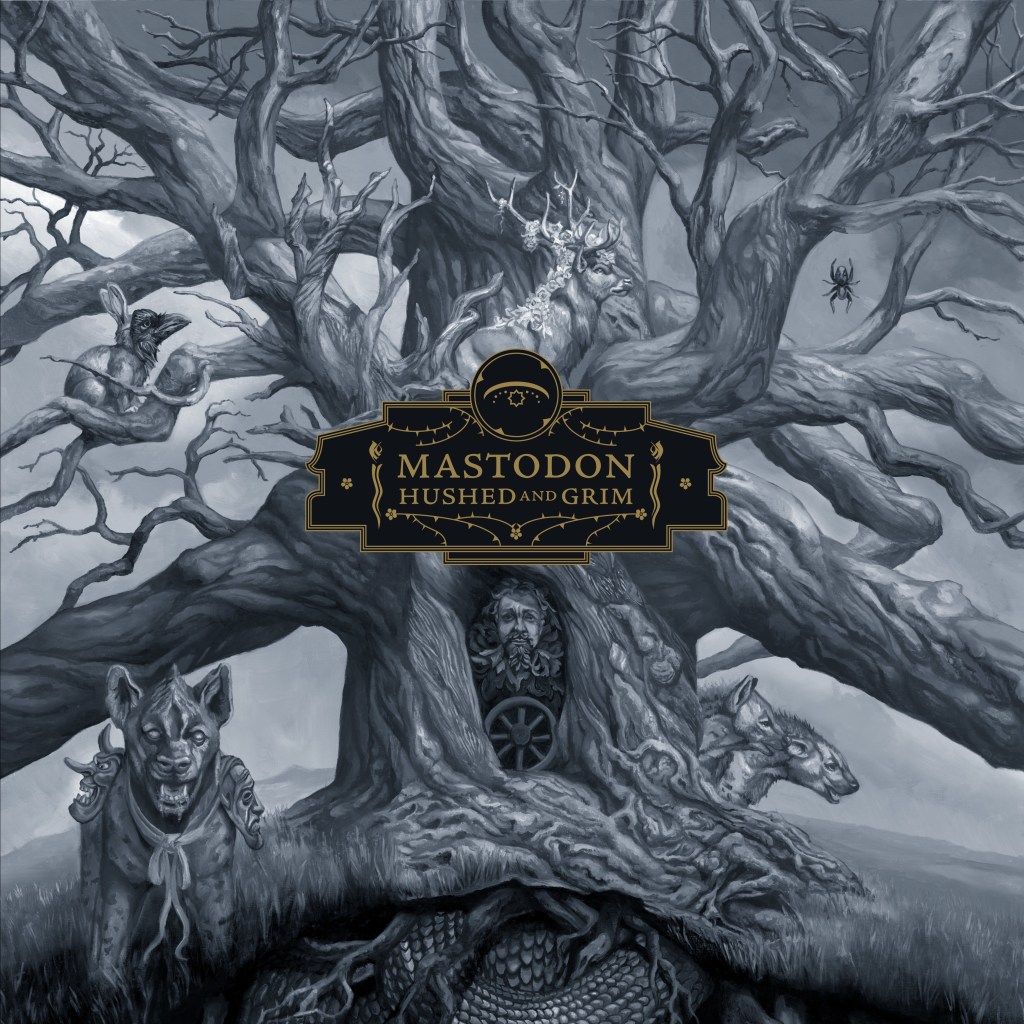
Mastodon – Hushed and Grim

I have a bit of a troubled relationship with Mastodon. I fell in love with their 2006 release Blood Mountain and thoroughly enjoyed the albums that preceded that one. Crack the Skye was a progressive opus that blew me away.

But follow up, The Hunter, left me cold. It just didn’t click with me. Nor did follow up Once More ‘Round the Sun, both of them just feeling less aggressive, somewhat more straightforward sound that just didn’t excite me. Emperor of Sand started to win me over a bit more, and I did listen to it a fair amount when it first came out. Yet I just didn’t find myself going back to any of these albums with any sort of regularity.

When I then stumbled across their soon to be released album Hushed and Grim I was intrigued, but can’t say I was excited. Taking full advantage of my streaming music subscription, I added the album to my library and briefly checked out part of one of the tracks that had been released. Again, I felt nonplussed. I wasn’t immediately turned off, but I certainly wasn’t excited. Add to that the fact it was a double album, reaching almost 90 minutes in length, I didn’t know what to expect.

So I suppose it was beneficial that I had an upcoming trip, with an unusual amount of time to listen to music. Because, make no mistake, this album requires a significant investment from the listener.

However, after a number of listens, I found that the investment was rewarded. Hushed and Grim is full (perhaps a little too full) of surprisingly emotional music. Written as a tribute to the band’s former manager who passed away a few years ago, the album is replete with the emotions that go with losing someone close to you: loss, anger, sadness, hope.

There is also a heaviness to the album that draws me back in when compared to the previous albums. The trademark Mastodon sound is present, heavy, a little sludgy, and a very nice use of the multiple vocalists. Hushed and Grim is a journey, and one that I have found rewarding over repeated listens. It isn’t an easy listen, not something you drop in and out of. But if you have 90 minutes to really sit back and listen, I find this the most engaging Mastodon release in a decade.