Gigafauna—Eye to Windward

I’ve been a metalhead for decades now. I’d always leaned toward heavier rock, but as I made my way through my twenties, and navigated major life changes and the insanity of medical school, heavier music became one of those key coping strategies. And while my heart remained rooted in progressive music, thanks to a lifelong love of the music of Rush, I began to explore the myriad sub-genres found in metal.

More than perhaps any other type of music, metal embraces variety. There are dozens of different sub-genres, yet all are still recognizably metal. Truth is, it is one of the facets of being a metalhead that I find so refreshing. There is no shortage of different styles of metal that I can dip in and out of, with new styles and sounds to discover.

Some bands find their sound, their style, and settle in and make decades long successful careers from that. My personal favorite thrash metal band, Testament, is a perfect example. On (almost) any one of their albums, it is instantly apparent that I am listening to thrash metal, and honestly that I am listening to Testament. Other bands, however, take the risk of mixing different styles, and do so with varying degrees of success.

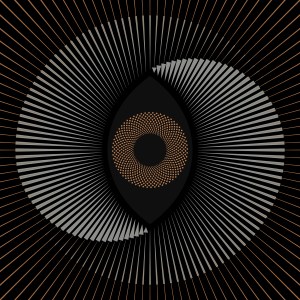
Cover of the album Eye to Windward by the band Gigafauna

Enter Gigafauna, a four piece from Uppsala, Sweden. For the sake of disclosure, I will admit that I was unaware of the band until they reached out via the contact form and let me know of their upcoming album, Eye to Windward. Hitting play, I truly had no idea what to expect. What I found, almost instantly, was a band taking that far riskier approach, that chance to mix genres and see what came out.

And what came out on Eye to Windward? A kick-ass album that deftly blends elements of progressive metal, sludge, and melodic death metal with a groove and swagger straight from an 80s hard rock band.

Songs move between moments of heavy grooves, crushing death metal riffs, clean vocals and growls, and back to those heavy grooves. The sense of swagger is ever present, even when the drums move to double time and the growls come barreling in. This all comes together to keep the heaviness from ever becoming overwhelming. Don’t mistake what I am saying: This is a metal album, through and through. But there is a sense of what I would describe as playfulness in how the band weaves together these different styles that keeps if from feeling oppressive.

Some days, I welcome the oppression and darkness that metal can provide. Eye to Windward keeps me engaged with its, at times, crushing heaviness. Yet the variety between the vocal styles and the riffs keeps the album feeling interesting, explorative, and injects a sense of joy into the music, even when the songs are dead serious. This is a difficult trick to pull off, and many bands falter as they try to do so. An excellent example is mid-album track “Plagued”. Harsh vocals start out, with an almost stomping beat. But the band isn’t afraid to take that places, with soaring vocals, textural variations in the guitars, and playing with moments of stripped back drums and bass coupled with layered guitars and vocals. It is an excellent showcase of all the different tools Gigafauna has at their disposal.

Other tracks are more focused. “Pyres” is heavy out of the gate, with my favorite riff on the album. Even here, though, there is a sense of dynamics that prevents the music from ever feeling stale. Album finale, “Vessel,” is a worthy way to close out this journey, taking us through all of the feelings of the album in a fantastic capstone on the experience. A sludgy, progressive, death-tinged epic, Gigafauna sticks the hooks in, tantalizingly hinting at where they may choose to go from here.

That doesn’t mean the album is perfect. There are some transitions that feel less fluid, slightly forced. There are moments where the disparate elements don’t come together perfectly. But that is always the risk when trying to marry these different styles. And while not perfect, the songs are all supremely enjoyable and performed with incredible talent. I am left impressed by the successes found on Eye to Windward, which far outshine the few bumps on the road.

For a band to come out of the dark and really blow me away is no small feat. Gigafauna has done just that with their release Eye to Windward. Mixing metal styles can either pay off or backfire spectacularly, and here it pays off with aplomb.
Revisiting Holocene by The Ocean

Expectations. The word carries a lot of weight. We have so many different expectations, and sometimes, even when we don’t realize we have them, they still spring up and get in our way. I make it a habit to teach those I work with that the best way to exceed expectations is to preemptively manage them.

I often don’t do that for myself.

For the last number of albums, and over the course of about 10 years, The Ocean has been on a path, setting itself apart as one of the most interesting metal bands currently active. They have explored the human condition through major geological epochs of the earth, painting with impeccable care, creating a string of powerful albums that have ranked amongst the very best each year they have released one.

Enter Holocene, their latest opus.

The writing has been on the wall. The Ocean didn’t come out of left field and knock us senseless with some unforetold haymaker. They have been expanding their sound, adding more keyboards, more dynamics and asking more of the listener.

For some reason, I was still surprised at what Holocene was. The initial single that was release seemed to really telegraph what was coming. Furthermore, the final track from the previous album “Holocene” presaged what was coming.

Still, both myself and much of the online music/metal community seemed taken aback by what Holocene was. It still sounded like The Ocean. But here we had much more electronic, keyboard heavy, and atmospheric release. The Ocean has never shied away from atmosphere in their music, particularly over the last decade or so. But here, something seemed just too stripped back. It felt to me that there was a lack of intensity.

I was bummed.

While at dinner with some friends prior to attending a YOB concert, Holocene came up in conversation. I clearly recall referring to it as “my least favorite Ocean album.” And that was the line I stuck with.

Until I had some time off. We were leaving town, family summer vacation time. We had a bit of a drive, not too long, but long enough for me to have some headphones in and to fire up this album. Even though I had largely written it off, I still felt bad. Here was the most recent release from one of my very favorite bands, and I still hadn’t really given it much of a chance. I hadn’t, still, listened to the album from start to finish.

A couple of hours in the car seemed a solid enough excuse to dedicate 52 minutes to at least one solid, uninterrupted listen.

Reader, I can’t give you the reason for what happened next. Was it just finally listening to the album start to finish? Was it that I was in a vacation state of mind and thus more relaxed, more open minded? Or was it just that The Ocean had secretly created an absolute fucking masterpiece and I was just too blind to realize it? We may never know.

Except for the fact that it is, in fact, a masterpiece. Of that, I no longer have any doubt.

Holocene just drips atmosphere, style, and confidence. This is the confidence of a band who understand just how talented they are, and that they can play with different textures, different layers, and still create incredibly compelling music. There is a swagger to the music here, so confident is the music in what it is presenting.

And intensity. So much intensity.

Yet used in an incredibly intelligent and sparing manner. Songs often build slowly, over the course of many minutes. There are crescendos and decrescendos, dynamics abound and each song is a journey. There are groovy moments that just make you want to move to the music, an almost dancelike EDM quality to them. But these are so adeptly coupled with passages of extreme heaviness, that I can’t decide, do I want to bop to the beat or full on bang my head and jump in the pit?

The truth is, what makes Holocene such a masterful album is the fact that both, almost simultaneously, are appropriate.

Holocene may not be my favorite album from The Ocean, but it isn’t far off. The more I listen to it, the more layers it seems to unfold to me, revealing a brilliance in song writing, structure, and storytelling that draws me in again and again. In fact, so engaging is that album that, despite actually being a few minutes longer than some of the previous albums, it feels far shorter. Holocene asks for an open mind, but when approached with one, it reveals itself to be a perfect album for our time. Balancing so many disparate elements in a manner that feels effortless, The Ocean are telling the story of our difficult times, times in which we all similarly balance almost innumerable responsibilities and roles. If we can only do so with such grace and elegance, we will surely live blessed lives.

My Week in Music – February 5, 2022

This week was a bit more of a fun one when it came to music. I sort of rediscovered Black Crown Initiate, as well as Persefone. BCI just sort of because. Persefone had a new album drop Friday. I have been a huge fan on their particular take on progressive metal eve since I heard their album Spiritual Migration years ago. This one sort of snuck up on me. Didn’t realize they had one coming out until Tuesday.

Dawn of Solace had a new one drop recently. They have a certain melancholy that just seems to speak to me. Some Meshuggah, some LoG (a workout favorite), and some folk black metal. All in all, a nice mix, with a bit more variety than the previous week. And more to choose from. I definitely listened to more music this week.

2021 In Review: Music

Best of 2021

  • Archspire – Bleed the Future
    • A tour de force of technical death metal. Yet still balances that with more quiet, calm moments. Understanding that, even at only 32 minutes, it would be too much if it was unrelenting. Also, songs. Not just display of technical ability, actual songs.
  • 1914 – Where Fear and Weapons Meet
    • WWI will always be a bleak subject, and here it is handled with aplomb. Blackened death metal, with the addition of some symphonic elements this go around. Interspersed with music and quotations from the time. The music is perfect for the subject matter: harsh, harrowing, yet with moments of emotion.
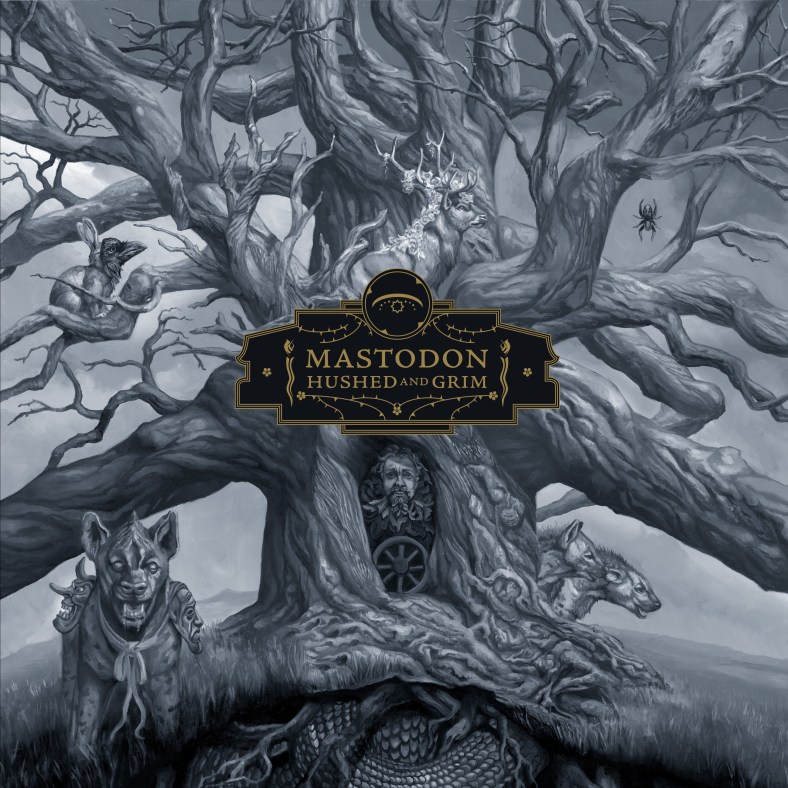
  • Mastodon – Hushed and Grim
    • Too long, yes. But honestly, every song wins me over at some point. Even the songs that start off in a style I despise (country anyone?) eventually grow into something that I appreciate. Packed with emotion, this one took a couple of listens, but definitely won me over.
  • AMENRA – De Doorn
    • Not Mass VII. And shame on us for wanting Mass VII. De Doorn is still classic AMENRA. Powerful, haunting, balancing being abrasive with being introspective. A shining example of what draws me to post-metal: quiet contemplation balanced with crushing brutality.
  • Black Sites – Untrue
    • Just damn good heavy metal in the classic sense of the term. Lead member’s previous band Trials was a much heavier act. Black Sites brings some of that edge, but couches it in a modern yet classic metal veneer. Catchy songs, excellent choruses, interesting compositions.
  • IOTUNN – Access All Worlds
    • Progressive death metal with a sci-if theme? Sign me up! And Jón Aldará on lead vocals? Oh hells yes. This is huge, grandiose progressive metal with death growls and soaring cleans, this just hits all the right spots for me.
  • LLNN – Unmaker
    • So. Heavy. LLNN deal in the heavier aspects of post-metal. This is crushing, brutal, truly heavy music. Yet it is still subtle. That seems impossible, but mixed in with the monolithic riffs and the tortured vocals are weaved synths as well as layered “field recordings” of sounds from the real world. Probably the best single word for this is devastating.
  • Spiritbox – Eternal Blue
    • On paper, I shouldn’t really like Spiritbox. While difficult to place in a genre, metalcore would be the best fit. And I don’t really love most metalcore. And while I appreciate and love the heavy (“Holy Roller”), what elevates Spiritbox and Eternal Blue for me are all the things that are distinctly NOT metalcore. The gorgeous cleans of Courtney Laplante, the electronic elements, the ambience, the effects and the ever present guitar skills of Mike Stringer. Spiritbox just strikes me as something special, and their first full length album confirms that.
  • Year of No Light – Consolamentum
    • I love almost all things post. It’s true. Add post-metal or post-rock tag to anything and I am immediately 5 times more likely to check it out. Then make it instrumental? Gaaaahh. Okay, I’m sold. And then the fact that the music is so good, moving, driving, atmospheric. Having never heard of Year of No Light before, I immediately became a huge fan.
  • Crescent – Carving the Fires of Akhet
    • Egyptian themed death metal. Yawn. Nile has been doing that for years. But Nile has also not really wowed me for years (though their most recent album is a winner). Enter Crescent. Combining the heaviness of death metal with middle eastern musical cues and styles, they have created a really powerful album of music. This was an easy one to keep coming back to this year.

Honorable mentions

  • Be’lakor – Coherence
    • I really like the melodeath of Be’lakor, and this album is no different. Could have been higher had I listened to it more.
  • Emma Ruth Rundle – Engine of Hell
    • “Return” might be my favorite song of the year. This album is raw, simple, ERR. And she excels and bringing the emotion she is so adept at conveying.
  • Evergrey – Escape of the Phoenix
    • I just love Evergrey. This is an excellent distillation of what makes this band who they are. And that is why it isn’t ranked higher. It is Evergrey, once again, doing what they do. Good thing they do it so well.
  • Exodus – Persona Non Grata
    • Exodus be Exodus. Don’t expect them to change. And here they don’t. This is reliable thrash with a brutal guitar tone and Zetro’s unhinged vocal delivery.
  • Frontierer – Oxidized
    • WTF. Literally every time I listen to Frontierer I just think WTF over and over. Pure chaos in musical form, cranked all the way to 11.
  • Impure Wilhelmina – Antidote
    • I really like this band and their blend of metal with smooth, Brit pop style crooning. And this might be the best example of that blending ever. Probably should be higher on my list, I just didn’t listen as much as I would have liked.
  • Khemmis – Deceiver
    • Late in the year, not enough time to really appreciate this. But a reliable Khemmis record. Not their best (don’t know if Hunted will be able to be topped), but another great release from this band and an album I have enjoyed quite a bit this year.
  • Swallow the Sun – Moonflowers
    • Where are the tissues? Why is it so dusty in here? Why won’t my eyes stop watering? Death doom designed to rip your heart out and leave it on the floor. The loss of Aleah Stanbridge continues to haunt Juha Raivio, and that radiates from this record.
  • Clouds – Despartire
    • Yeah, seconded. Minus the loss of Aleah. Do not, I repeat DO NOT listen unless you want to wrap yourself in sadness and despair. But if you do, this is the softest, fuzziest blanket of despair you’ll find.

Better Than it Should Be

  • Chevelle – Niriatas
    • Chevelle hasn’t really interested me in years. But somehow this one grabbed my attention enough I listened to it multiple times this year. That shocked me.
  • Between the Buried and Me – Colors II
    • Following up such a landmark album like Colors is a difficult task. And the fact that BtBaM do it as well as they do here is surprising. I still have to be in the correct mindset for BtBaM and their “kitchen sink” approach to music, but here it works better than expected.

Disappointments

  • Gojira – Fortitude
    • Too many moments or tracks that just halt the momentum of this album. Like it’s predecessor Magma, this album just doesn’t click for me. I know a lot of the metal community continue to slather praise on Gojira and treat them like the second coming of the Lord. But while I admit they have had some amazing albums in the past, Fortitude continues the trend of albums that I have little to no interest in coming back to.
  • Iron Maiden – Senjutsu
    • It’s Maiden. It’s reliable. It’s also getting slower, songs feel more bloated, and fewer and fewer moments really stand out. This isn’t a bad album, it just isn’t one I came back to after the first week or so. I love that these guys are still rocking into their late 60s, but maybe it is time to wind down? Maybe?
  • Leprous – Aphelion
    • It is fine, if you want proggy pop-rock. But if what you loved about Leprous all started to fade with 2015s The Congregation this album will do little to nothing to win you back over. It certainly didn’t win me over. At least it isn’t any worse than their last 2 albums.

Mastodon – Hushed and Grim

I have a bit of a troubled relationship with Mastodon. I fell in love with their 2006 release Blood Mountain and thoroughly enjoyed the albums that preceded that one. Crack the Skye was a progressive opus that blew me away.

But follow up, The Hunter, left me cold. It just didn’t click with me. Nor did follow up Once More ‘Round the Sun, both of them just feeling less aggressive, somewhat more straightforward sound that just didn’t excite me. Emperor of Sand started to win me over a bit more, and I did listen to it a fair amount when it first came out. Yet I just didn’t find myself going back to any of these albums with any sort of regularity.

When I then stumbled across their soon to be released album Hushed and Grim I was intrigued, but can’t say I was excited. Taking full advantage of my streaming music subscription, I added the album to my library and briefly checked out part of one of the tracks that had been released. Again, I felt nonplussed. I wasn’t immediately turned off, but I certainly wasn’t excited. Add to that the fact it was a double album, reaching almost 90 minutes in length, I didn’t know what to expect.

So I suppose it was beneficial that I had an upcoming trip, with an unusual amount of time to listen to music. Because, make no mistake, this album requires a significant investment from the listener.

However, after a number of listens, I found that the investment was rewarded. Hushed and Grim is full (perhaps a little too full) of surprisingly emotional music. Written as a tribute to the band’s former manager who passed away a few years ago, the album is replete with the emotions that go with losing someone close to you: loss, anger, sadness, hope.

There is also a heaviness to the album that draws me back in when compared to the previous albums. The trademark Mastodon sound is present, heavy, a little sludgy, and a very nice use of the multiple vocalists. Hushed and Grim is a journey, and one that I have found rewarding over repeated listens. It isn’t an easy listen, not something you drop in and out of. But if you have 90 minutes to really sit back and listen, I find this the most engaging Mastodon release in a decade.

Archspire – Bleed The Future

I don’t even remember how it happened. It was most likely on angrymetalguy.com, since that is how I tend to find most of my new music. But I recall seeing the cover for Relentless Mutation by Archspire, and thinking “that is some freaking crazy album artwork!”

Little did I know, the artwork was just a shadow of what I would discover on the actual album itself. 

Firing that album up and hearing “Involuntary Doppelgänger” was one of those pivotal moments in my music life. No joke. I knew, going in, that Archspire was technical death metal. So I expected theatrics. My brain and ears were not ready for the level of theatrics. Insane drum fills, lightning fast guitar riffs, and harsh vocals that were so rapid fire and percussive, I still haven’t heard their like. 

But while it was immediate amazement, it wasn’t immediate love. The technical ability on display was untouchable. But so dense was the music that it took a bit to really get into it. However, once I did, I was secondarily amazed at how, despite the insanity of the music, there was still a focus on melody, on the musicality of the songs. It became one of my favorite albums of 2017.

Fast forward to 2021. The announcement of a new Archspire album was now met with immediate anticipation. Listening, over and over again, to the singles that were released prior to the full album dropping, my anticipation was only fed. And then the full album dropped.

Bleed the Future is an unapologetic, brutal, technical 32 minutes. It is also an absolute, unequivocal triumph.

On display is everything about Relentless Mutation that I loved, but better. More speed, more technicality, more vocal lines that are so fast you simply can’t follow them if you happen to watch the lyric video. No joke. But most impressive is this: these songs are catchy as hell. It is true. Despite the brutality, the speed, the insanity of the music, these songs are true earworms. Melodies get stuck in your head, passages embed themselves in a way that just won’t let go or let up.

Very welcome on this release is an improvement in the presence of the bass. Rush was my first love, the first band I went all in on, and I think that has had a huge influence on my lifelong love of bass in music. And so, it pains me when it is absent (And Justice For All I’m glaring in your direction). And while it wasn’t absent on previous releases, it just feels so much more present here. It rounds out each song, adding a depth that is so welcome.

Amongst the insanity there are also many moments to catch one’s breath. These moments of slow and peaceful brilliance are essential and so welcome. While just over 30 minutes long, Bleed The Future would be punishing to get through from start to finish, were it not for these well placed and thoughtful breaks. They are another example of just how tight and brilliant Archspire are. These guys know what they are doing, and understand music incredibly well.

Melodic guitar solos also act in a contrapuntal fashion to the brutal tech death riffing, giving moments of reprieve from the onslaught, injecting beauty in the overall all album. The efficiency of the album in communicating all of this is incredible.

If it wasn’t obvious yet, let me make this perfectly clear. Bleed the Future is a truly amazing album. It is rare that an album grabs me with such a choke hold, but this has done just that. Other very good albums have come out recently, and yet while I listen to them, all I can think is “but I could be listening to Bleed The Future instead!” If this isn’t my top album of 2021, it means something is coming out in the next two months that I am not aware of. I don’t see how any album tops this.

Archspire aren’t just bleeding the future, these guys are creating the future of tech death in a way no other band is. And this is a future I believe in and welcome.

Witherfall – A Prelude to Sorrow

In 2017, a little album came out of nowhere and knocked my socks off with its technical approach to power metal. WItherfall dropped Nocturnes and Requiems, a compelling mix of progressive, power and even neoclassical metal, all with a dark, haunting undertone pinning it all together.

Having lost their original drummer to tragedy in 2016, the band released that album posthumously. It was replete with powerful vocals, stunning guitar work, and a melancholic attitude that impressed me. However, for some reason, it didn’t really click with me, and while I found it impressive in many ways, I didn’t find myself coming back to it that often.

However, just one year later, Witherfall dropped A Prelude to Sorrow, follow up to their debut. It would be easy to be worried about a second album coming so quickly after the debut, however, given that Nocturnes and Requiems had actually been finished some time before release, and my fears were assuaged. Some.

And then I listened to A Prelude to Sorrow.

Not much had changed, but for some reason, this album instantly clicked with me. I found myself listening over and over again. The same elements were present, yet something about them this time around spoke to me. Subsequently returning to Nocturnes and Requiems has revealed it to be an album I really love as well.

The dark atmosphere that permeates A Prelude to Sorrow is the key in making it enjoyable for me. It harkens back to the gone, but never forgotten, Nevermore. Sure, there are elements of power metal here, but the standard cheese is exchanged for melancholy and darkness. That instantly improves the album in my estimation.

Lyrically, this isn’t happy go lucky fair. Take these lines from first proper track, “We Are Nothing”:

We are nothing

Our souls are just flickering lights

To be extinguished,

Snuffed out by the cold hands of time.

Or how about these words from “Ode to Despair”?

Sometimes mirrors only show

What we want to see

And we’ll fall into despair

And we’ll get no reprieve

As we descend further down

You see what you want to see

In our ode to despair

And we’ll get no reprieve

In our ode to despair

Time just slips away

Still, these are all things we have felt, and I find the expression of said sentiments to be cathartic. There is something to be said in expressing these thoughts and feelings. Perhaps that is why I find this album somewhat therapeutic to listen to.

And musically, this is an impressive album. The guitars are technical, driving, powerful, while still emoting. The vocals are equally powerful. There are high falsettos, lower register vocals with some grit to them, but always tastefully done, executed with the utmost skill. Really, every member is excellent, with the rhythm section being more than up to the task of carrying the weight of these songs.

The best part for me, I gained an entire new appreciation for Nocturnes and Requiems after really falling in love with A Prelude to Sorrow. Witherfall has proven themselves to be one of the most promising and talented prog/power bands, and I look forward to more from them.

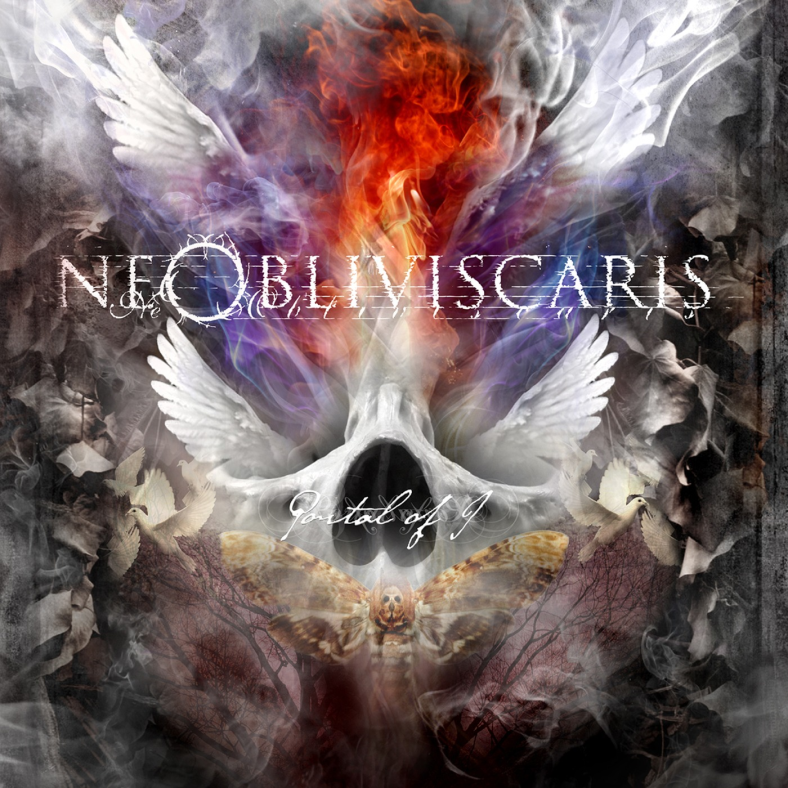
Ne Obliviscaris – Portal of I

Writing about 30 albums in 30 days has been a good exercise for me. It has helped me dust off the cobwebs that have accumulated in the writing portion of my brain, and has given me the opportunity to perhaps think a bit more about why I like some of the music I like.

I don’t think I could say it has made me a better writer, yet. But hopefully that will come with time and with some continued writing.

As I’ve been thinking about what album I should finish this endeavor out with, I struggled a bit. Strictly for my purposes, I felt it should be some piece of music that has had a more profound impact on my life. Yet, I’ve already written about a number of those. I’ve hit upon Neurosis, Fates Warning, Opeth, and some others. So, just for fun, I thought I would fire up iTunes and see what album has the highest play count.

And I was blown away.

I actually think there has to be some sort of error in the way iTunes counted things, because it says that I have listened to some tracks of Portal of I but Ne Obliviscaris over 1,400 times. Yet, while I doubt that total number, there can be no mistake, Portal of I was another massive breakthrough album for me, and led to Ne Obliviscaris being one of my very favorite bands.

I wish I could recall how I stumbled across this album. It was something online. There was a lot of buzz building, despite the fact it was the first album from this young Australian band. It seemed there was a bit of a bandwagon forming, so I decided I would jump on.

Again, gut trusted, payoff ensued.

Portal of I is an amazing album, one which, personally, I don’t think Ne Obliviscaris has topped, despite subsequent albums being stronger as albums. Portal of I just has some of the most amazing metal songs I think I have ever heard.

Playing another melange of genres, Ne Obliviscaris is firmly rooted in some of the more extreme styles (death and black metal are a staple of the sound). However, over all this is a very strong progressive component. Many songs are longer than 10 minutes, with multiple passages and recurring motifs, in a fashion that calls to mind classical music to be completely honest.

Furthering the classical music comparison is the central, and really essential, use of violin in the music. It would be tempting to relegate the violin to brief moments here and there. However, Ne Obliviscaris intelligently writes their music understanding that the violin is a central instrument, much like the guitar or bass. Every song is replete with lyrical violin that adds a unique and beautiful layer to the music. Played by Tim Charles, the clean vocalist, it is really present nearly all the time that Tim isn’t singing, and at times plays off the lead guitar as well.

Beautiful really is one of the most effective ways to describe the music of Ne Obliviscaris. Take, for example, my favorite song off Portal of I, “Forget Not”. A tribute to a family member of the band, the first 5 full minutes are primarily violin and acoustic guitar. The music ebbs and flows, building and retreating throughout the entire 12 minutes.

Other songs are equally as powerful. “As Plague Flowers The Kaleidoscope” is a monster of a song. Layering clean vocals and black screams and death growls from Xenoyr, this is another song full of crescendo and denouement, an emotional journey from start to finish, that really showcases just how dynamic, moving, and fascinating metal can be.

Make no mistake, this is a metal album from a metal band. Yet, they are extremely willing to push the boundaries of what we would traditionally consider extreme metal, melding different styles, genres, and dynamics to create something that, at least as far as I have thus found, is a truly unique sound. Sure, other bands are doing many of the same things NeO does, but I have yet to find a band that blends them all together as seamlessly as these Aussies do. Add on that, they just come across as a super affable bunch, very willing to interact with fans and to have a relationship with those fans (particularly via Patreon), and you have a band that is super talented and a class act all around. I love all their albums, but Portal of I still remains my favorite, likely as it was my introduction to this fine act.

Oceans of Slumber – The Banished Heart

Loss is part of life.

We all will, or have, lost someone near and dear to us. The melange of emotions that accompanies such loss is a complex one. Grief, anger, despair, pain are all common. Mayhap there is also a sense of peace or relief, depending on the situation.

However, in every case, it is a confusing time for us all.

And loss doesn’t need to mean death. We’ve all experienced the loss of a friendship, a relationship that at some point was so fundamental to our existence, that the very thought of life without that person or relationship seemed impossible to fathom. Those can be some of the most painful losses, because that person is still there, still exists and occupies this same sphere of existence as we do, but the loss of that relationship taunts us incessantly, reminding us of what once was, but no longer is.

I first became familiar with Oceans of Slumber with the release of their 2016 sophomore LP, Winter. I subsequently discovered their debut, Aetherial and couldn’t have been more surprised at the difference between the two albums. It felt like these were completely different bands.

At least at first.

However, closer listens revealed many of the same hallmarks. Oceans of Slumber play a progressive style of metal, with overtones of melodic death metal, and a healthy slab of doom layered over it all. The emotional power of third full-length, The Banished Heart really drives home that doom aspect this time around.

Between their first album and subsequent EP, Blue, Oceans of Slumber had the fortune of adding Cammie Gilbert as lead vocalist. Her power, ability to convey emotion, and wonderfully soulful voice has become the real heart of Oceans of Slumber since that EP. It is the addition of her and her prodigious ability that has allowed the band to become a much more fascinating, engaging, and powerful band than on the debut.

Her talent is put into full force on The Banished Heart. Penned primarily by the drummer, the album chronicles the emotional journey of the birth of a daughter and a divorce from his wife. There is real emotion here. In a similar manner as Iris from Altars of Grief, this is a powerful and painful listen. This album hits hard, and rarely relents.

Lyrically, this cuts like a knife. Lines such as “You take from me for gain/You take my love in vain/And here we are the same as before”, sung with Cammie’s powerful voice are immediately followed by growl/screams “Could you believe/The other side of bliss is misery?”. These are powerful words. The final stance from first track, “The Decay of Disregard” establish this sense of loss and pain. “Did you even try to find me?/Did you even care for one last chance at reconciliation?/Do you know how long these veins have ran?/Remnant of red that stains your hands” gives a solid clue as to where this album will go.

Musically, it is powerful stuff. There are quiet moments of simple keys and vocals. There are driving moments of heavy guitars, double bass, and growls and screams. The performances are excellent all around. Tom Englund, ultimate melancholy and sad boy vocalist, even appears for a duet on “No Color, No Light”. Honestly, pairing him with Cammie Gilbert nearly breaks me. I’d have a hard time telling you which track leaves me feeling more drained, this one or “Becoming Intangible” from Iris. Both songs are supreme tours de force of emotional, cathartic, and melancholy misery.

And yet, there still exists some light at the end of this tunnel. It isn’t all darkness and sadness. There is a sense of, if not hope, at least peace to be found in the cover of folk song “Wayfaring Stranger”, as the album closes out. It won’t leave you feeling happy, pumped to go and take on the world. But The Banished Heart is a powerful expression of emotion, loss, and acceptance of some of the more difficult aspects of being human. This ability to reach inside the listener and lead to some emotional introspection is a mark of true art, and one I welcome.

But only every once in a while.

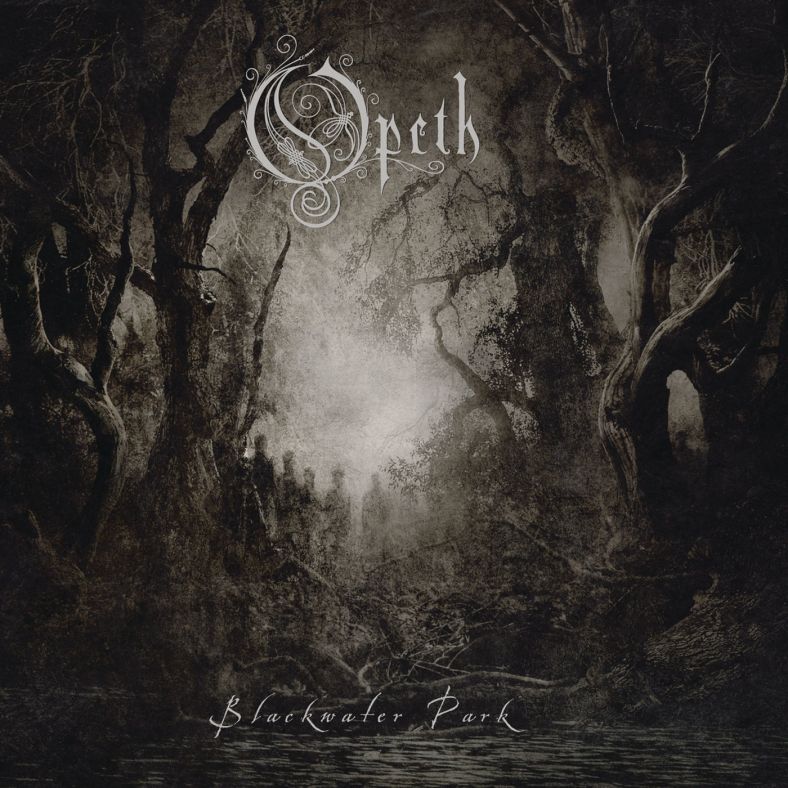
Opeth – Blackwater Park

As I reflect on my musical journey over the past many years, it is difficult to overstate the importance of Blackwater Park by Opeth. Over time, my tastes in music had been gradually edging towards the more heavy. I was moving beyond the mainstream things like 90s and 2000s Metallica and Megadeth. I was exploring more progressive music, and starting to spread out into genres I hadn’t previously dabbled in. But I had one huge hang up: harsh vocals.

I just couldn’t handle them. I found them too grating, too unrelenting. And so, I instantly rejected any music that had harsh vocals. I’d encountered some minimal harsh vocals, but these were more appropriately classified as screams. Not growls. But, in the era after the release of Blackwater Park it was almost impossible to go anywhere online that wasn’t heaping praise on this album. And most interesting to me was, in the midst of all this, many comments about what a beautiful album it was.

That was what most piqued my interest. Comments about beautiful music, even in spite of the death growls, intrigued me. And so, I fully admit, I downloaded it and gave it a spin. (Full disclosure, I have since purchased the album both physically and digitally. But this was before YouTube, Pandora, Spotify or Apple Music. It was tough to hear new music without coughing up the dough for it.)

And let me tell you something, it was most definitely not love at first spin. I could totally get into the music. But the vocals. Ugh, the vocals. Surprisingly to me, there still were clean vocals, and they were quite nice at that. Yet the death growls still put me off. After a time, though, I started to grow accustomed to them. Some would say it was me becoming dull to them. However, I also started to view the vocals as another layer to the music. They were more a texture than a melody. I believe it was that understanding that opened my mind to harsh vocals.

Once I got over that hump, I was able to really start to appreciate just what an amazing album Opeth had released. Blackwater Park has so many layers. Yes, this is death metal. But deep in a way I was’t expecting. There are loads of acoustic guitars here, moments of quiet peace and contemplation. And then there are moments when this is heavy as a freaking two-ton heavy thing.

Add to that the fact that “Blackwater Park”, the song, is one of the most brutally awesome songs of all time, coupled with so many good songs on this album, and you have one amazing piece of art. To this day, I still feel that art is the best way to describe this album. While I may not love everything Opeth has done since Blackwater Park, this album will always be a watershed moment for me and my musical journey. And if you haven’t listened to “Blackwater Park”, well, it’s below so what the heck are you waiting for?