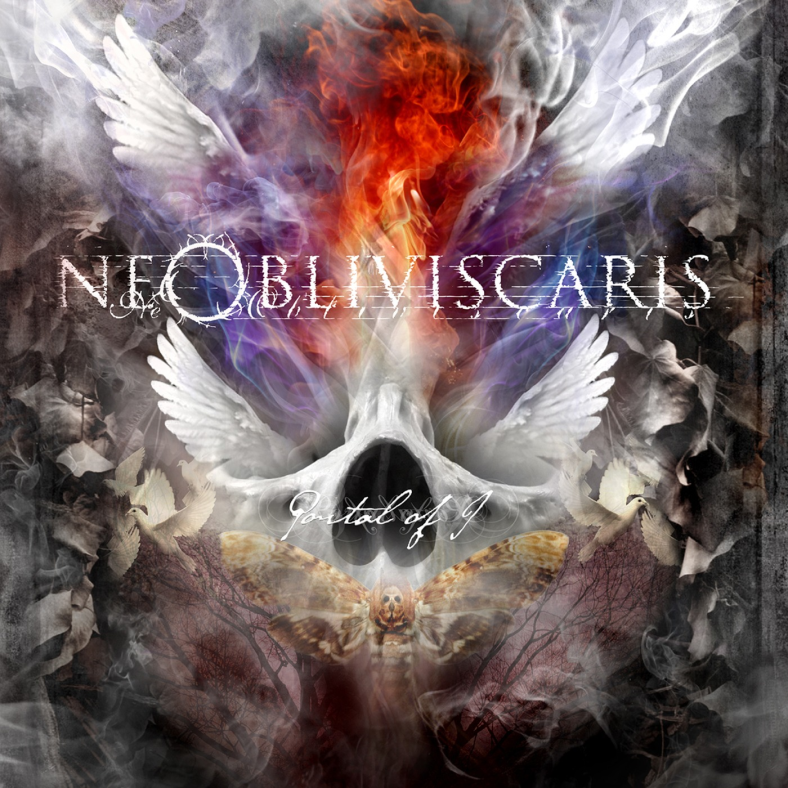
Ne Obliviscaris – Portal of I

Writing about 30 albums in 30 days has been a good exercise for me. It has helped me dust off the cobwebs that have accumulated in the writing portion of my brain, and has given me the opportunity to perhaps think a bit more about why I like some of the music I like.

I don’t think I could say it has made me a better writer, yet. But hopefully that will come with time and with some continued writing.

As I’ve been thinking about what album I should finish this endeavor out with, I struggled a bit. Strictly for my purposes, I felt it should be some piece of music that has had a more profound impact on my life. Yet, I’ve already written about a number of those. I’ve hit upon Neurosis, Fates Warning, Opeth, and some others. So, just for fun, I thought I would fire up iTunes and see what album has the highest play count.

And I was blown away.

I actually think there has to be some sort of error in the way iTunes counted things, because it says that I have listened to some tracks of Portal of I but Ne Obliviscaris over 1,400 times. Yet, while I doubt that total number, there can be no mistake, Portal of I was another massive breakthrough album for me, and led to Ne Obliviscaris being one of my very favorite bands.

I wish I could recall how I stumbled across this album. It was something online. There was a lot of buzz building, despite the fact it was the first album from this young Australian band. It seemed there was a bit of a bandwagon forming, so I decided I would jump on.

Again, gut trusted, payoff ensued.

Portal of I is an amazing album, one which, personally, I don’t think Ne Obliviscaris has topped, despite subsequent albums being stronger as albums. Portal of I just has some of the most amazing metal songs I think I have ever heard.

Playing another melange of genres, Ne Obliviscaris is firmly rooted in some of the more extreme styles (death and black metal are a staple of the sound). However, over all this is a very strong progressive component. Many songs are longer than 10 minutes, with multiple passages and recurring motifs, in a fashion that calls to mind classical music to be completely honest.

Furthering the classical music comparison is the central, and really essential, use of violin in the music. It would be tempting to relegate the violin to brief moments here and there. However, Ne Obliviscaris intelligently writes their music understanding that the violin is a central instrument, much like the guitar or bass. Every song is replete with lyrical violin that adds a unique and beautiful layer to the music. Played by Tim Charles, the clean vocalist, it is really present nearly all the time that Tim isn’t singing, and at times plays off the lead guitar as well.

Beautiful really is one of the most effective ways to describe the music of Ne Obliviscaris. Take, for example, my favorite song off Portal of I, “Forget Not”. A tribute to a family member of the band, the first 5 full minutes are primarily violin and acoustic guitar. The music ebbs and flows, building and retreating throughout the entire 12 minutes.

Other songs are equally as powerful. “As Plague Flowers The Kaleidoscope” is a monster of a song. Layering clean vocals and black screams and death growls from Xenoyr, this is another song full of crescendo and denouement, an emotional journey from start to finish, that really showcases just how dynamic, moving, and fascinating metal can be.

Make no mistake, this is a metal album from a metal band. Yet, they are extremely willing to push the boundaries of what we would traditionally consider extreme metal, melding different styles, genres, and dynamics to create something that, at least as far as I have thus found, is a truly unique sound. Sure, other bands are doing many of the same things NeO does, but I have yet to find a band that blends them all together as seamlessly as these Aussies do. Add on that, they just come across as a super affable bunch, very willing to interact with fans and to have a relationship with those fans (particularly via Patreon), and you have a band that is super talented and a class act all around. I love all their albums, but Portal of I still remains my favorite, likely as it was my introduction to this fine act.

The Great Old Ones – Cosmicism

Black Friday can mean only one thing: Black metal.

Not really, of course. But in my heart, maybe, just a little. After all, black metal has (had, maybe, as it has grown so far beyond it’s initial roots) some mighty rebellious roots as far as establishments go.

And, well, after years of engaging in the Black Friday brouhaha, I have really shied away from it these last few years. So, there it is, my act of rebellion against the capitalist establishment. Haha, so rebellious, right?

But really, I’ve been meaning to write about this album all freaking November long, the months is 2 days from being gone, and I still haven’t managed to get around to it.

Honestly, I don’t know why either. I really have become a huge fan of The Great Old Ones. I dig their quasi post-black metal take on Lovecraftian mythos. I really do. In a similar fashion as Sulphur Aeon does with their death metal, TGOO weave Lovecraft’s stories and ideas throughout their music, making it an essential part of the album. This isn’t some one off idea like Metallica and their classic instrumental “The Call of Ktulu” (intentional misspelling according to the band).

No, such is not the case here. Rather, Cosmicism, like the albums that come before it, is entirely built upon the Cthulhu mythos, incorporating passages from Lovecraft’s works and building an entire presence around those stories and that universe. I find Lovecraft and his work interesting, and likewise continue to enjoy it here.

So why has writing about this album eluded me so? Perhaps, in an eldritch sort of way, thinking about it causes it to become slippery in my mind. I can’t hold onto it, lest it drive me mad. Mayhap that is it. Or really, maybe it’s just because I’m struggling putting into words my thoughts on this album. So this will be rough.

I love Cosmicism. I really do. I preordered it the second it was announced, I like the previous albums enough. Of course, I went with the vinyl preorder, as one does. But even then, ended up jumping for the special edition CD with a little Cthulhu statue, which now sits on my desk at work. You know, as one does. I mean, doesn’t that just scream, “Trust me, I’m a doctor”? The statue nicely compliments my Neurosis flag, my Allegaeon flag, my Imperialist flag, and my Plini flag. So, actually, I guess the office decor already gives of a, shall we say, unique vibe.

But back to the album. Musically, it has the hallmarks of black metal. There are blast beats, tremolo picking, rapid strumming, harsh vocals. But there are also passages that lean more towards the death metal side of things, heavier and more aggressive than usual black metal. The production is loud, but no lo-fi to the point it is painful to listen to. You can actually tell there are multiple (3!) guitars at play here, layering nicely to add to the music. Yet there are also those moments of slower music, of quieter music, of atmosphere at play here that add to the depth of the album.

And oddly, that’s really about all I feel like I can intelligently say about the album. I’ve been listening to it since it released, and I really like it a lot. But I struggle at articulating why. I don’t have an emotional connection with this album, it is too otherworldly for that. But it is an excellent album of interesting and well played and written black metal, Which seems more than I can ask on a cold, snowy, Black Friday.

Bull Elephant – Bull Elephant

We’ve all heard the advice to “trust your gut”.

It is a time honored saying, and one I fully endorse. In my personal life, I honestly don’t remember a time a regretted trusting my gut. Perhaps that is some sort of memory bias at play. However, I can think of plenty of times I didn’t trust my gut, and regretted it immensely.

And this is in many aspects of life. Personal, professional, and even something as mundane as taking a chance on new music.

That brings us to debut album, Bull Elephant, from anonymous four piece from the UK, Bull Elephant. My gut didn’t just say “buy this album”. No, it said “buy this album this very second, including the art book, you fool, you fool!”

How’s that for a gut instinct? And what an instinct that was.

Disclaimer: I haven’t listened to this enough you to really feel like I can offer a definitive assessment, so this is more of an initial impression. But that impression is impressively positive.

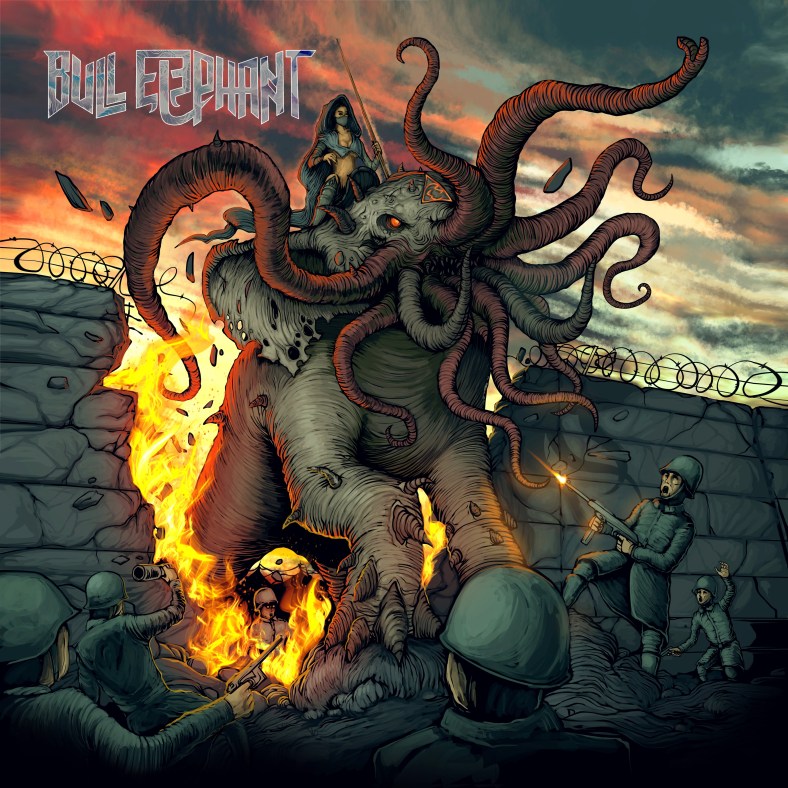
First off, why did my gut tell me so strongly to get this album? Well, there are two reasons. First, did you see that cover up there? I mean, did you really see it? A mix of WWII, mystic arts, and a huge war elephant/Lovecraftian horror hybrid. How metal is that? The answer is thus: all the metal. All of it.

And then there is this, the description from the band:

Bull Elephant is the story of a slain African elephant that occultist Ahnenerbe SS attempted to bring back from the dead as a new form of battle asset. However, before re-animation could be completed it was intercepted by a mysterious witch-shaman, pursuing her own agenda and redirecting the undead creature’s purpose.

Think of the background concept as Raiders of the Lost Ark set to a progressive doom soundtrack where Judeo-Christian mythology is replaced by the even more sinister universe hinted at in the writings of H. P. Lovecraft…. with Nazi assault wolves.

Once again, all the metal.

But fantastic artwork and a beautifully bonkers theme only get you so far. The music has to do the rest. Here, the music does so brilliantly. Bull Elephant are playing a bit of a genre salad here, with the base being a sludgy sort of doom. Layered on top of this are some elements of death metal and atmosphere that wouldn’t be out of place on a post-metal record. Vocals range from death growls to pleasant cleans. Songs are mostly in the mid to slow pace range, with some more propulsive moments.

So far, I love what I’ve been hearing. The guitar tone is heavy, with just enough fuzz to give it a little grime, that seems super appropriate given the theme. The drumming is crisp, with some nice little fills here and there, and never overwhelm, but provide a solid backdrop. Really, everything here has been clicking into place for me. Even though many of the songs are on the long side, and take their time moving from section to section, the album moves briskly, without ever feeling like there is a wasted moment. And just listen to the riff the kicks in “Dread Reactor”, final track. It is a delicious monster of a riff. These lads know what they are doing, and execute excellently.

A concept album with such a ridiculous premise has a very difficult job of not crumbling under the weight of its own ridiculousness. Bull Elephant pulls that off admirably, embracing the concept to the point that you can’t help but be pulled along. This album came out of nowhere and I can’t stop smiling while listening, or even thinking about listening. Cheers you crazy lads, cheers.

Oceans of Slumber – The Banished Heart

Loss is part of life.

We all will, or have, lost someone near and dear to us. The melange of emotions that accompanies such loss is a complex one. Grief, anger, despair, pain are all common. Mayhap there is also a sense of peace or relief, depending on the situation.

However, in every case, it is a confusing time for us all.

And loss doesn’t need to mean death. We’ve all experienced the loss of a friendship, a relationship that at some point was so fundamental to our existence, that the very thought of life without that person or relationship seemed impossible to fathom. Those can be some of the most painful losses, because that person is still there, still exists and occupies this same sphere of existence as we do, but the loss of that relationship taunts us incessantly, reminding us of what once was, but no longer is.

I first became familiar with Oceans of Slumber with the release of their 2016 sophomore LP, Winter. I subsequently discovered their debut, Aetherial and couldn’t have been more surprised at the difference between the two albums. It felt like these were completely different bands.

At least at first.

However, closer listens revealed many of the same hallmarks. Oceans of Slumber play a progressive style of metal, with overtones of melodic death metal, and a healthy slab of doom layered over it all. The emotional power of third full-length, The Banished Heart really drives home that doom aspect this time around.

Between their first album and subsequent EP, Blue, Oceans of Slumber had the fortune of adding Cammie Gilbert as lead vocalist. Her power, ability to convey emotion, and wonderfully soulful voice has become the real heart of Oceans of Slumber since that EP. It is the addition of her and her prodigious ability that has allowed the band to become a much more fascinating, engaging, and powerful band than on the debut.

Her talent is put into full force on The Banished Heart. Penned primarily by the drummer, the album chronicles the emotional journey of the birth of a daughter and a divorce from his wife. There is real emotion here. In a similar manner as Iris from Altars of Grief, this is a powerful and painful listen. This album hits hard, and rarely relents.

Lyrically, this cuts like a knife. Lines such as “You take from me for gain/You take my love in vain/And here we are the same as before”, sung with Cammie’s powerful voice are immediately followed by growl/screams “Could you believe/The other side of bliss is misery?”. These are powerful words. The final stance from first track, “The Decay of Disregard” establish this sense of loss and pain. “Did you even try to find me?/Did you even care for one last chance at reconciliation?/Do you know how long these veins have ran?/Remnant of red that stains your hands” gives a solid clue as to where this album will go.

Musically, it is powerful stuff. There are quiet moments of simple keys and vocals. There are driving moments of heavy guitars, double bass, and growls and screams. The performances are excellent all around. Tom Englund, ultimate melancholy and sad boy vocalist, even appears for a duet on “No Color, No Light”. Honestly, pairing him with Cammie Gilbert nearly breaks me. I’d have a hard time telling you which track leaves me feeling more drained, this one or “Becoming Intangible” from Iris. Both songs are supreme tours de force of emotional, cathartic, and melancholy misery.

And yet, there still exists some light at the end of this tunnel. It isn’t all darkness and sadness. There is a sense of, if not hope, at least peace to be found in the cover of folk song “Wayfaring Stranger”, as the album closes out. It won’t leave you feeling happy, pumped to go and take on the world. But The Banished Heart is a powerful expression of emotion, loss, and acceptance of some of the more difficult aspects of being human. This ability to reach inside the listener and lead to some emotional introspection is a mark of true art, and one I welcome.

But only every once in a while.

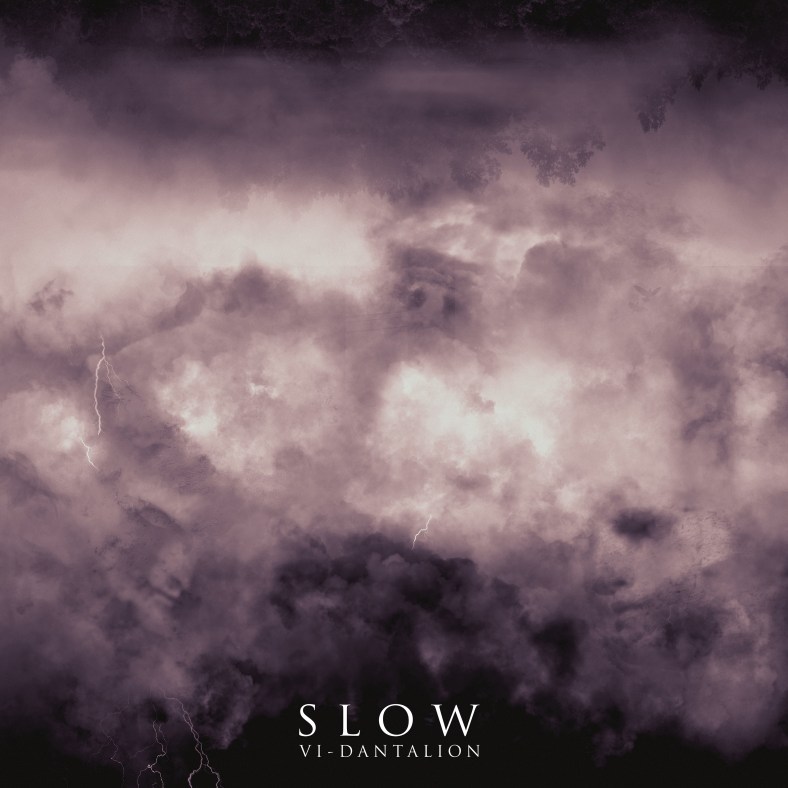
Slow – IV Dantalion

Years ago, my family and I went to Myrtle Beach in South Carolina. My oldest daughter and I, being the more adventurous and swimmerly of the crew (my youngest may be staking claim to that throne though), were out in the Atlantic, swimming and playing in the waves.

She had gone back to shore, and I was still out in the water. Shortly, I realized that I was actually getting further away from the shore. Yes, I was caught in a current and being pulled out to sea. As the saline waves cascaded over me, I had a brief moment when I truly thought that I might die. The ocean, so vast, so unfathomable, so uncaring for us mere mortals, had me in its relentless grasp, and cared not one whit about me or my plight. That inexorable current was all that mattered to me, I had to escape. Being honest with myself, at that moment, I felt a dread like none I have ever felt in my life.

I’ve been held up at gunpoint, I’ve been nearly plummeted off a steep washout with the river a hundred feet or more below me, I’ve been in biking accidents where I hit my head hard enough to lose consciousness. I’ve felt fear.

Yet never before, and never since, have I known dread as I knew it that day, in the clutches of the inhuman deep.

Slow, a two person band hailing from Belgium, must have felt similar dread at some point. The music of IV – Dantalion perfectly encapsulates that same sense of dread and helplessness I felt, embraced by the Atlantic.

Slow could not be more appropriately named. This is funeral doom at its finest. The music is incredibly slow, almost suffocatingly so. Songs march with an aptly funereal pace, feeling inevitable in their progression toward some sort of finality. And that finality is not going to be some happy occurrence. Seven tracks, with the album weighing in at a hefty 78 minutes, this isn’t a casual listen.

And yet I find it incredibly compelling. There is sadness here. There is loss, pain, fear. I think we all identify with those feelings. And while these may not be pleasant, the musical conveyance of said emotions carries with it a profound power. It allows us to process some of these feelings. It creates and atmosphere in which we can become introspective, looking inward and discovering a strength inside ourselves to overcome the vagaries that life will throw our way.

It is that cathartic ability I find so profound in the music of Slow. The guitars are heavy, crushingly so. The vocals, predominantly deep and throat ripping growls. The drums march out a sepulchral beat, relentless in their march. Yet layered over all this are beautiful keys and effects, almost sounding choral at times. When the music does increase in tempo, it is often simply in service of propelling one to the unavoidable conclusion.

Yet, buried in this doom, these moments of beauty and clarity serve to provide glimmers of hope. I don’t finish IV – Dantalion and feel like the hero has won, evil has been vanquished, and all is right in the world. But it doesn’t end feeling as though all is lost. Slow is music for realists. It is for those who know life can suck, but that we can fight back and make it through. This isn’t anthemic music to get you pumped to push on. But it reminds you that overcoming is part of the trial of life, and the ultimate goal for us all. We get kicked, we get beat, we are tired, fed up, worn out. But we persist.

In the end, Slow play music for those who are willing to be just as relentless as the ocean. And some days, relentless is the very best we can possibly be.

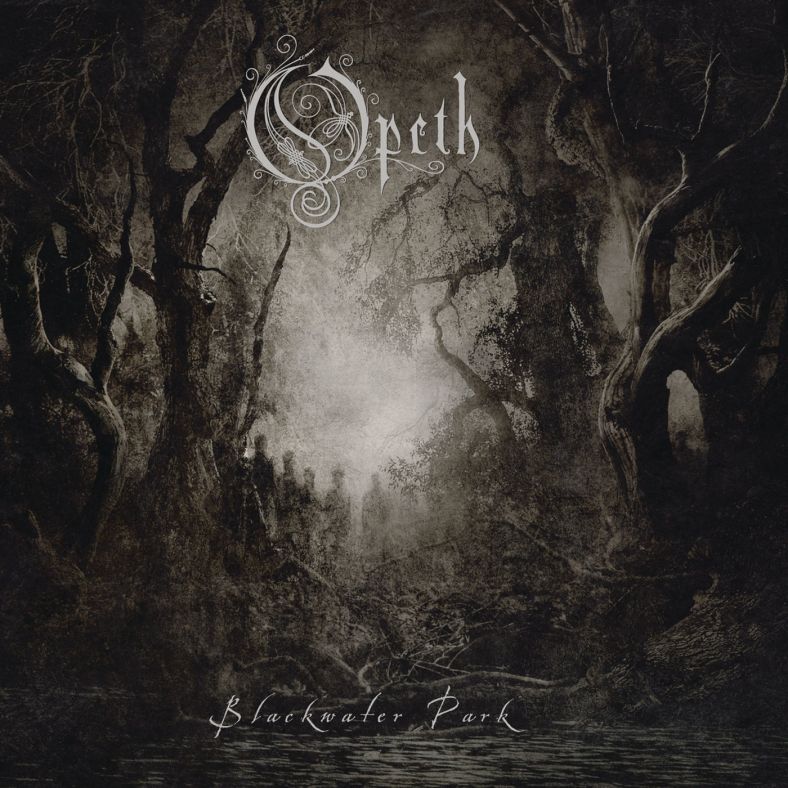
Opeth – Blackwater Park

As I reflect on my musical journey over the past many years, it is difficult to overstate the importance of Blackwater Park by Opeth. Over time, my tastes in music had been gradually edging towards the more heavy. I was moving beyond the mainstream things like 90s and 2000s Metallica and Megadeth. I was exploring more progressive music, and starting to spread out into genres I hadn’t previously dabbled in. But I had one huge hang up: harsh vocals.

I just couldn’t handle them. I found them too grating, too unrelenting. And so, I instantly rejected any music that had harsh vocals. I’d encountered some minimal harsh vocals, but these were more appropriately classified as screams. Not growls. But, in the era after the release of Blackwater Park it was almost impossible to go anywhere online that wasn’t heaping praise on this album. And most interesting to me was, in the midst of all this, many comments about what a beautiful album it was.

That was what most piqued my interest. Comments about beautiful music, even in spite of the death growls, intrigued me. And so, I fully admit, I downloaded it and gave it a spin. (Full disclosure, I have since purchased the album both physically and digitally. But this was before YouTube, Pandora, Spotify or Apple Music. It was tough to hear new music without coughing up the dough for it.)

And let me tell you something, it was most definitely not love at first spin. I could totally get into the music. But the vocals. Ugh, the vocals. Surprisingly to me, there still were clean vocals, and they were quite nice at that. Yet the death growls still put me off. After a time, though, I started to grow accustomed to them. Some would say it was me becoming dull to them. However, I also started to view the vocals as another layer to the music. They were more a texture than a melody. I believe it was that understanding that opened my mind to harsh vocals.

Once I got over that hump, I was able to really start to appreciate just what an amazing album Opeth had released. Blackwater Park has so many layers. Yes, this is death metal. But deep in a way I was’t expecting. There are loads of acoustic guitars here, moments of quiet peace and contemplation. And then there are moments when this is heavy as a freaking two-ton heavy thing.

Add to that the fact that “Blackwater Park”, the song, is one of the most brutally awesome songs of all time, coupled with so many good songs on this album, and you have one amazing piece of art. To this day, I still feel that art is the best way to describe this album. While I may not love everything Opeth has done since Blackwater Park, this album will always be a watershed moment for me and my musical journey. And if you haven’t listened to “Blackwater Park”, well, it’s below so what the heck are you waiting for?

Dream Theater – Systematic Chaos

I’m digging back for this one. Why? Because I want to have fun and be mean. That simple.

So, here’s the deal. I freaking loved Dream Theater. I mean LOVED this band. I vividly recall hearing “Pull Me Under” from Images and Words on the radio and having an eargasm. It was melodic, heavy, progressive. It was everything I wanted. I tracked the album down and was blown away (minus on moment of saxophone on one track: please refer to previously mentioned inverse sax rule). Metropolis Pt. 1 was mind-bending. I was hooked. Here were the progressive tendencies of Rush, but heavier and more aggressive.

Follow up album, Awake was my most played album my first year of college. Final track, “Space-Dye Vest” remains on of my favorite DT songs of all time. It is weird, out there, but oozes emotion, feeling, and ambience. It has Kevin Moore’s fingerprints all over it. And the pair of “The Mirror” and “Lie” were cranked over and over again in my small dorm room.

Having left the country, and music, for two years, I returned in 1997 to find a new album from the band had dropped. Falling Into Infinity was an interesting album. A different keyboardist led to a different feel, but there was still a lot to like and I continued to love the band. Derek Sherinian was with the band only for this one studio album (and a double live album) and then exited, to be replaced by Jordan Rudess, with whom I was familiar from his collaboration with Mike Portnoy (drummer) and John Petrucci (guitarist) on Liquid Tension Experiment.

As far as I was concerned, Dream Theater was the most stacked progressive band in the world. Add in John Myung on bass, and these guys were formidable (notice, no mention of lead singer James Labrie, yet). Metropolis Pt. 2: Scenes From A Memory followed, and for the next little while, I think it would be fair to say that Dream Theater was my favorite band in the world. 2003 brought us Train of Thought, a somewhat more aggressive, angry and metal album, dialing back the progressive aspects some. However, live follow up Live at Budokan and Octavarium in 2005 restored my faith in my favorite band.

Yet the winds of change were blowing.

In the meantime I had discovered Fates Warning, and was beginning to learn that a song could be truly progressive while still having a flow, a sense of unity and purpose throughout both an album and a song. Progressive music didn’t need to just be A, B, A, B, long musical C bridge with lots of time changes and unnecessary instrumental wankery, followed by B, B and end the song. More could be done with progressive music. Also, Kevin Moore had teamed up with Jim Matheos in 2003 (and continues to do so) to create OSI (and had contributed to two previous Fates albums), and continued to impress, not with his technical abilities as a keyboardist, but rather with his talent for creating atmosphere, tension, and emotion in music.

Emotion in Dream Theater’s music had exited when Kevin left the band after Awake, at least as far as I was concerned. Except for anger. There were some songs after his time that were angry lyrical screeds, but that was about it.

And then it happened.

Dream Theater dropped Systematic Chaos in 2007.

I tried. I tried so hard to like this album. It was heavy, aggressive music. And my musical tastes had been moving that direction over the past few years. This should have been my jam. But the album’s epic track, “In The Presence of Enemies” was weirdly split into two halves, to start and end the album, making the song feel extremely disjointed. Subsequent tracks range from fantastical, to personal, to political. But sadly, are all lyrical abominations that should have been aborted long before they were given life.

Metal can be silly, serious, thoughtful, introspective, emotional. It runs the gamut, as with all music. But there is a serious risk when it takes itself too seriously. And that is what damns Systematic Chaos. It is just so serious, while having ridiculous lyrical themes handled with the tact, restraint and grace of a libidinous teenager. I can’t stand to listen to these songs as the lyrics are just terrible. Couple that with James Labrie’s breathy, weak vocals, and you have songs that simply don’t work.

Dream Theater is a skilled group of musicians. But someone needs to let Jordan Rudess know that sometimes less is more. It really doesn’t matter how many notes he can play if they all sound stupid. He has a penchant for selecting the most idiotic keyboard tones known to metal. I truly have never heard a keyboardist select such awful sounding keyboard tones as he does. He has been a blight on a once great band.

Since Systematic Chaos release, I simply can’t listen to this band anymore. I haven’t been able to listen to a single full album since 2007. And the way the band presents itself as the saviors of progressive metal just turns me off so completely. From my favorite band to one I dismiss entirely and have zero interest in listening to, Dream Theater has experienced the largest fall from musical grace in my opinion of any band I can think of, and I have completely written them off at this point. And it all started with Systematic Chaos and those stupid giant ants on the freeway.

Vintersea – Illuminated

A few months ago I received and email regarding the upcoming album from Vintersea, a metal band hailing from Oregon. I honestly can’t recall exactly why I received the email, but it mentioned the cover art for Illuminated had been created by Xenoyr, harsh vocalist for Ne Obliviscaris.

This instantly intrigued me, as I am a huge and unapologetic NeO fan. If Xen was contributing something to this band, I assumed (whether this assumption was correct or not) that there must be some merit to the band and their work. The email also detailed a special collectors pack of the album, including CD, vinyl, t-shirt and photo book. I’m a sucker, and tell me this collectors pack is limited and includes the vinyl and, well, I had to force myself to not just press “Add to Cart”. You know, self-control and all that.

At the very least, I felt I should check out a song or two before I made the jump. Again, this is what we call “being responsible”, right?

Enter “Illuminated”, title track, and lead single from the album of the same name. I added it via Apple Music (most likely) and started listening. I’m sure I’m not the only one to have certain songs indelibly linked to memories, and this is one of those cases. It was late at night, my entire family had gone to bed and the house was dark. I was letting the dog out one last time for the night, and was jamming to this previously unknown to me band.

“Illuminated” starts off well enough, some keys and then some relatively standard sounding modern metal guitars. The sound was crisp, clean, and the guitar had a good tone. Lead singer Avienne entered the mix with a very pleasant voice, some layered effects to add to it, and a mild build in intensity with some double bass as the song progressed. Then it pulled back again, easing off the gas pedal. It was good, solid, if not entirely impressive music. An oddly placed spoken word passage appeared (turns out the album is a bit of a concept album, but I didn’t know this at the time), and then a bridge with, again, some very pleasant vocals. So far, my favorite part of the song was Avienne’s vocals.

Still, nothing about this was grabbing me. It wasn’t standing out in any way from a handful of other relatively generic, female fronted metal bands. Even the guitar solo was just fine. It was pleasant and enjoyable, but not attention grabbing.

And then it hits. About 4:45 in, the song gets quite a bit heavier, and Avienne suddenly breaks out some throat ripping growls, the double bass really kicks in, and now we have something different.

So sudden was the change in my interest, I remember saying out loud in the darkness “Okay, you guys just sold me.”

Illuminated is a chimera of modern progressive metal, death metal, and some blackened elements that really helped give this band their own identity. The rest of the album is just as, if not stronger than that single. “Spawn Awakening” starts of with a real kick, and I love playing it for others and letting them know just who provides the vocals. While not a dizzying display of turbulent time signatures, there are still plenty of progressive moments to be found. Songs change style and identity, have longer passages, and don’t feel like they are being crammed into a box.

Overall, I quite enjoy the album and there is a lot to really like. My only complaint is the use of saxophone on “Crack of Light”. It falls victim to the “Jones saxophone law” which states that the excellence of a song is inversely proportional to the amount of saxophone used. That is to say, the less sax, the better. Always. Heck, Kenny G’s music would be infinitely more tolerable if the saxophone was removed.

However, that doesn’t detract from what is an otherwise excellent album. This is a tight affair, coming in at only 39 minutes. It doesn’t overstay its welcome and manages to remain impactful by avoiding bloat. The performances are all excellent, and I can’t say enough good about Avienne. She has a wonderful clean voice that is a joy to listen to, and growls that are powerful and punishing. Illuminated is also a very nice maturation and improvement over their previous album The Gravity of Fall. This is a band with a lot of talent, a vision of what they want to become, and are well worth keeping your eye on.

And, yes, I did end up ordering that collectors pack. And I have no regrets.

Zero Hour – Dark Deceiver

Let’s just get right to the point. Dark Deceiver by Zero Hour is some crazy stuff.

And for some reason, in 2008, I was really, really in the mood for crazy. I was familiar with some of the band’s previous work. Their opus Specs of Pictures Burnt Beyond was an album I had tried to enjoy given the praise it had received in the progressive online media. Yet true enjoyment of that album had eluded me for a couple of years (though it now boasts two of my all-time favorite songs). Something about Specs just left me feeling a little cold.

Enter Dark Deceiver, the fifth and final album from Zero Hour. Here was an album that was darker, heavier, faster, and really more all over the place than the band’s previous work. Zero Hour played a style of technically challenging progressive metal. Powerful vocals, thundering and stunning bass work, with drumming to match, and some really great fretwork.

Dark Deceiver took all of that and turned it up to 11. The bass playing here is just insane, and the drumming keeps up. Chris Salinas has a powerful voice that is a bit of a mix of Geoff Tate (he’s a douche these days, but man that guy had an amazing voice), Warrel Dane (RIP), and even some glimpses of Ray Alder, while always still sounding like his own singer. He demonstrates a true power here, with a strong range, and the ability to punch through the technical music.

And the songs here are just top notch. They take some time to get into, honestly. Part of this is the technical nature. The time signatures vary dramatically, and some of the songs never really get into a groove. Often that will put me off, but here it works. There are moments of really beautiful and emotional music to be found amidst the aggression and technical playing, as well as some just punishingly heavy riffs.

For me though, once I started to really get into these songs, particularly some of the shorter tracks, everything else started to click into place for me. I really couldn’t stop listening to Dark Deciever, and still find myself drawn to it today. Next thing I knew, this was all I was listening to, and suddenly the band’s previous work opened up to me and I was hooked. I fell in love with their style of aggressive, progressive metal.

Sadly, Zero Hour is no longer with us, though the Tipton brothers continue to release great music (check out the two albums from Cynthesis for some more amazing, powerful, but much less technical prog). Gone though, these guys are not forgotten and I strongly recommend checking out their albums. And Dark Deceiver is a great place to jump in.