Isole – Dystopia

There is just something about doom metal that gets me. It gets so many things right, it pulls me in and keeps me wanting more and more. The first half of 2019 saw a relative dearth of great doom metal, and I kept waiting for my fix.

When I think of excellent doom metal, I am looking for heavy, heavy riffs, that still remain delightfully melodic. Vocals that are soaring, emotive, and powerful are a key. I want memorable choruses that you want to sing along with. And, of course, under it all should be a palpable melancholy, a sense of loss, sadness, of even despair. Come on, it’s called doom metal for a reason. This isn’t happy music.

The catharsis in a solid doom song is a wonderful thing. It can be incredibly therapeutic, and I find it even soothing at times.

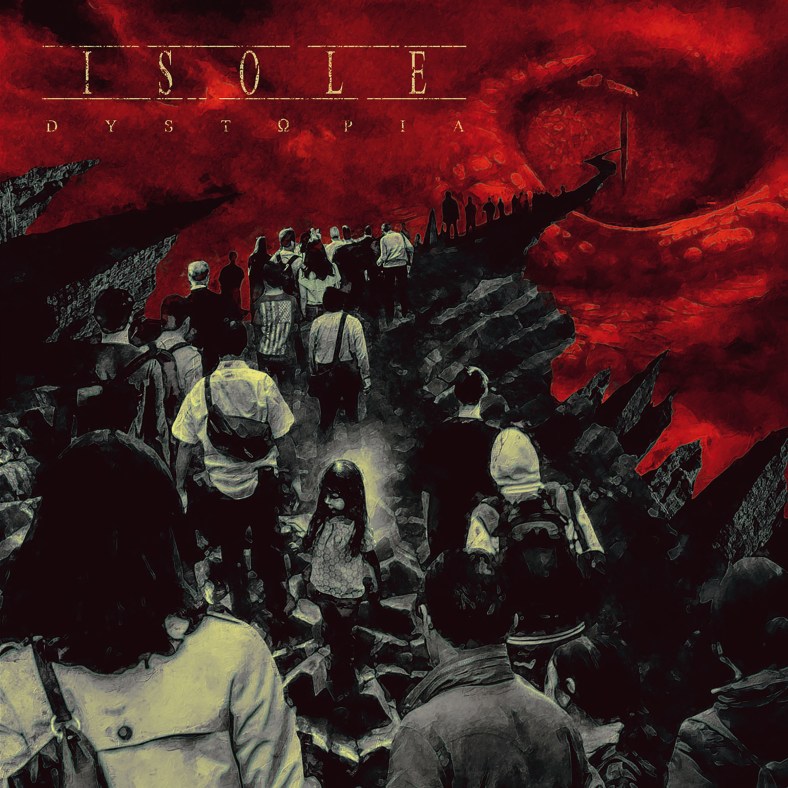
Enter Isole, with their latest album Dystopia. I wasn’t familiar with the band prior to this August release. But Dystopia immediately made me a fan. I found everything I was hoping for.

The riffs are massive. They are powerful. They are heavy. Yet they still sing to you. They tell a story. They aren’t heavy just to be heavy. They propel the music and the emotion directly into that instinctive lizard brain. The guitars emote in a mournfully beautiful manner. Take personal favorite “You Went Away”. It starts with an ominous church bell and a grinding, low, brutal riff. Layered on top of this, though, is a mournful clean mini-solo. Nary a word has been sung, but this combination has already set up an epic feeling tale of sadness and loss.

Let’s not forget the vocals. Throughout the album, they shine through the music. Acting both as a focus of light, and an additional source of sadness and loss, they sweep along with the music, bringing the listener with. Scaling back at times, growing, and exploding at others, they provide the dynamics necessary to sweep the listener along in the flow of the music. There are even sparse and tasteful death growls. These are all the more effective due to their restraint. They masterfully convey darker emotions at just the right time.

Dystopia is a tight seven songs. Not a moment feels wasted or superfluous. This further enhances the impact of each and every song. I find myself coming back again and again.

What I love the most about music is it’s ability to be appreciate for a plethora of reasons. Some music I love because of the technical ability required to produce it. Other, because of its ability to excite and motivate me. The music I love the most is that which makes me feel.

Dystopia makes me feel. It communicates so many emotions and does so with so much skill and power. The music is as emotional as the vocals. The lyrics bring you along as well. This is doom at its finest, and exemplifies why doom is one of my very favorites.
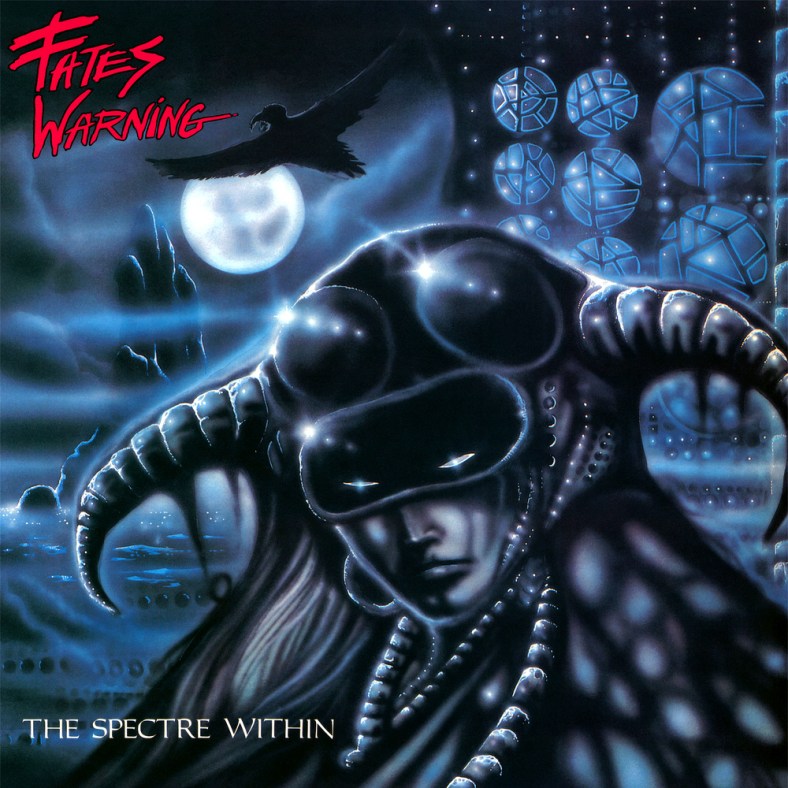
Fates Warning – The Spectre Within

The New Wave of British Heavy Metal was in full swing in the early 80s. Thanks to bands such as Iron Maiden and Judas Priest (amongst others), heavy metal was taking hold, becoming a pretty big deal, and many bands were following in the footsteps of those greats.

One of those bands was Fates Warning, from Connecticut. Their first album, Night on Brocken dropped in 1984, with a distinct sense of Iron Maiden worship.

However, a closer listen revealed some tendencies to more progressive music. Shades of bands such as Rush were creeping into the NWOBHM sound that Fates was building their sound on. Enter their second album in 1985, The Spectre Within, and I don’t think it would be unfair to say that progressive metal was born.

Taking the metal sound of Night on Brocken and adding different time signatures, allowing the music to really be more dynamic and variable, and in retrospect, ground was being broken. Fates Warning is anchored by the guitar playing of Jim Matheos, and on The Spectre Within we see him upping his game considerably. Songs like “Orphan Gypsy” still are built on that fast, metal riffing. But it is also willing to slow things down, add some variation with the choruses. “Pirates of the Underground” is one of my favorites. Starting with a rapid gallop, it slows things down when the first verse hits, only to end by speeding up again, with one of my favorite endings in metal.

And that is a theme really seen on The Spectre Within. Few, if any, of the songs are predictable, or go where you initially expect. Yet what also makes this album so strong is how none of these transitions feel abrupt or out of place. There is a definite flow to the album, despite the changing time signatures and tempos throughout.

Songs like “The Apparition” are legitimate prog masterpieces. Final track, “Epitaph” is 12 minutes of excellence that really shows where the band would go on subsequent tracks like “Exodus” and “The Ivory Gate of Dreams”.

It is impossible to talk about the first three Fates Warning albums without spending some time on the vocals of John Arch.

Let me start by saying that, it took me a bit to really get into his voice. Given that Ray Alder was my introduction to Fates Warning, John Arch was something completely different. I’ve read that Tony Iommi said that Ozzy sang with the melody, but Dio sang across the melody. That is a good way to describe John Arch as well. His vocal melodies are some of the most interesting in metal. He has a high tenor, and isn’t afraid to use it. But what I love the most is just how dynamic his vocal lines are. This man can sing, and amazingly still can today. Because his vocal melodies are much more unique and dynamic than usual for this type of music, it takes a bit for them to click. But once they do, I’ll fight anyone who has bad things to say about John Arch. It’s that simple.

The Spectre Within is an essential album, as it really is the birth of prog metal. It holds up excellently today and is a dynamic, vibrant musical expression of a band that continues to shape progressive music to this day.

Alter Bridge – Walk the Sky

I have always love Mark Tremonti’s guitar playing. Yes, always.

So, in essence, that means I just admitted to liking at least some aspect of Creed’s music. Ok, ok, I admit it. I really loved Creed when Torn dropped. At that time in my life, there was just something about it that resonated with me. Follow up, Human Clay kept me engaged, with it’s beefier production and heavier sound. There were some really great moments on that album. I mean, come on, the bridge in “What If” builds to a pummeling breakdown that still sounds awesome to this day.

But, by the time Weathered dropped, the cracks were really starting to show. Most of this centered around lead singer Scott Stapp’s over-the-top vocal delivery and what really started to look like a messiah complex.

But none of that takes away from the heavy, bombastic guitar work from Mark Tremonti. Musically, those Creed songs hold up just fine, thanks to Mark’s crunching and tasty riffs. So I was more than ready for Alter Bridge to drop their self-titled debut in 2004. We had the same musical backbone of Creed (literally, guitar, bass and drummer from Creed) with a much more accomplished, versatile, and able singer in Myles Kennedy.

I loved their debut, Blackbird was a moving follow up. AB III took a bit to grow on me, but subsequent albums Fortress and The Last Hero were on near constant rotation shortly after their releases. Likewise, I’ve definitely enjoyed and continued to listen to Tremonti’s solo work on 4 solid albums of guitar centered hard rock.

No one wants prime rib every day. Some days, you want a $1.00 McDouble. I mean, come on, you just do.

I’m not saying Alter Bridge is no better than a McDouble. But this is meet and potatoes hard rock. There isn’t much unexpected going on here. And that is just fine. Some days I just want solid, guitar heavy hard rock that you can sing along to. It fills a need and I’ve appreciated Alter Bridge more than capably filling that need for the past 15 years.

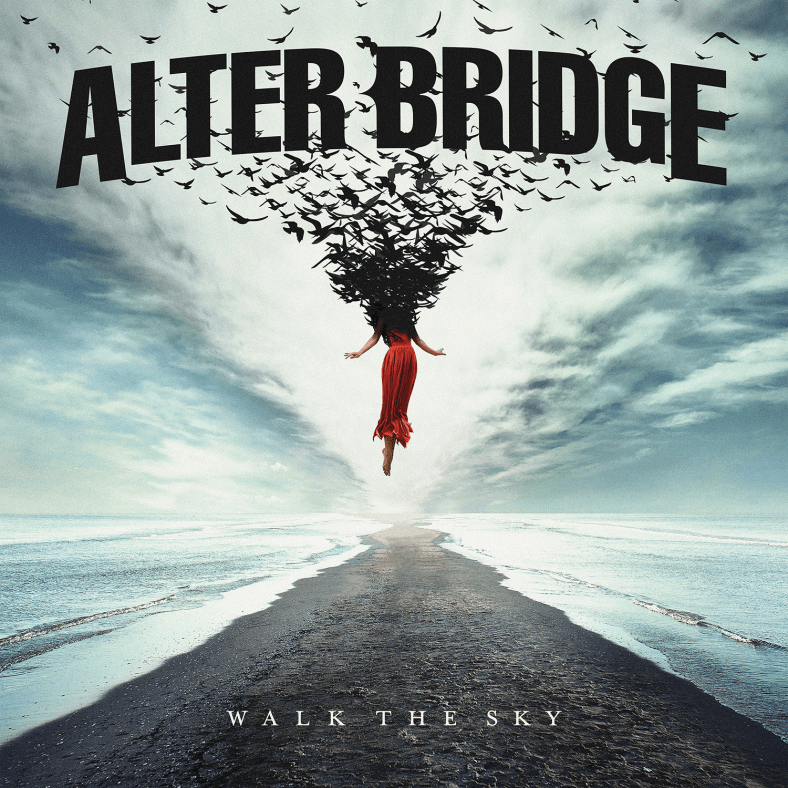
So, with their latest release Walk the Sky, I guess I have to say “Sorry, it’s not you, it’s me.”

I can’t get into it. I preordered it, as I am wont to do. It’s exciting, every week or two you’ll get a new track released to whet your appetite for the full album release. Except none of those singles drew me in. I couldn’t make myself even listen to one of them all the way through before the album dropped. And then the album dropped, mid October. Oddly enough, it isn’t even like it had real stiff competition. The latest from Insomnium had released 2 weeks before, but that hadn’t grabbed me the way their previous release had. Lacuna Coil had shocked me the week before with Black Anima which I continue to think is a really great album.

So it was all the more odd to me that Walk the Sky just couldn’t seem to grab me. But it didn’t, and it still hasn’t. Listening to it now, trying to write something about this album, and I find myself skipping songs like crazy. Not because they are bad. Alter Bridge is even stretching and doing some different things on this album. I appreciate that. And all the same keys are there. Myles has an awesome, powerful voice. Mark’s guitar is as good as ever. The man is one of the best rock guitarists out there.

But I just don’t want to listen for more than a few minutes. Like I said, sorry Alter Bridge, it’s not you, it’s me. So I guess it’s back to the cold embrace of Schammasch, Monolithe, and The Drowning for this middle aged metal head.

Cobalt – Slow Forever

Life is full of surprises, that’s for sure.

Take, for example, Cobalt. If you had told me years ago I would like black metal, I’d have told you you were crazy. Had you told me that an American black metal band would become my ultimate go-to music? Even more crazy.

But that’s what Cobalt is. See, sometimes I get in a rut. I want to listen to music, but nothing seems to grab me. I try new songs, old songs, wander through just about every genre without finding something that I want to stick with. For someone who loves music as much as I do, it becomes an increasingly frustrating endeavor. I get cranky, and it starts to really drive me crazy.

Then I’ll turn on some Cobalt. Doesn’t really matter which album. Could be their breakthrough, Eater of Birds, perhaps their subsequent triumph Gin, or just as often, their amazing return to the music scene, 2016s Slow Forever. And every single time, I’m instantly out of my musical rut. Suddenly, I find joy in music once again. The craziest part of all of this? I couldn’t even tell you why. There is just something visceral about Cobalt that clicks with me, and draws me in immediately.

Slow Forever was my first introduction to Cobalt. Basically a two man band, with all the instruments manned by Eric Wunder, with Charlie Fell helming the mic (having replaced Phil McSorley after some internal band issues). That this really is just two men is astonishing, and the last thing I would have expected given just how powerful the album is.

Slow Forever is an evolution of the black metal found on the previous albums. It is less raw, and actually has an incredibly crisp production that makes the instruments, particularly the drums just pop. In fact, I’m not entirely sure I’d continue to call Slow Forever black metal. At the same time, I don’t know what I’d call it instead. There are elements of punk, hardcore, crust, hard rock, and country. Yes, even country.

Cobalt’s music is just raw, no matter how sharp the production is. The vocals still carry with them that harsh, almost shriek, even with a different vocalist. Instrumentally, this is just filthy, nasty metal, in the very best ways possible. The guitars have a “dirtiness” to their sound. I don’t really know how else to describe them. Many songs are long, the album itself is 1 hour and 24 minutes (with the bonus track “Siege” which is an awesome song). This album is a journey.

There is also something uniquely American about Slow Forever. It has the identity of the west baked into the music. There is a rebelliousness, a celebration of individuality, and also an acknowledgment that things just might be a little effed up. That leads to a powerful authenticity to the music. It is both contemplative at times, and yet just straight up brutal and in your face at others.

Slow Forever is a band that realizes that we just might actually be up shit creek, and they are making sure they scream this loud and clear for all to hear. There aren’t solutions offered here, that isn’t the intent. But Slow Forever is a brilliant, visceral, and raw anthem that wouldn’t be out of place while we burn things to the ground with the hopes of starting over.

Altars of Grief – Iris

I’m not sure I’m really able to do this album justice.

How’s that for a start? Iris by Canada’s Altars of Grief is a staggeringly powerful album, that draws me back regularly. It is a harrowing journey, emotionally wrenching, and leaves me feeling wrung out when the final notes fade.

So powerful is this record, I regret my deep desire to go back and listen to it again.

Art is difficult to define. For me, a key factor is purpose. I don’t know what the authorial purpose of Iris is, but I’ll be damned if it doesn’t have one, and a powerful one at that. If nothing else, this is music that forces me to reflect on life, on my place in the world, on the impact others have had on me, and the small impact I may have on those that surround me.

I realize this is all sort of vague and nebulous. I’ll try to be a little more concrete. Altars of Grief play a blackened style of doom metal. There are blast beats, tremolo picking, harsh vocals, and vicious riffs. Yet, they are also so much more. We have moments of beautiful melody, quiet contemplation, and tenuous peace.

The clean vocals are excellent. At times very reminiscent of the late David Gold, from Woods of Ypres, at others, they are more soaring and melodious. The contrapuntal harsh vocals run the gamut. We have blackened shrieks, hardcore screams, and even some low, bone shaking death growls. The vocals are used to perfect effect, clean when the song calls for it, harsh when necessary. The guitars follow the same pattern. There are extremely heavy and crushing passages, that often move deftly into crystalline moments of tranquility. Keys and organs punctuate the guitars, never one overwhelming the other.

In many ways, Woods of Ypres is an excellent starting reference point for Iris. Yet this never feels derivative. Many of the same hallmarks are present, but Altars of Grief owns these moments so thoroughly that they become theirs.

Iris tells a story. A story of loss, grief, addiction, abandonment, and death. I’ll leave it to the individual to seek out the specifics. It is sufficient to say that this is a dark record. It doesn’t leave one feeling hopeful, but it does end with a certain sense of peace. And with music this powerful, and a subject matter this dark, peace is about the best one could hope for.

I really do find myself struggling somewhat with what to say about Iris. Musically, it is an amazing record, full of heavy blackened moments, slow, plodding doom moments, and plenty of beautiful, quiet passages. Lyrically, well, I’ve touched on that enough. As a father, it is a harrowing album. Emotionally, this albums devastates me. It is such a complete experience, and so stunningly cathartic, that when final strings fade, I can’t help but feel as though I’ve been through the wringer. This is proof positive that music has power and emotional weight. Iris, while not for the faint of heart, is an amazingly powerful, beautiful, and emotional experience, from first note to last.

Source – Totality

Three years ago, thanks to a review at good old Angrymetalguy.com, I stumbled across a release from a three piece band from Colorado. The band was Source, and the album was Return to Nothing. It was a little too brazen in its Tool worship, and there were shades of the band Soen as well. But it was a lovely album of noodly, heavy music, with some serious progressive overtones. Songs were long, had needlessly long instrumental passages, and probably could have benefited greatly from some self-editing.

But it was also refreshing, a little eclectic, and wholly endearing.

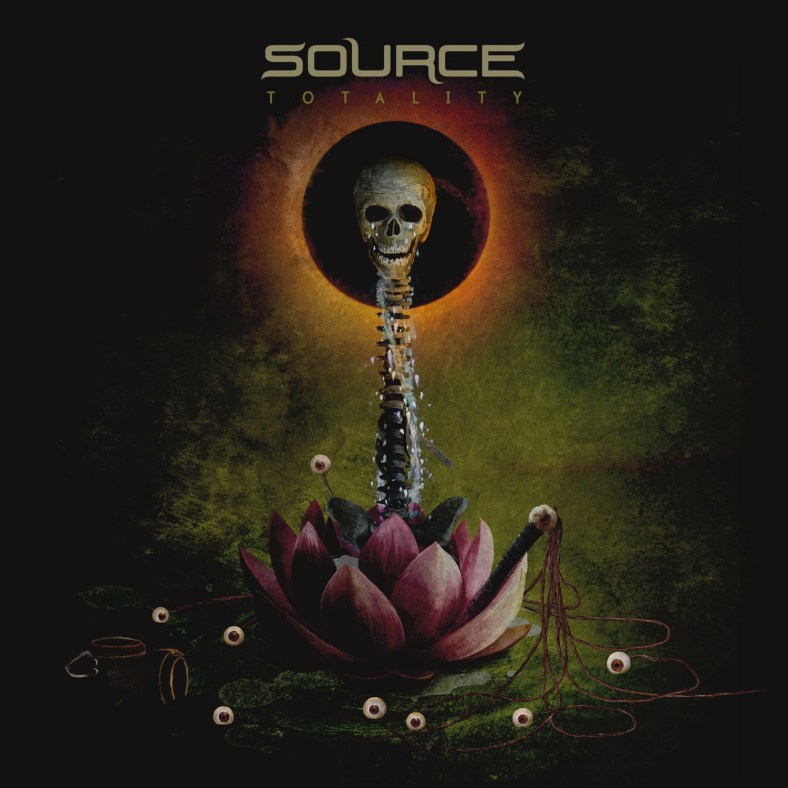
I loved it and desperately hoped it wouldn’t be a one off. To my excitement, 2019 brought us the second album from Source, Totality. And I won’t lie, I don’t love it as much as I wanted to.

Don’t get me wrong, it I still a really solid album, one which I like quite a lot.

It is also a more mature album. The Tool worship is far less pronounced. Songs aren’t nearly as long or self-indulgent. They are more straightforward. They are more concise. They still have the progressive overtones, but avoid devolving into musical onanism. If I’m being honest, I actually think it is a better album. It took everything that was actually good from Return to Nothing, and focused it and honed it to a more impactful edge.

But I miss the indulgent nature of the previous album.

Looking at Totality on its own merits then, it is a really, really good metal album from a 3 piece band that is finding their voice. This is a more confident band, who manages to be impactful without being too long in the tooth. There is a lot to like here. The playing is excellent. These are skilled musicians who don’t feel the need to beat you over the head with their ability. I like the guitar tone a lot. It has just enough crunch to be metal, but isn’t going to turn anyone off by being too much.

I’d love the bass to be a little more noticeable, because it is good playing, but it can get a bit lost in the mix. Lyrically, this is actually a pretty dark album, addressing issues such as suicide, acceptance, and dealing with life challenges. You get the sense these lyrics are fairly personal.

I really like Source. This is a young band with, I hope, a bright future. They write great songs, are developing a real identity for themselves. I look forward to what they do next, and hope that perhaps they will bring back in a bit of those more progressive aspects from their first album. Totality is more than worth a listen, and while I don’t find myself drawn back to it as much as I was their debut, I have come back time and again and every time end up thinking “I should probably listen to this album more than I do!”

And that is always a good sign.

Tool – Fear Inoculum

So far, all I’ve pretty much done is write about albums I like. And, well, that is fine to me. This isn’t a blog for reviews. I’ll leave that to others. Again, these are my reactions to music. And sometimes, that reaction is apathy.

So, with a heavy heart, I state that, in my opinion, Fear Inoculum by Tool is just fine.

And I’m neither surprised nor really disappointed. I mean, I thought that their previous album, released 13 FREAKING YEARS AGO, 10,000 Days was just fine as well. There were a few good tracks, and some filler crap, and a handful of songs that just bored me before they ever wrapped up.

Look, I won’t claim to be the most die-hard Tool fan ever. I like their previous music, and even would say that I think Lateralus is a brilliant album. But I don’t love it either. There are excellent tracks on it, but overall, it leaves me feeling a bit cold. Still, they are Tool, and I can’t deny the impact they have had on modern rock/metal.

Of course, that meant that their first album in over a decade was sure to create a bit of a stir.

Then the title track, “Fear Inoculum” dropped. I preordered the album, because this was Tool after all. And I listened to that song. Then I listened again. Then one more time. Then I decided to spend my time listening to songs that were actually interesting. But I was still open to giving the rest of the album a fair shot. And so it was released.

And, much to my surprise, what I found was an album where the proper songs (forget the stupid “interludes”) followed a formula. Yes, formulaic songs from Tool. Long songs (around 10 minutes), with a mellow, slow, quiet intro. This slowly builds, adding more instruments, eventually the song reaches some type of crescendo. Maybe it backs off and builds again, or maybe the crescendo comes at the very end. Either way, about halfway through the album and I was bored.

Yes, bored. Big time.

Here’s the thing. I dig progressive music, so nothing Tool is doing on the album wowed me in that regard. I have more than enough patience for long songs, if they do something interesting (Mirror Reaper anyone?), so it wasn’t that the songs were longer than your average tune. They just felt boring. Yes, we have crescendos and denouements, but I just kept waiting for the songs to reach a bit higher of a crescendo, so was left wanting more. And even formulaic music can be well appreciated. Take Cult of Luna. They have a certain formula, and it works. But they still mix it up enough that the songs feel different and fresh. Instead, the formula on Fear Inoculum makes each song sound almost generic.

They playing is fine. These guys are excellent musicians. But the album just never hits with the impact I was hoping for. It isn’t bad. None of the songs (again, ignoring the stupid interludes) are atrocious. They just all start to blend together as far as I am concerned, and nothing has made me want to come back to Fear Inoculum in the months since it has been released. They feel cold and clinical, surprising since older Tool had so damn much emotion, even if that emotion was often anger.

Others will disagree, and adamantly so. Tool has a somewhat rabid and, at times, myopic fan base who think that everything Tool does is the best and most original (despite the fact that many bands do and have done the same sort of thing and in many cases do it better). And that is fine. I won’t take issue with anyone who loves Fear Inoculum as, again, it isn’t a bad album by any stretch of the imagination.

It’s just sort of fine and a bit boring and forgettable. And if that isn’t damning with faint praise, I don’t know what is.